Barretina
Hat & Headwear Definitions — hats, caps, helmets and headwear terms from Apparel Search
A barretina is a traditional Catalan hat that was frequently worn by men, especially in the countryside, until the 19th century. It is a hat in the form of a bag, made of wool, usually red or sometimes purple. Today use of the barretina is uncommon in everyday life, but it is still used in folklore dances, or as a symbol of Catalan identity.
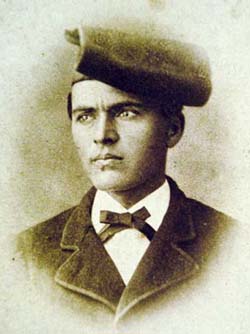 A
barretina is a traditional
catalan hat that was frequently worn
by men, especially in the countryside, until
the 19th century. It is a
hat in
the form of a bag, made of
wool, usually
red, or sometimes purple. Today, use of
the barretina is uncommon in everyday
life, but is still used in folklore dances,
or as a symbol of catalan identity. Salvador
Dali
popularized the
barretina in recent
times. The catalan Christmas figure
caganer
also wears a barretina.
| The above article is licensed under the GNU Free Documentation License. From Wikipedia, the free encyclopedia https://en.wikipedia.org/wiki/barretina 6/11/05 |
Learn about additional fashion or textile industry topics:
Fabric & Textile Industry Definitions
Embroidery Industry Definitions
Hat & Headwear Industry Definitions
Shoe & Footwear Industry Definitions
A Wool Bag Worn as a Hat
Most hats are shaped: they have a crown, a brim, or stiffening that holds a fixed form whether they are on a head or off it. The barretina belongs to the older and simpler family of soft caps, because it is a hat in the form of a bag, made of wool. That single fact explains its appearance and its history at once. A bag-shaped cap has no brim to break, no stiff crown to crush, and no structure to maintain; it takes its shape from the head wearing it and from the way the soft wool falls. Pulled on, the bag settles over the hair and the loose end drapes in the manner that makes the barretina instantly recognisable in images of traditional Catalan dress. Taken off, it is simply a soft wool pouch of a hat, easy to make, easy to carry, easy to store, and easy to replace, all qualities that mattered greatly for everyday clothing worn by working men in the countryside.
Wool is the right material for such a cap, and it is worth understanding why it served country wearers so well for so long. Wool gives warmth without bulk, keeps some of its insulating value in damp weather, and knits or weaves into a fabric soft enough to fold into this bag form while still holding together through daily use. For men working outdoors in the countryside, a warm, soft, unstructured cap that could be worn all day, in all ordinary weather, met the need exactly, which is why the barretina was frequently worn by men, especially in the countryside, until the 19th century. The colours belong to the tradition just as firmly: a barretina is usually red, or sometimes purple. Red is the colour that dominates the hat's image today, in festival dress, in pictures, and on the figures that keep the hat in public view, and a colour that consistent across a whole region's everyday dress becomes part of how that dress is recognised at a glance. The bag form has one further practical virtue worth noting: because there is no stiff shape to protect, a barretina can be carried folded or tucked away and put on when needed, suiting a life spent moving between field, village and home. A structured hat demands care in storage and handling; a soft wool bag cap demands almost none, and for generations of country wearers that freedom from fuss was part of the garment's fitness for daily life. It is also why the form could be made and remade locally without specialist equipment, keeping the same red or purple wool cap in continuous production wherever the tradition was lived.
From Everyday Dress to Symbol of Identity
The barretina's modern story is the story of many traditional garments: the everyday need disappears, but the meaning remains. Today, use of the barretina is uncommon in everyday life, yet it is still used in folklore dances, and as a symbol of Catalan identity. Those two survivals support each other. In folklore dance the barretina is worn as part of traditional dress, keeping the complete historic outfit, not just its steps and music, in front of living audiences. As a symbol, the hat can stand for Catalonia itself in a way few garments can, precisely because it was once so ordinary: a cap worn by country men across the region for generations carries the memory of that shared everyday life. When a garment moves from clothing to emblem in this way, its details stop being merely practical. The bag shape, the wool, and above all the red colour become the message, recognised immediately even by people who have never worn one.
Two figures have carried the barretina to audiences far beyond Catalonia in recent times. Salvador Dali popularised the barretina in recent times, lending the traditional cap the visibility of one of the most famous Catalan artists in the world, photographed and recognised everywhere in his native dress. The other figure is smaller, older, and just as persistent: the Catalan Christmas figure caganer also wears a barretina, so the little traditional figure displayed at Christmas keeps the red cap in homes season after season, long after it left daily wear. Between the dance stage, the famous artist, and the Christmas figure, the barretina's second life is secure. It survives not because anyone still needs a wool bag cap for a day's work in the fields, its role until the 19th century, but because Catalonia chose to remember itself in it, and a hat that a whole culture recognises as its own has a permanence that everyday fashion, which changes with every generation, rarely achieves. For a visitor encountering the barretina for the first time, in a folklore performance, on a caganer at Christmas, or in images of Dali, the points to take away are the ones that have held constant through both of its lives: a soft bag-shaped cap of wool, red far more often than purple, once the everyday headwear of Catalan country men, and now the recognised emblem of the culture that wore it. That an article of ordinary working dress could carry that weight of meaning is the real measure of how completely it once belonged to daily life in Catalonia: symbols are rarely chosen from garments nobody wore, and the barretina was worn by a whole countryside, which is why it can still speak for that countryside today.
Common Questions
What shape is a barretina?
A barretina is a hat in the form of a bag, made of wool. Unlike a shaped or brimmed hat, its soft bag form is what defines it, giving the traditional Catalan cap its loose, distinctive silhouette.
What colours is a barretina?
A barretina is usually red, or sometimes purple. The red version is the best-known form of the hat and the one most closely linked with its role as a symbol of Catalan identity.
Who wears a barretina today?
Everyday use is now uncommon, but the barretina is still used in folklore dances and as a symbol of Catalan identity. The Catalan Christmas figure caganer also wears a barretina, and Salvador Dali popularised the hat in recent times.