Beanie
Hat & Headwear Definitions — hats, caps, helmets and headwear terms from Apparel Search
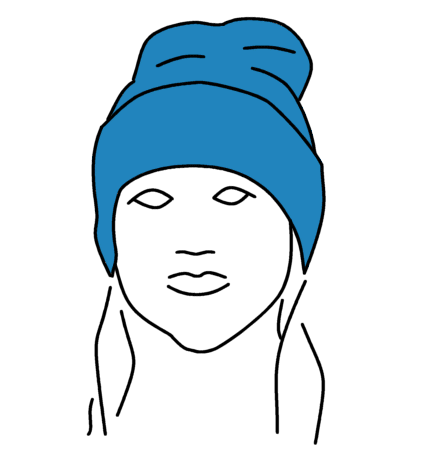
A beanie or skully is a soft, close-fitting cap or hat, usually made of wool, synthetic material or fleece. Beanies are worn low on the head, covering the forehead, and can be pulled down over the ears as well. They protect the head and ears from cold and wind chill, or are worn as a fashion item, and the term beanie is used mainly in New Zealand, Australia, the United States and the United Kingdom.
A beanie or skully is a soft, close-fitting cap or hat, which is usually made of wool, synthetic material, or fleece. They are worn low on the head, covering the forehead, and can be pulled down over the ears as well. They can be worn by either sex, but are more commonly worn by men.
Beanies can have a turn-up, and skullies are sometimes crocheted; otherwise, the terms are interchangeable. There are two main varieties of beanies, those that hug the top of the head, and those that leave the top couple of inches of the hat unstretched on top of the head. Beanies and skullies that are worn as fashion items are often heavily branded with the name of the designer or with other logos or slogans.
These hats protect the head and ears from cold and wind chill, or are worn as a fashion item. The term beanie is used mainly in New Zealand, Australia, the United States, and the United Kingdom. Some English-speakers, especially military, refer to beanies as watch caps. They are also called woollen or wooly hats, or bobble hats if they are topped with a pompom. Canadians often refer to them as tuques. Some varieties are known as stevedore caps; they are also referred to as ski caps or, if worn over the face, as balaclavas.
Originally, the beanie was a blue-collar working hat, worn by laborers like welders or mechanics who needed to keep their hair back but for whom a brim would be an unnecessary obstruction. Some hat historians believe schoolchildren began wearing skullcaps in imitation of their working-class fathers. The baseball cap evolved from this kind of beanie, with the addition of a brim to block the sun.
The name "beanie" probably comes from the early-20th century slang term "bean," meaning "head."
| The above article is licensed under the GNU Free Documentation License. From Wikipedia, the free encyclopedia https://en.wikipedia.org/wiki/beanie Modified by Apparel Search 5/13/05 |
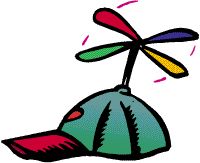 Picture Source Edwards AFB |
|
|
Learn about additional fashion or textile industry topics:
Fabric & Textile Industry Definitions
Embroidery Industry Definitions
Hat & Headwear Industry Definitions
Shoe & Footwear Industry Definitions
| Fashion Industry |
A Working Hat Before It Was a Fashion HatThe beanie began with work, not warmth alone and certainly not fashion. Originally the beanie was a blue-collar working hat, worn by labourers like welders or mechanics who needed to keep their hair back but for whom a brim would be an unnecessary obstruction. That origin explains the design's defining features: soft, close-fitting, and brimless, so it stays out of the eyes, catches on nothing, and works under other equipment. Some hat historians believe schoolchildren began wearing skullcaps in imitation of their working-class fathers, and the name itself points the same way, probably coming from the early 20th century slang term bean, meaning head. The brimless schoolchild's version has its own history in the record: a beanie is also the name for a skullcap, a tight-fitting brimless hat, worn by schoolchildren in the early to mid-20th century, and the crown that Jughead Jones wears in Archie Comics is a form of beanie, as is a cap often worn by Spanky of Our Gang. These were also known as whoopee caps and dinks. Fittingly, the beanie is also a parent of the world's most popular cap. The baseball cap evolved from this kind of beanie, with the addition of a brim to block the sun, which makes the two hats a neat before-and-after pair: the same close working cap, plain for the workshop where a brim obstructs, and brimmed for the ball field where the sun is the problem. Later usage muddied the name in one direction only. Since the schoolchild era, the name beanie has come almost exclusively, in one popular sense, to mean a child's hat that has a plastic propeller sticking out of the crown, a novelty meaning that sits alongside the ordinary warm cap without replacing it in most English-speaking countries. The term beanie itself is used mainly in New Zealand, Australia, the United States and the United Kingdom, while the same hat answers to other names elsewhere and in other settings, which is worth knowing when shopping across countries, since the hat on the shelf does not change when its label does. Fit, Names and Choosing a BeanieThe modern beanie's job is the one its shape suits best: they are worn low on the head, covering the forehead, and can be pulled down over the ears as well, and these hats protect the head and ears from cold and wind chill, or are worn as a fashion item. Material decides how well each job is done, since beanies are usually made of wool, synthetic material or fleece: wool for traditional warmth, fleece and synthetics for light, quick-drying cold-weather wear. Fit comes in two main varieties, those that hug the top of the head, and those that leave the top couple of inches of the hat unstretched on top of the head, the slouchier form. Beanies can have a turn-up, which adds a double layer over the ears exactly where wind chill bites hardest, and skullies are sometimes crocheted, giving a more open texture suited to milder cold or indoor fashion wear. The names multiply because the hat is everywhere. Some English speakers, especially military, refer to beanies as watch caps, a name that suits the same close cap worn on cold duty. They are also called woollen or woolly hats, or bobble hats if they are topped with a pompom. Canadians often refer to them as tuques. Some varieties are known as stevedore caps, after dock work, continuing the hat's labour history, and they are also referred to as ski caps or, if worn over the face, as balaclavas, where the beanie family shades into full-face cold protection. Fashion has its own branch: beanies and skullies worn as fashion items are often heavily branded with the name of the designer or with other logos or slogans, and they can be worn by either sex, but are more commonly worn by men. Choosing well means matching those variables to the purpose: a turn-up wool or fleece beanie pulled over the ears for real cold, a hugging fit for wear under other headgear or at work, a looser unstretched top or a branded style when the hat's job is appearance first and warmth second. Common QuestionsWhat is the difference between a beanie and a skully?The terms are largely interchangeable: a beanie or skully is a soft, close-fitting cap, and skullies are sometimes crocheted. There are two main varieties, those that hug the top of the head and those that leave the top couple of inches of the hat unstretched on top of the head. What are beanies called in other places?Some English speakers, especially military, refer to beanies as watch caps, and they are also called woollen or woolly hats, or bobble hats if topped with a pompom. Canadians often refer to them as tuques. Where does the name beanie come from?The name beanie probably comes from the early 20th century slang term bean, meaning head. The hat itself began as a blue-collar working hat worn by labourers such as welders and mechanics who needed to keep their hair back without a brim in the way. More to ExploreMore from Apparel Search: Hat & Headwear Definitions | Clothing Industry Glossary | Fashion Terms | Apparel Search Home
|