Pickelhaube
Hat & Headwear Definitions — the spiked leather helmet of German military forces, from Apparel Search
Search Apparel Search
At a Glance
Definition: The pickelhaube is a spiked helmet worn in the 19th century by German military forces, its name from the German Pickel, meaning point, and Haube, a general word for headgear. The basic form was made of leather with metal reinforcements and a metal point, and from 1916 it was slowly replaced by the Stahlhelm.
Pronunciation: PIK-el-how-buh
Category: Hat & Headwear Definitions
Word Origin
The name is German: Pickel means point, and Haube — literally bonnet — is a general word for headgear. The pickelhaube is therefore simply the pointed headgear, named for the spike that defines it.
The pickelhaube is a spiked helmet worn in the 19th century by German military forces, its name from the German Pickel, meaning point, and Haube, a general word for headgear. It was originally designed in 1842 by King Frederick William IV of Prussia, and its use slowly spread to other German principalities, with Bavaria the last German state to adopt it, in 1887. In World War I the leather helmet offered little protection in the trenches and was slowly replaced from 1916 by the Stahlhelm. This page covers the spike and the leather-and-metal construction, the helmet's gradual spread across Germany, and its replacement by the steel helmet.
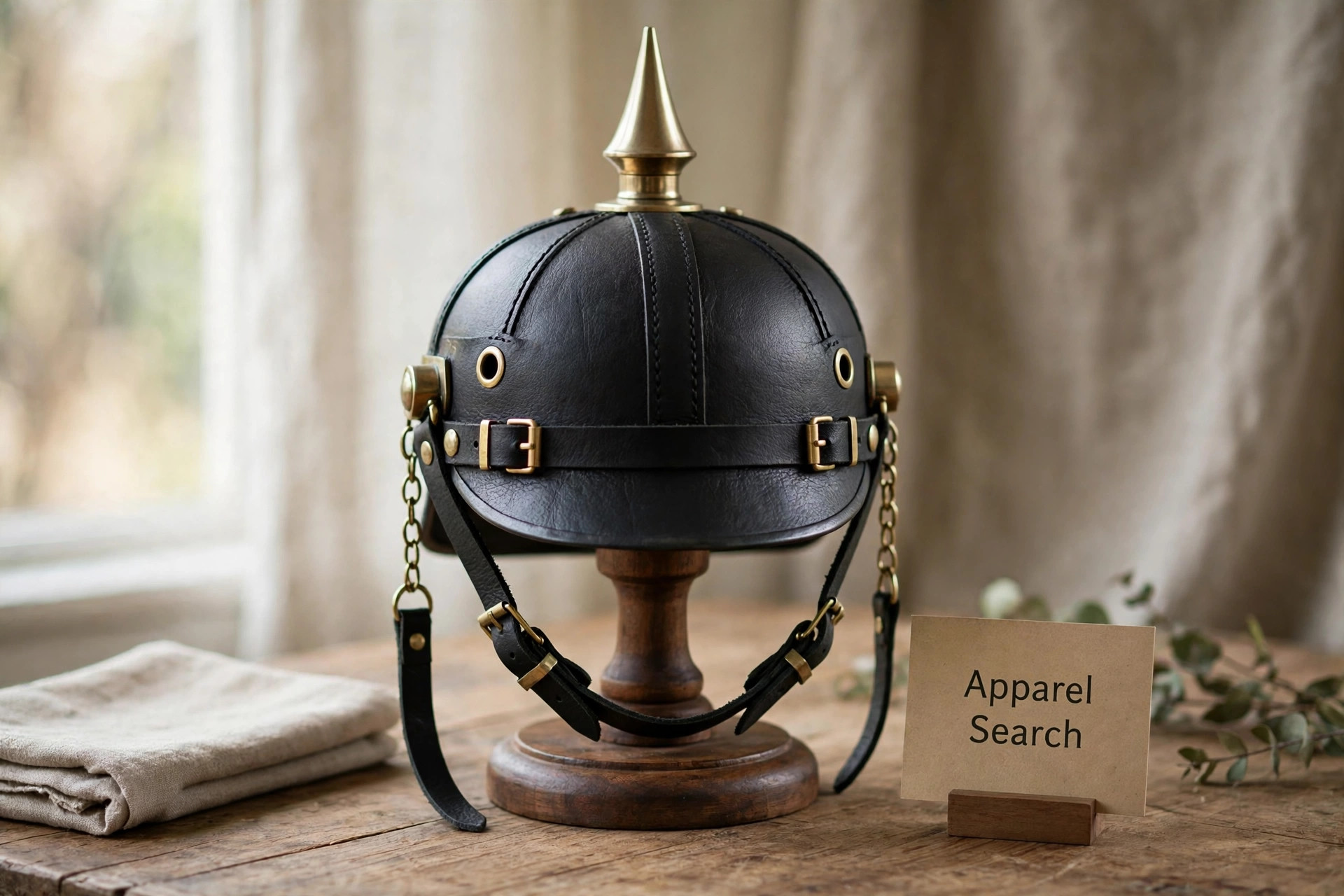
Leather, Metal Reinforcements and a Spike
The pickelhaube is recognised by a single feature, named in its own title: a spike. Pickel means point, and Haube is a general word for headgear, literally bonnet, so the name simply calls it the pointed headgear. The famous spike is said to have been a feature to protect the infantrymen against sabre-blows by cavalry, a purpose that belongs to the warfare of the 19th century, when mounted cavalry and edged weapons were still part of the threat a soldier's helmet was designed against. Whether judged as protection or as appearance, the spike made the helmet unmistakable at a distance and gave German military forces a silhouette shared by no other army of the period in quite the same way.
The basic construction underneath the spike was leather with metal reinforcements and the metal point. Leather formed into a helmet body could be shaped and finished as formal military headgear, while metal strengthened the parts that needed it and supplied the defining spike. All-metal versions of the pickelhaube were also worn, mainly by cuirassiers, and they often appear in portraits of high-ranking military and political figures, such as Otto von Bismarck. The distinction matters when identifying examples: the standard infantry form is the leather helmet with metal fittings, while the all-metal form belongs chiefly to cuirassiers and to the formal portrait image of senior figures. Several other nations adopted the pickelhaube, or at least something very similar, so the spiked form spread beyond Germany even while it remained most closely associated with German forces.
From Prussian Design to Trench Obsolescence
The helmet's adoption was gradual. Originally designed in 1842 by King Frederick William IV of Prussia, its use slowly spread to other German principalities, and in 1887 the Kingdom of Bavaria was the last German state to adopt the pickelhaube. That long spread, forty-five years from Prussian design to the last German adoption, shows a helmet becoming a common German form state by state rather than by a single uniform decision. By the time Bavaria adopted it, the pickelhaube had become the established spiked helmet of German military forces, worn through the later 19th century as both protective headgear in its original sense and a central part of the military appearance of the period.
World War I exposed the limit of a leather helmet. In the trenches it was found that the pickelhaube offered little protection to troops, because the conditions of that war demanded a helmet built to a different standard, and leather with metal reinforcements was not built to it. In 1916 it was slowly replaced by the Stahlhelm, or steel helmet, that would still be worn by German troops in World War II, and the pickelhaube was reduced to ceremonial wear. With the collapse of the German Empire in 1918, the pickelhaube was completely abandoned as military equipment. Its afterlife, however, has been unusually long: even today it continues to be an important part of a clichéd mental picture of Germans, especially in Britain. The helmet therefore survives in popular imagination long after it left service, its spike standing for an earlier era of German soldiering in a way the steel helmet that replaced it, for all its longer battlefield use, does not quite displace.
Common Questions
What does pickelhaube mean?
Pickelhaube comes from the German Pickel, meaning point, and Haube, literally bonnet, a general word for headgear. The name therefore describes the helmet by its most obvious feature, its point or spike.
Who designed the pickelhaube and when?
The pickelhaube was originally designed in 1842 by King Frederick William IV of Prussia. Its use slowly spread to other German principalities, and in 1887 the Kingdom of Bavaria was the last German state to adopt it.
Why was the pickelhaube replaced?
During World War I it was found that the leather helmet offered little protection to troops in the trenches. In 1916 it was slowly replaced by the Stahlhelm, or steel helmet, and the pickelhaube was reduced to ceremonial wear.