Stovepipe Hat
Hat & Headwear Definitions — hats, caps, helmets and headwear terms from Apparel Search
A top hat is a kind of tall, flat-crowned, broad-brimmed hat worn by men and especially common in the 19th century, made from stiffened felt made from beaver fur or from silk. A popular version, particularly in the United States in the 19th century, was the stovepipe hat, which was straight, like piping, and not wider at the top and bottom, and often taller than the typical top hat.
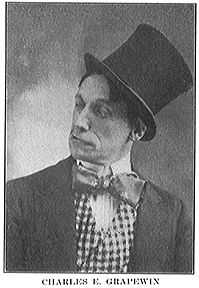 A
top-hat
or
top hat
is a kind of tall, flat-crowned, broad-brimmed
hat worn
by men and was especially common in the
19th century. They were made from stiffened
felt made
from
beaver fur or from
silk. A
popular version, particularly in the
United States
in the 19th century, was the
stovepipe hat.
Unlike many top-hats, this version was straight,
like piping, and was not wider at the top
and bottom. Often they were taller than
the typical top-hat.
Later on, top-hats were sometimes given an internal hinged frame, making them collapsible. Such hats are often called "opera hats", though the term can be synonymous with any top-hat, or any tall formal men's hat.
Top-hats are sometimes associated with stage magic.
| The above article is licensed under the GNU Free Documentation License. From Wikipedia, the free encyclopedia https://en.wikipedia.org/wiki/stovepipe_hat 5/13/05 |
|
Straight Sides and Extra Height
The stovepipe hat is best understood as a variation inside a famous family. A top hat is a tall, flat-crowned, broad-brimmed hat worn by men, and it was especially common in the 19th century. Within that family, a popular version, particularly in the United States in the 19th century, was the stovepipe hat. Its difference is a matter of line. Unlike many top hats, this version was straight, like piping, and was not wider at the top and bottom. Where another top hat might flare or taper between crown top and brim, the stovepipe keeps one even vertical line, and the comparison in its name is exact: the crown reads as a section of pipe set on a brim. Often they were taller than the typical top hat as well, so the style combines the straightest sides with the greatest height in the family, producing the most emphatic silhouette of all.
Materials made that silhouette possible. Top hats were made from stiffened felt made from beaver fur or from silk. Stiffening is the essential word, because a tall crown with a flat top and straight sides cannot hold itself up in a soft material; the structure has to be built into the fabric so the hat keeps its architectural shape through wearing, handling and storage. Beaver fur felt gave a dense, firm body that took stiffening well, while silk gave the formal surface associated with dress wear. Either way, the wearer was carrying a constructed object, not a soft cap, and the care such hats needed followed from that construction. Height of that kind also had a social effect in its century: added inches, an unbroken vertical line and a broad brim made the wearer conspicuous in a crowd, which suited an era when the top hat was standard formal dress for men rather than an occasional costume.
Collapsible Heirs and Stage Associations
Later development softened the top hat's rigidity in one ingenious direction. Later on, top hats were sometimes given an internal hinged frame, making them collapsible. Such hats are often called opera hats, though the term can be synonymous with any top hat, or any tall formal men's hat, so the name opera hat needs care in use: it may mean the collapsible hinged design specifically, or tall formal headgear generally. The collapsible idea answered a real inconvenience of the stiff original, since a tall rigid hat is awkward to hold on the lap or store under a seat during a performance, while a hat that folds flat on a hinged frame can be set aside and opened back into shape afterwards. The stovepipe's straight, extra-tall form belongs to the rigid tradition rather than to this folding branch, and its unbending line is precisely what defines it.
One further association follows the whole top hat family into modern imagination: top hats are sometimes associated with stage magic. The tall crown that made the hat formal in the 19th century made it useful and symbolic on stage, where a magician's hat needs height, a flat crown and a brim that reads clearly to an audience. When describing examples today, the checks that separate a stovepipe from its relatives are simple and visual. Look first at the sides: straight, like piping, with no widening at top or bottom. Look next at the height: often taller than the typical top hat. Then confirm the family features shared with other top hats, the flat crown, the broad brim and the stiffened construction in beaver fur felt or silk, and the identification is complete.
Common Questions
How does a stovepipe hat differ from other top hats?
Unlike many top hats, the stovepipe version was straight, like piping, and was not wider at the top and bottom. Often they were taller than the typical top hat, which gives the style its pipe-like silhouette.
What were top hats made from?
Top hats were made from stiffened felt made from beaver fur or from silk. That stiffened construction is what allowed the tall, flat crown and broad brim to hold their formal shape.
What is an opera hat?
Later top hats were sometimes given an internal hinged frame, making them collapsible, and such hats are often called opera hats. The term can also be synonymous with any top hat, or any tall formal men's hat.