Why Study Fashion in Belgium
Belgium is a small country with an outsized fashion reputation, and almost all of that reputation was built by its schools. In the 1980s a group of graduates from Antwerp's fashion department changed what the fashion world thought Belgian design could be, and the schools have traded on serious, concept-driven teaching ever since. Students come to Belgium not for a large commercial fashion industry, but for an education that treats fashion as an artistic discipline with its own point of view.
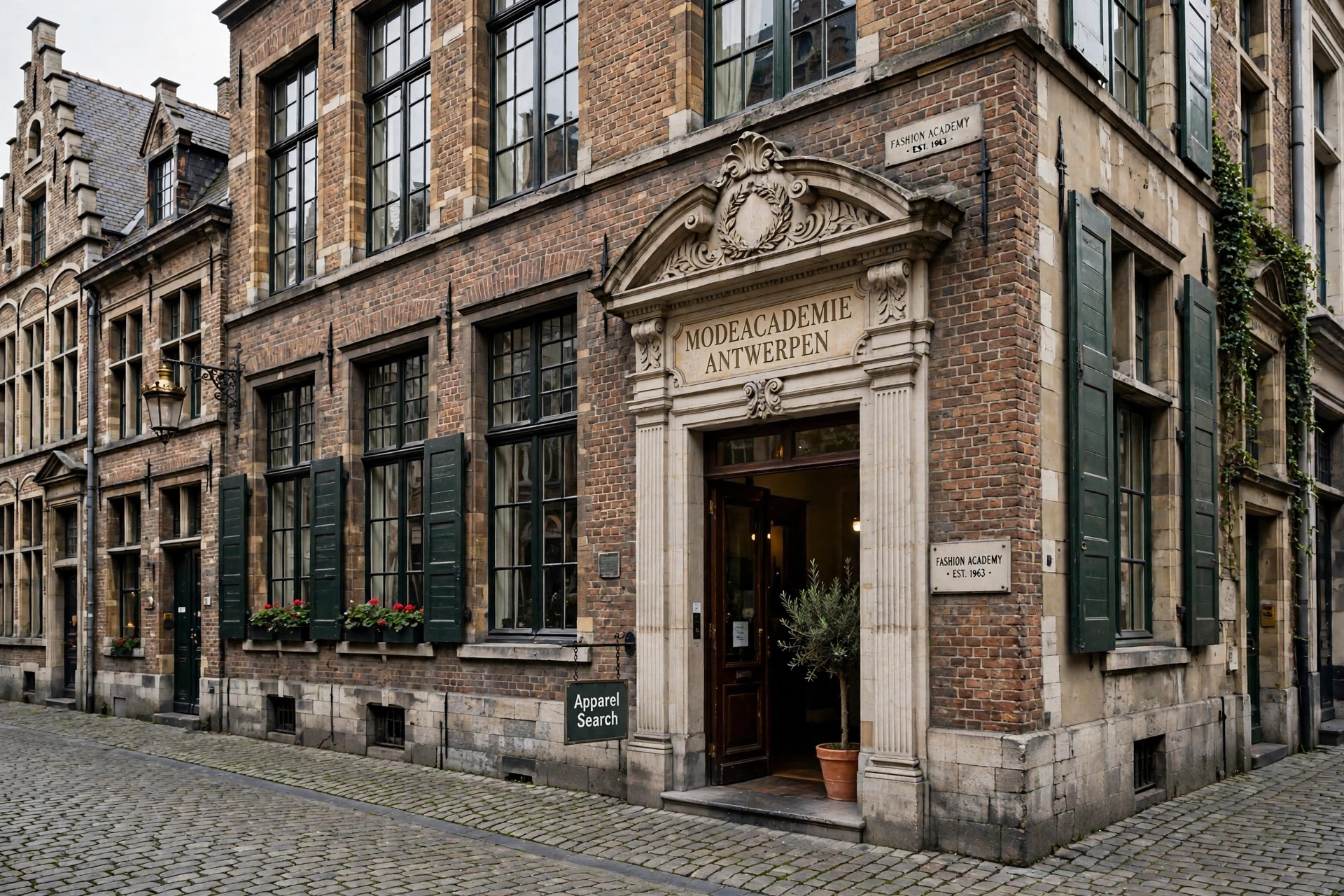
Two cities matter. Antwerp, in Dutch-speaking Flanders, is home to the Royal Academy of Fine Arts and its famous fashion department, set in the city's fashion district. Brussels, the capital, is home to La Cambre, a national school of visual arts whose fashion department, La Cambre Mode[s], teaches within a broad art and design environment. The two schools have different characters — Antwerp is a fashion department with a singular focus, Brussels is a fashion program inside a multidisciplinary art school — and comparing them is the best way to understand Belgian fashion education.
Belgium's language communities shape student life as much as its schools do. Antwerp's institutions belong to Dutch-speaking Flanders, while La Cambre belongs to the French-speaking community's higher education system. Check the language of instruction and the language requirements of any program early, because they differ between the two cities.
Fashion Schools in Belgium
Royal Academy of Fine Arts Antwerp — Fashion Department
The Fashion Department of the Royal Academy of Fine Arts in Antwerp was founded in 1963, growing out of the academy's fine arts tradition under Mary Prijot and Marthe Van Leemput. In the early 1980s its graduates known as the Antwerp Six made an international name for themselves with contrarian, conceptual views of fashion, and their success brought the department lasting international fame. A second turning point came from 1985 under Linda Loppa, who emphasized individual expression, international orientation and boundless conceptual creativity. The department describes its teaching today around the body, experiment and freedom: drawing from the body is the foundation, students are pushed to experiment without limits, and close personal guidance follows each student's development through the four-year program.
The department is based in the ModeNatie building in Antwerp's fashion district, where the MoMu fashion museum also arose, with theory and drawing lessons at the academy's main campus. This is a school for students with a strong, independent design voice who want intensive, personal teaching and are comfortable with an education that deliberately puts conceptual creativity ahead of commercial design. Expect to develop your own signature rather than to be trained for a single job in the industry.
La Cambre Mode[s] — Brussels
La Cambre Mode[s] was created in 1986 as the fashion design department of the École nationale supérieure des arts visuels de La Cambre (ENSAV), the Brussels school of art and design founded in 1927 by the artist and architect Henry van de Velde. The wider school teaches across art and design, from drawing, painting and sculpture to photography, graphic design, ceramics, industrial design, textile design and interior design, and its courses run over five years in two cycles, a bachelor's cycle and a master's cycle. Fashion students therefore study inside a genuinely multidisciplinary art school, on the historic site of the Abbey of La Cambre in Brussels.
The fashion curriculum itself is built around two axes. Stylisme (styling) responds to a defined brief within a brand strategy, covering production, communication and distribution, and suits students who want to work at the center of a business. Fashion design, less determined by economic logic, develops a more personal and innovative language. La Cambre also teaches fashion and accessories design within its design departments, including a master's program in accessories. Students who want both a brand-facing and an authorial path — and who like the idea of crossing into textiles, accessories and other design disciplines — should look closely at Brussels.
Studying Fashion in Belgium
Antwerp is a compact, walkable fashion city. The fashion department sits in the ModeNatie in the fashion district, the MoMu fashion museum anchors the same neighborhood, and independent boutiques and designer stores give students daily contact with how conceptual fashion is actually sold and worn. Brussels is a larger, bilingual capital with European institutions, a strong vintage and second-hand scene, and La Cambre's abbey campus set in green surroundings near the center.
Belgium's scale is an advantage: Antwerp and Brussels are close enough that students regularly use both cities, and Paris, Amsterdam and London are all within easy reach for exhibitions, fabric sourcing and fashion weeks. Cohorts at both schools in this guide are small by university standards, teaching is personal, and the expectation is that you arrive with — or quickly develop — a clear individual direction.
Plan the practical side carefully. Belgium's two language communities run their own higher education systems, so admissions, language requirements and academic calendars are set institution by institution. International students from outside Europe will also need to arrange the appropriate student visa and residence paperwork. None of this is difficult with time in hand, but none of it should be left to the last month before term.
How to Choose and Apply
Choose between Antwerp and Brussels by teaching philosophy first. Antwerp's department is the choice for a single-minded, experimental fashion education built around drawing, the body and your own signature. La Cambre is the choice if you want fashion inside a wider art school, with a styling axis that connects design to brand strategy, production and communication, and with neighboring disciplines such as textile design and accessories close at hand.
Artistic entrance procedures are central at schools like these. Expect your portfolio — drawing, experimentation and evidence of a personal point of view — to carry real weight, alongside the school's own artistic tests or interviews where they apply. Requirements, dates and procedures are published by each school for each intake, so work only from the official pages of the school you are applying to and prepare your portfolio months, not weeks, in advance.
Budget for tuition, housing, materials and the real cost of producing collections, which at concept-driven schools can be significant. Research exactly which funding and scholarship routes are open to students with your nationality and status, and use our fashion school financial aid guide to understand the main types of support and the questions worth asking an admissions office.
Related Fashion School Guides
- Fashion Schools by Location
- Fashion Schools in Japan
- Fashion Schools in Spain
- Fashion Schools in Germany
- Fashion Schools in South Korea
- Fashion Schools in China
- Fashion Schools in the Netherlands
- Fashion Schools in France
- Fashion Schools in Italy
- Fashion Schools in the United Kingdom
- Bachelor's Degree in Fashion
Common Questions
Why is Antwerp famous for fashion education?
Antwerp's Royal Academy fashion department, founded in 1963, became internationally famous in the early 1980s when a group of its graduates known as the Antwerp Six won international attention with conceptual, contrarian fashion. The department has emphasized individual expression and experimental creativity ever since.
What was the Antwerp Six?
The Antwerp Six were six graduates of the Antwerp fashion department who made a name for themselves in the early 1980s with views of fashion that ran against what commercial fashion dictated. Their international success was a turning point for the department and for Belgian fashion as a whole.
How long is the fashion program at the Royal Academy in Antwerp?
The Antwerp fashion department describes a four-year program, in which each student's development is followed closely by the teaching team from year to year. Theory and drawing lessons take place at the academy's main campus, while the department itself is based in the ModeNatie building.
What language will I study in at a Belgian fashion school?
It depends on the institution and its language community. Antwerp's institutions belong to Dutch-speaking Flanders, while La Cambre in Brussels belongs to the French-speaking community's higher education system. Check the language of instruction and the language requirements of your chosen program early.
What should a portfolio for a Belgian fashion school show?
Show drawing, experimentation and a personal point of view. Belgian fashion schools in this guide prize individual expression and conceptual creativity, so a portfolio that reveals how you think — research, drawing from the body, material experiments and finished garments — matters more than polished commercial work alone.