Why Study Fashion in Germany?
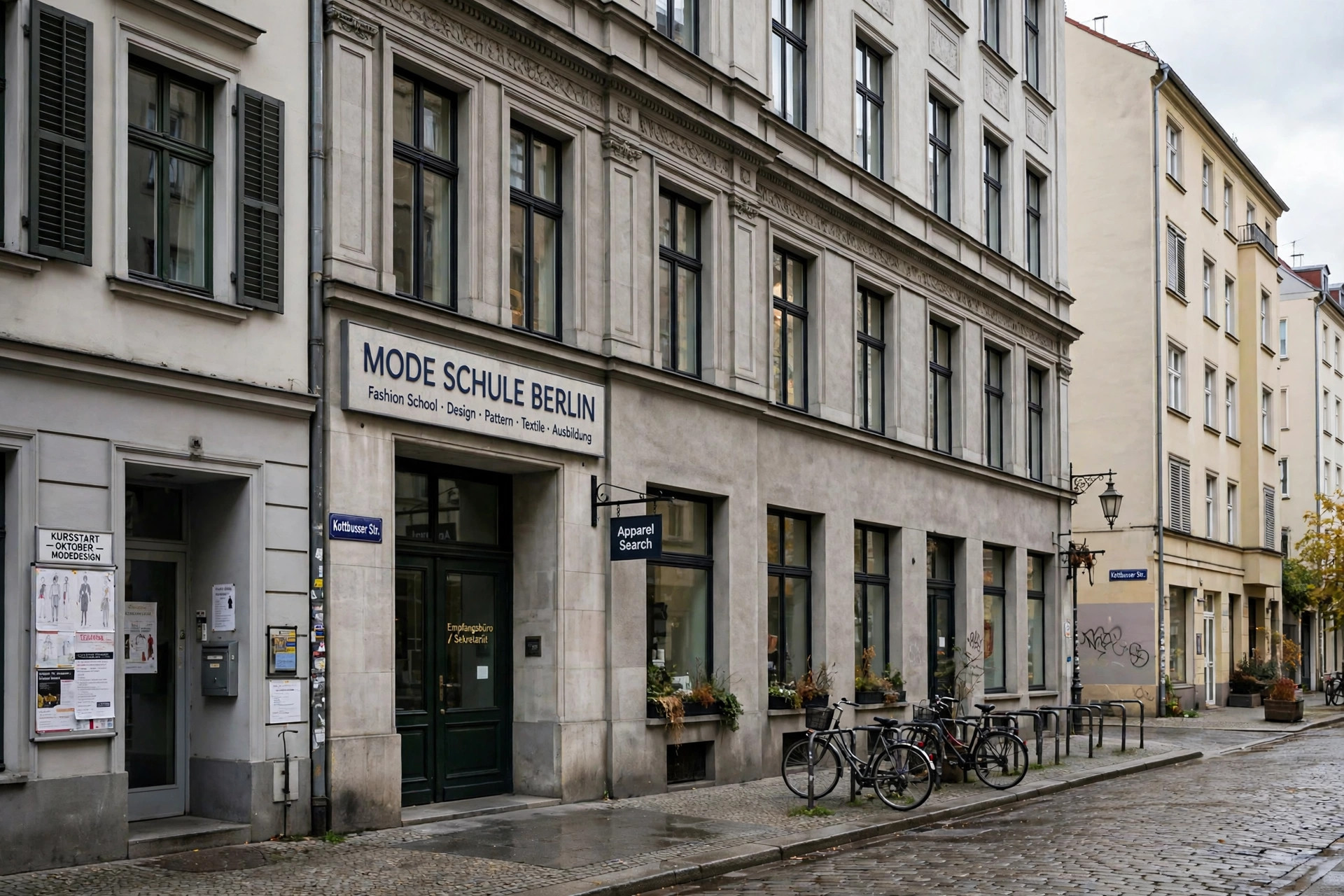
Germany offers fashion students something few countries can match: a serious apparel and textile industry, strong publicly funded universities, and a capital city with its own fashion identity. Berlin is the creative center, known for independent labels, streetwear, sustainable fashion research, and Berlin Fashion Week. Beyond Berlin, Düsseldorf is a long-established fashion trade and ordering city, Munich and Hamburg support major retail and media employers, and textile manufacturing regions give product-focused students access to real production knowledge.
The study routes are varied. Private academies such as AMD Akademie Mode & Design teach fashion design and fashion management across several German cities, with some programs taught entirely in English. Public art universities, including the Universität der Künste Berlin, teach fashion within a broader design degree and select students primarily on artistic talent, with teaching mainly in German. That mix means your first decision in Germany is not just which city, but which kind of institution: a practice-oriented private academy with industry semesters built in, or a public art university where admission is competitive, tuition is typically far lower, and German language skills are essential.
One caution belongs in every Germany search: school histories change. ESMOD Berlin, once a well-known name, closed in 2017, and its students completed their studies through AMD. Always verify that a school is currently enrolling on its own official website before building an application around it. The two institutions below are active, official, and verifiable routes into German fashion education today.
Fashion Schools in Germany
AMD Akademie Mode & Design
AMD Akademie Mode & Design is the design faculty of Fresenius University of Applied Sciences and one of Germany’s best-established private fashion academies, with campuses in Berlin, Hamburg, Düsseldorf, Munich, and Wiesbaden. Its bachelor’s offer includes Fashion Design (B.A.) and Fashion & Design Management (B.A.), both running over seven semesters. The management degree is practice-oriented, combines fashion design basics with business administration, marketing, and management, offers two-semester majors in areas such as sustainability, brand strategy, and staging, and includes a mandatory internship semester that students may take in Germany or abroad. AMD also teaches an English-language Fashion Design (B.A.) in Berlin, which makes it one of the more accessible German options for international applicants.
AMD suits students who want a structured, career-focused program with industry projects, an internship built into the degree, and a choice of fashion cities. Applicants interested in buying, product management, marketing, e-commerce, or brand roles will find the Fashion & Design Management degree a direct fit, while design applicants get a studio-based program with an international outlook.
Universität der Künste Berlin (UdK Berlin)
The Universität der Künste Berlin is Berlin’s public university of the arts. Within its Faculty of Design, fashion is taught through the Institute of Experimental Fashion and Textile Design as part of the Design bachelor’s and master’s programs, where students choose the Fashion and Product pathway. The bachelor’s degree runs for eight semesters and 240 credit points and leads to a Bachelor of Arts. Admission is based on artistic talent: applicants complete a homework assignment for pre-selection, then an entrance examination with a portfolio of roughly twenty independently produced works, and a six-week practical internship in a craft business such as a tailoring or sewing workshop must be proven by enrollment. International applicants need German at C1 level, with application possible at B2.
UdK Berlin suits students who want fashion taught as an experimental art and design discipline inside a large public arts university, alongside product design, communication design, and fine art. It is the right list-topper for applicants with strong portfolios and serious German, and its public-university status makes it a very different financial proposition from a private academy.
Studying Fashion in Germany
Berlin rewards self-starters. The city’s fashion scene is decentralized: independent studios, concept stores, vintage and upcycling businesses, sustainability consultancies, and fashion-tech startups sit alongside the showrooms and events of Berlin Fashion Week. Students who attend shows, volunteer backstage, join open calls, and build contacts across art, music, and film — all strong in Berlin — get far more from the city than students who only attend classes. Düsseldorf offers a contrasting education in the commercial industry, with trade fairs and ordering seasons that suit management and buying students, while Hamburg and Munich add publishing, retail headquarters, and agency work.
Language shapes your options more in Germany than almost anywhere else in Europe. English-taught programs exist, particularly in Berlin’s private sector, but public universities teach mainly in German, internships with German companies usually expect German, and daily life is far easier with the language. Treat German study as part of your fashion education, not an extra. Non-EU students generally need a student visa and a blocked account or other proof of funds; confirm the current amounts and rules with the German consulate and your university’s international office, since figures are updated periodically.
Working culture is another draw. German fashion employers value technical competence: pattern quality, fit, materials knowledge, and reliable production skills carry real weight alongside creative direction. Programs that include internship semesters, company projects, or craft internships give you evidence of that competence, and graduates often convert internships into first jobs. Sustainability is also a professional language in Germany, not a marketing extra, so expect serious teaching on materials, supply chains, and circular design wherever you study.
How to Choose and Apply
Decide first between the private-academy and public-university routes, because they ask for different things. Private academies such as AMD run structured admissions, accept international qualifications through defined equivalency routes, and include English-taught options and internship semesters; you pay tuition for that structure. Public art universities such as UdK Berlin select mainly on artistic talent through homework assignments, entrance examinations, and portfolios, expect advanced German, and require a short craft internship before or by enrollment.
- Check whether your school-leaving certificate is recognized as a German university entrance qualification, and what equivalency exam or preparatory route applies if it is not.
- Prepare your portfolio early: art universities ask for a defined number of independent works and set homework themes after application, with fixed January-to-February style application windows for winter intake.
- Confirm the language of instruction for your exact program and intake, and the certificate level required, before you apply.
- Compare total costs honestly: tuition where it applies, plus semester contributions, materials, housing, and visa proof-of-funds requirements.
- Ask each school how internships are found and credited, and whether placements are guaranteed or self-sourced.
For funding, look at each institution’s own financing pages, German public support schemes you may be eligible for, and scholarship databases for international students. Our guide to fashion school financial aid explains the main types of help in plain language; confirm eligibility and deadlines with the school and the relevant German authorities, because rules differ for EU and non-EU students.
Related Fashion School Guides
Compare study destinations and degree options before you apply. Start with the full directory of countries, then read the country guides that match the cities, languages, and industries you are most interested in.
- Fashion Schools by Location
- Fashion Schools in Japan
- Fashion Schools in Spain
- Fashion Schools in South Korea
- Fashion Schools in China
- Fashion Schools in Belgium
- Fashion Schools in the Netherlands
- Fashion Schools in France
- Fashion Schools in Italy
- Fashion Schools in the United Kingdom
- Bachelor of Fashion Degree Guide
Common Questions
Can I study fashion in Germany in English?
Yes, in some programs. AMD Akademie Mode & Design teaches an English-language Fashion Design bachelor's degree in Berlin and offers English-taught options within its wider program range. Public art universities such as the Universität der Künste Berlin teach mainly in German and require advanced German for admission. Check the language listed for your exact program and intake before applying.
Is ESMOD Berlin still open?
No. ESMOD Berlin closed on October 1, 2017, and its students were given the opportunity to complete their bachelor's degrees at AMD Akademie Mode & Design. ESMOD continues to operate schools in other countries, but there is no longer an ESMOD university in Berlin, so do not plan an application around it.
Do German fashion schools require a portfolio?
Art and design programs generally do. At the Universität der Künste Berlin, admission to the Design bachelor's program is based on artistic talent: a homework assignment for pre-selection, then an entrance examination with a portfolio of about twenty independently produced works. Private academies set their own admissions requirements, which are published on each program page, so check the current requirements for the degree you want.
What German level do I need for a public art university?
For the Design program at the Universität der Künste Berlin, international applicants need German at C1 level under the Common European Framework, although an application is possible with B2. Other German universities set similar advanced requirements for German-taught degrees. If your German is not yet at that level, an English-taught private program or a preparatory language year may be a more realistic first step.
Are public fashion programs in Germany cheaper than private academies?
Public universities in Germany are publicly funded and generally charge far lower student costs than private academies, which charge tuition for their programs. Exact fees, semester contributions, and living costs vary by institution and city and change over time, so compare the current figures published by each school and budget for materials, housing, and visa requirements as well as tuition.