Studying Fashion in Japan
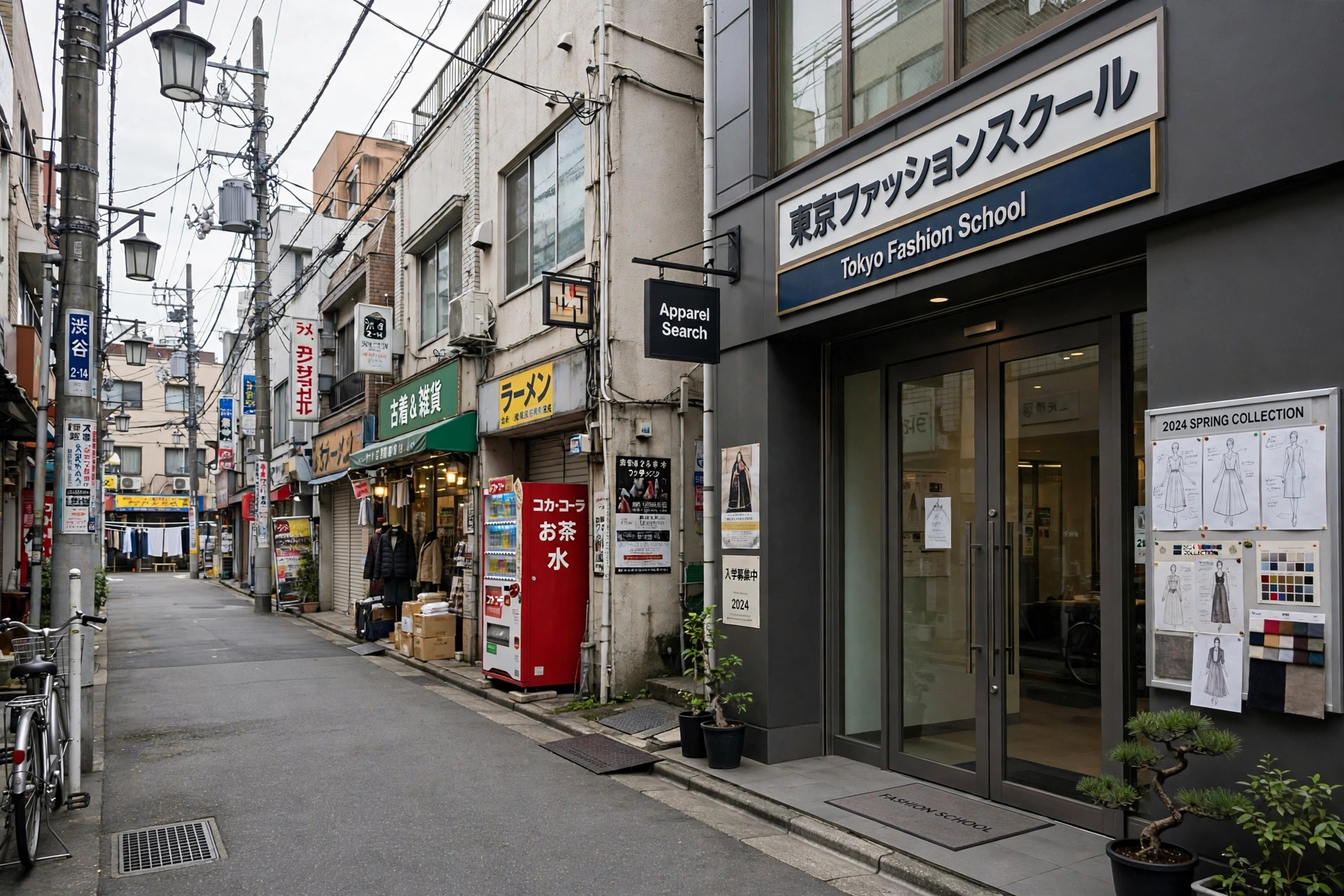
Japan offers fashion students a distinctive combination: highly developed specialist training in garment creation and pattern making, a large domestic apparel industry, and Tokyo neighborhoods where fashion culture is visible every day, from luxury flagships and department stores to independent boutiques and vintage shops. Most of the schools in this guide are in Tokyo, in or near Shinjuku and Shibuya, which puts students close to retailers, suppliers, exhibitions and part-time industry work.
Japanese fashion education divides broadly into vocational colleges, which train students intensively for industry jobs in design, technology, styling and distribution, and universities, which add academic study of fashion as culture and society. Knowing which type fits your goal matters more than any headline reputation: a student who wants to make garments professionally needs studio hours and technical depth, while a student who wants to research fashion, work in fashion media or study fashion business may prefer a university route. The schools below were each checked on their official sites.
Fashion Schools in Japan
Bunka Fashion College
Bunka Fashion College in Shinjuku, Tokyo, describes itself as Japan's first fashion school, founded as a small dressmaking school in 1919 and approved as a dressmaking school in 1923. Its English site organizes study into four departments. The Fashion Creation Department includes the two-year Garment Creation course and a one-year Intensive Garment Creation course for graduates. The Fashion Technology Department includes a four-year Creative Design Advanced Diploma and three-year courses. The Fashion Marketing and Distribution Department includes a four-year Global Fashion Business Advanced Diploma and the two-year Foundations of Styling and Distribution course. The Fashion Accessories and Textiles Department includes a three-year Fashion Textiles course and courses in Jewelry Design and Bag Design. The college suits students who want intensive, practical training across creation, technology, distribution or accessories, including beginners, since the college notes that most new entrants have no prior garment creation experience and classes run under a tutoring system.
Bunka Gakuen University
Bunka Gakuen University, part of the same Bunka Gakuen foundation, takes the university approach. Its Faculty of Fashion Science has two departments: the Department of Fashion Creation, for students who want to express their own fashion across specialized fields, and the Department of Fashion Sociology, which analyzes fashion through sociology, psychology, economics and history. The Faculty of Intercultural Studies includes the Department of International Fashion and Culture Studies. At graduate level, the Graduate School of Fashion and Living Environment Studies focuses on fashion and living environment research, including a Global Fashion Concentration taught in English within the master's program in Clothing Science Studies. The university suits students who want a bachelor or graduate degree that combines making with academic study of fashion, or who specifically want research-led study of fashion culture.
ESMOD Tokyo (ESMOD Japon)
ESMOD Tokyo, established in Harajuku in 1984 as the first ESMOD school outside France, teaches the Paris-based ESMOD curriculum in Ebisu, Shibuya. Its course list includes a Design and Creation Course, an English Course covering the same curriculum taught in English, a Paris Exchange Course with the third year at the Paris campus, a one-year Intensive Course for experienced students, Saturday and evening courses, and a CNAM Bachelor Course in innovation management run with the French Conservatoire National des Arts et Métiers. All students learn fashion design and pattern making, from concept through production. ESMOD Tokyo suits students who want a French design and pattern-making method taught in Tokyo, students who need instruction in English for the first years of study, and students hoping to continue to Paris.
Mode Gakuen
Mode Gakuen, founded in Nagoya in 1966, runs Tokyo Mode Gakuen in the Mode Gakuen Cocoon Tower in Shinjuku, a short walk from Shinjuku Station, with sister schools in Osaka and Nagoya. Its English site lists fashion subjects including Fashion Design, Advanced Pattern Making, Fashion Business and Stylist courses, within a wider vocational school that also teaches interior, graphic, makeup and hair subjects. Tokyo Mode Gakuen offers a four-year Fashion Design Department Advanced Diploma Course and a Fashion Business Department Advanced Diploma Course, alongside shorter diploma courses with majors such as Brand Designer, Apparel Designer, Costume Designer and Mens Designer, plus Advanced Pattern Making majors including 3D Digital Pattern Maker. Mode Gakuen suits students who want vocational training with a wide choice of fashion majors, cross-disciplinary classmates, and the school's stated support systems for international students, including Japanese language skill-up help and employment and visa support.
Studying Fashion in Tokyo: Practical Notes
Language is the central practical question. At Bunka Fashion College, main instruction is in Japanese, and international applicants should expect to need Japanese ability; the wider Bunka Gakuen foundation runs the Bunka Institute of Language on the same campus for students who need Japanese preparation first. Bunka Gakuen University's Global Fashion Concentration at graduate level is taught in English, while its undergraduate fashion faculties teach in Japanese. ESMOD Tokyo offers an English Course taught in English, notes that third-year classes are primarily in Japanese with English or French available when the instructor is foreign, and runs other courses in Japanese and English. Mode Gakuen provides a Skill Up Course to help international students improve Japanese proficiency. Check the language of the exact course you want, in writing, before applying.
Daily life in Tokyo is efficient and train-based, and schools cluster near major stations, which keeps commuting simple. Living costs, housing and visa rules change, so use each school's international student guidance and official Japanese immigration information rather than general advice. International students should also confirm in advance whether their student status allows part-time work and under what conditions, and should budget for materials: fashion students buy fabric, pattern paper, tools and art supplies throughout the year, on top of tuition and living costs.
Industry access is a genuine strength of studying in Tokyo. Students can visit flagship stores, exhibitions and trade events, study how Japanese retailers present product, and look for internships or entry roles with apparel companies. Vocational colleges in particular build employment support into the program, so ask each school how it helps international graduates with job hunting and work visa processes in Japan.
How to Choose and Apply
Start by deciding between vocational and university study, then compare the exact course, not just the school name. Read the curriculum year by year: how many hours go to pattern making, sewing and studio projects, and how much to business, theory or language? Check the award you will receive, such as a diploma, advanced diploma or bachelor degree, and whether it supports your plans for work or further study in Japan or at home. Visit open campus events if you can, or take an online consultation, and ask current international students about language support and workload.
Applications to Japanese schools usually follow the Japanese academic year, with entry in spring, and international applications often require language evidence, school records, a statement of purpose and, for design courses, sometimes creative work. Deadlines and document rules differ by school and by whether you apply from overseas or within Japan, so work from each school's current international admissions guide and leave extra time for visa processing. For money, compare total costs including materials and living expenses, ask about scholarships and tuition support for international students, and read the guide to fashion school financial aid for general financing questions to work through before you commit.
Related Guides
Common Questions
Do I need to speak Japanese to study fashion in Japan?
For most courses, yes. Bunka Fashion College and the undergraduate faculties of Bunka Gakuen University teach mainly in Japanese, so applicants usually need Japanese preparation first. Exceptions include ESMOD Tokyo's English Course, taught in English, and Bunka Gakuen University's graduate Global Fashion Concentration, taught in English. Always confirm the language of your exact course with the school.
What is the difference between Bunka Fashion College and Bunka Gakuen University?
Both belong to the Bunka Gakuen foundation. Bunka Fashion College is a vocational college offering intensive practical courses in garment creation, fashion technology, marketing and distribution, and accessories and textiles. Bunka Gakuen University is a university offering bachelor and graduate degrees, including Fashion Creation and Fashion Sociology, combining making with academic study of fashion.
Can international students study at Mode Gakuen in Tokyo?
Yes. Mode Gakuen's English site describes support systems for international students, including help with school life, housing, daily life, employment in Japan and visas, plus a Skill Up Course to improve Japanese proficiency. Tokyo Mode Gakuen offers fashion design, advanced pattern making, fashion business and stylist courses in Shinjuku.
Does ESMOD Tokyo let students study in Paris?
Yes. ESMOD Tokyo lists a Paris Exchange Course in which students follow the Tokyo curriculum in the first and second years and study at the Paris campus in the third year. The Tokyo school was established in 1984 as the first ESMOD school outside France and teaches the Paris-based ESMOD curriculum.
When should I apply to fashion schools in Japan?
Japanese schools generally enroll for a spring start to the academic year, and international applications require extra time for language evidence, documents and visa processing. Deadlines differ by school and course, so follow each school's current international admissions guide and start preparing well before the application window for your intended entry year.