Why Study Fashion in China
China is one of the world's great centers of clothing and textile production, and studying fashion there puts you close to the factories, fabric markets, brands and design studios that supply much of the global industry. A fashion student in China does not just learn how a garment is designed; there are real opportunities to see how it is patterned, sampled, costed, manufactured and shipped. That combination of creative training and direct exposure to production is the strongest reason to consider China for a fashion education.
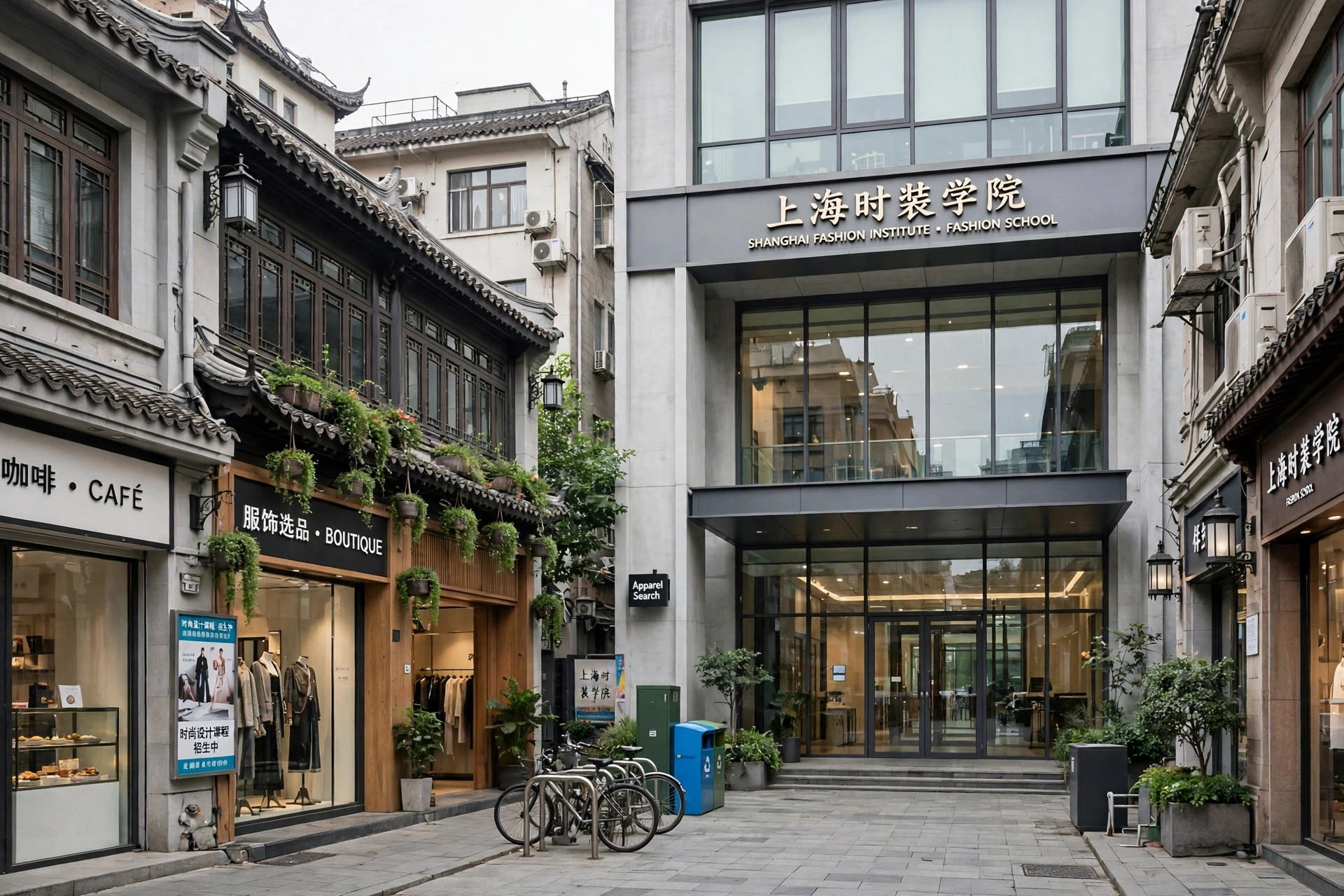
Three cities anchor this guide. Shanghai is China's fashion and retail capital, home to design-led universities, international brands and a busy calendar of fashion events. Beijing, the capital, combines a specialist fashion university with fashion media, communication and cultural institutions. Hangzhou, in the Yangtze River Delta near major textile and garment clusters, is home to one of China's leading art academies, where fashion is taught as an art and design discipline.
One point of geography matters before you apply. Mainland China and Hong Kong operate as separate education destinations, with different institutions, admissions systems and directories. Hong Kong has its own fashion schools and its own guide on Apparel Search, linked at the bottom of this page, so treat the two as separate choices and research each on its own terms.
Fashion Schools in China
Donghua University — College of Fashion and Design (Shanghai)
Donghua University's College of Fashion and Design describes itself as one of the earliest established fashion disciplines in China, and its structure shows how seriously the university takes both sides of the subject. The college includes a Department of Fashion Design and Engineering and a Department of Fashion Art Design, alongside departments for visual communication, environmental design and product design. Its undergraduate majors include Fashion Design and Engineering and Fashion and Clothing Design, and the Fashion Design and Engineering pathway runs through bachelor's, master's and doctoral levels.
That mix suits students who want creative design training backed by real technical depth: pattern, garment technology, materials and the engineering side of how clothing is made. The college also runs a Sino-Japanese cooperation project in Fashion and Clothing Design organized with Japan Bunka Gakuen, which gives interested students an international dimension within a Shanghai degree. If your ambition is to design with a manufacturer's understanding of production, Donghua is the natural first school to examine in this guide.
Beijing Institute of Fashion Technology (Beijing)
The Beijing Institute of Fashion Technology (BIFT) is a specialist university devoted to fashion, and its English-language program pages show an unusually complete view of the industry. Its flagship bachelor's program in Fashion and Costume Design covers directions that include womenswear, menswear, knitwear, sportswear, digital fashion, heritage fashion, and costume design for stage and screen. A separate Fashion Design and Engineering bachelor's program teaches garment design, pattern making, production processes and apparel technology, including CAD and intelligent manufacturing.
BIFT also teaches the business and media sides of fashion, with bachelor's programs in Fashion Communication and in Marketing with a Fashion Brand Management focus, plus a School of Fashion Communication covering communication, advertising, photography and fashion performance. Students who want one institution where design, engineering, branding and media sit side by side — in the capital, close to national media and cultural organizations — will find BIFT the broadest option in this guide.
China Academy of Art — School of Fashion Design (Hangzhou)
The China Academy of Art (CAA) in Hangzhou approaches fashion from the art academy tradition. Its School of Fashion Design offers a Fashion and Accessories Design program across undergraduate, master's and doctoral levels, organized around two departments — Fashion Design, and Textile Design and Interior Design — and three program tracks: Fashion Design, Textile Design, and Interior Textile Design.
The school emphasizes Oriental design studies, interdisciplinary work with emerging digital technologies, and the building of original fashion brands with a strong cultural identity. Its project-based curriculum connects fashion design, research and industry, and Hangzhou's position in the Yangtze River Delta places students near a dense textile and garment industry. CAA suits students who think of fashion first as an artistic and cultural practice, and who want a fine-art environment rather than a purely commercial or engineering-led one.
Studying Fashion in China
Student life differs sharply by city. Shanghai offers the most international environment, with design studios, flagship retail and fashion events woven into daily life. Beijing offers the capital's museums, media organizations and cultural institutions, plus the community of a specialist fashion campus. Hangzhou is smaller and greener, known for West Lake and a strong art academy atmosphere, while remaining a short trip from Shanghai and from the region's textile towns.
Industry access is China's great advantage. Depending on your program, coursework and projects can connect you with garment manufacturers, textile suppliers and brands, and the Yangtze River Delta and other manufacturing regions make factory visits and sourcing trips practical in a way that is difficult in most fashion capitals. Internships are arranged through each university, so ask any school you consider how placements work for your specific program and student status.
Language deserves honest attention. Many programs in mainland China are taught primarily in Mandarin, while some universities offer English-taught, bilingual or international cooperative options for particular programs. Check the language of instruction for the exact program you want, and be realistic: even where classes are in English, Mandarin transforms your internship options, factory visits and daily life. International students apply through each university's international college or admissions office and arrange a student visa through the normal channels, so start paperwork early.
How to Choose and Apply
Start with the kind of fashion professional you want to become. Choose an engineering-strong program if you care about pattern, construction, materials and production; choose an art academy if your priority is concept, culture and an original design voice; choose a specialist institute with business and media programs if you may move between design, branding and communication. Then compare cities, because in China the city itself is part of the education.
Expect application requirements to center on your academic record and, for design programs, a portfolio of drawing and design work; some art programs also involve drawing or design examinations, and international applicants usually provide language evidence for the language of instruction. Deadlines, documents and entrance requirements are set by each university and change by intake, so work only from the official admissions pages of the schools on your shortlist.
Finally, budget honestly for tuition, housing, materials and portfolio production, and research what funding, scholarships or part-time options are actually open to you. Our fashion school financial aid guide explains the main types of student funding and the questions to ask any school's admissions office before you commit.
Related Fashion School Guides
- Fashion Schools by Location
- Fashion Schools in Japan
- Fashion Schools in Spain
- Fashion Schools in Germany
- Fashion Schools in South Korea
- Fashion Schools in Belgium
- Fashion Schools in the Netherlands
- Fashion Schools in France
- Fashion Schools in Italy
- Fashion Schools in the United Kingdom
- Bachelor's Degree in Fashion
- Fashion Schools in Hong Kong
Common Questions
What are the main cities for studying fashion in China?
Shanghai, Beijing and Hangzhou are the main cities covered in this guide. Shanghai is China's fashion and retail capital, Beijing is home to a specialist fashion university and national media and cultural institutions, and Hangzhou hosts a leading art academy near the textile and garment clusters of the Yangtze River Delta.
Are fashion programs in China taught in English?
Many programs in mainland China are taught primarily in Mandarin, while some universities offer English-taught, bilingual or international cooperative options for particular programs. Always confirm the language of instruction for the exact program you are applying to, directly with the university.
What is the difference between fashion design and fashion design and engineering in China?
Fashion design programs focus on creative collection development, drawing and design identity. Fashion design and engineering programs add the technical side of the industry, including pattern making, garment construction, materials, production processes and apparel technology, so graduates understand both how a garment is imagined and how it is made.
How is studying fashion in mainland China different from Hong Kong?
Mainland China and Hong Kong are separate education destinations with different institutions and admissions systems. Hong Kong has its own fashion schools and its own directory on Apparel Search, so research it as a separate choice rather than assuming a mainland application covers both.
What should I prepare to apply to a fashion school in China?
Prepare your academic records, a portfolio of drawing and design work for design programs, and language evidence for the language of instruction. Some art programs also involve drawing or design examinations. Requirements and deadlines are set by each university, so follow the official admissions pages of your shortlisted schools.