Why Study Fashion in Spain?
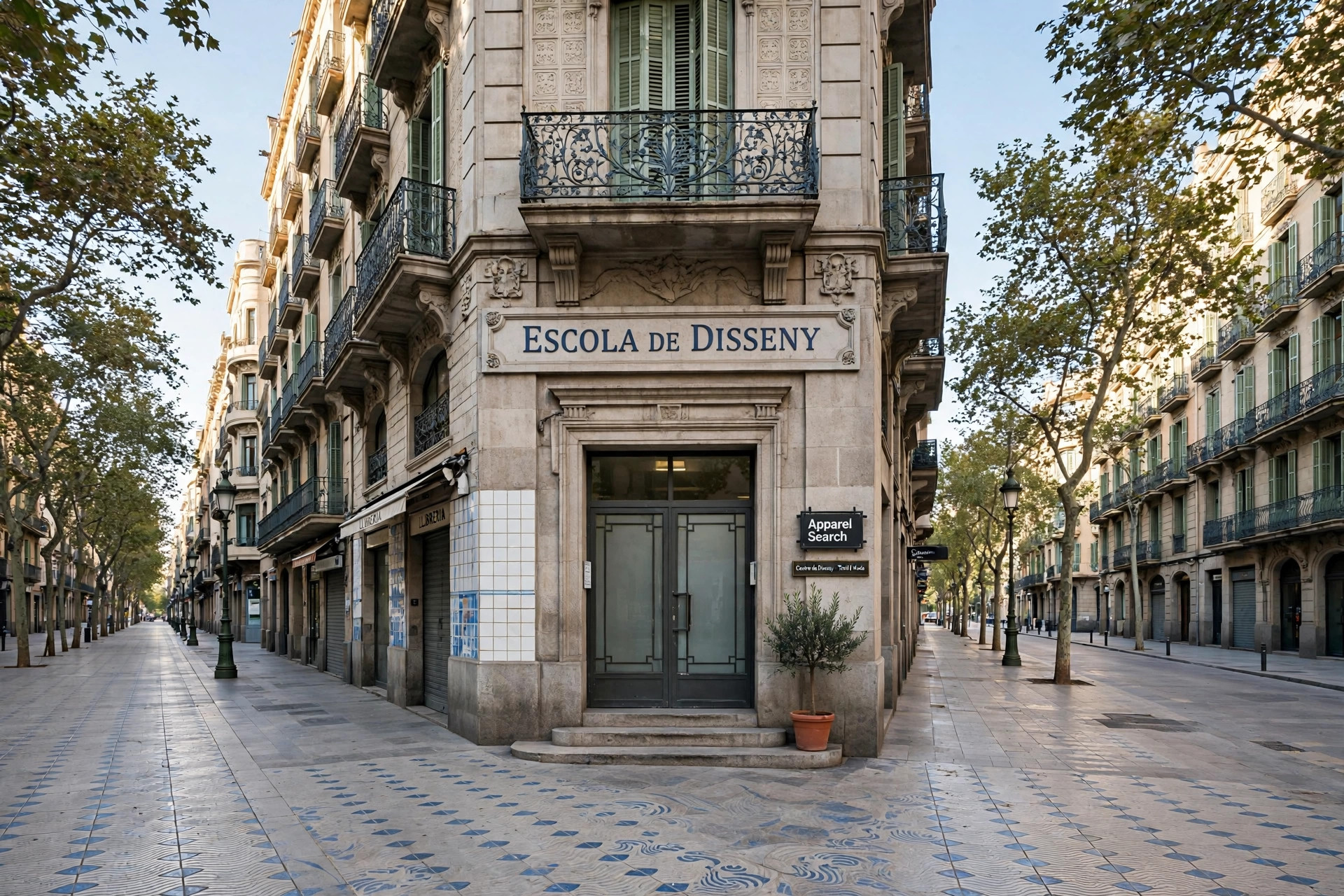
Spain gives a fashion student two complementary capitals of style. Madrid is the country’s business and media center, home to Mercedes-Benz Fashion Week Madrid and the head offices of major Spanish fashion groups. Barcelona is the design-led Mediterranean city, with a deep textile heritage in Catalonia, a strong independent designer scene, and events that put student work in front of buyers and press. Studying in either city puts you inside a working industry rather than beside it: garment districts, fabric suppliers, ateliers, showrooms, and retail flagships are part of everyday student life.
Spanish fashion education also spans a useful range of formats. You can follow an official university-style degree in design with a fashion specialization, study at an international design network school with campuses in both Madrid and Barcelona, or choose a fashion-focused school in Barcelona with its own bachelor’s and master’s programs in design, styling, and marketing. Many programs are taught in Spanish, some offer English-language pathways, and degrees structured around the European Credit Transfer System (ECTS) are recognized across the European Higher Education Area, which makes later study or work elsewhere in Europe easier to plan.
Costs of living, climate, and culture matter too. Students consistently find Spanish cities welcoming and comparatively manageable next to Paris or London, and the country’s strong footwear, textile, and fast-fashion manufacturing base means internships can cover everything from couture-level craft to high-volume product development. The three schools below are established, verifiable starting points for a serious application list.
Fashion Schools in Spain
IED Istituto Europeo di Design — Madrid and Barcelona
IED is an international design education network, founded in Italy, with Spanish schools in both Madrid and Barcelona. Its four-year Bachelor of Arts in Fashion Design is an official degree in higher artistic education in design, built on 240 ECTS credits and recognized throughout the European Higher Education Area. In Madrid, the program is offered with a specialization in Fashion Styling and Communication, taught in Spanish, and covers design fundamentals, pattern design and garment making, styling, materials and technology applied to fashion design, and design management. Students work in fashion workshops equipped for sewing, knitting, embroidery, and digital experimentation, and finish with a supervised internship and a final degree project.
IED suits students who want a structured, project-based degree inside a large international network, with the option to experience two different Spanish fashion cities. Applicants drawn to the communication side of the industry — editorials, campaigns, art direction, and brand content — will find the styling and communication specialization especially relevant, while the shared design core still teaches garment construction skills.
ESDi School of Design — Sabadell (Barcelona)
ESDi, the Escola Superior de Disseny, is a university-affiliated design school based in Sabadell, in the Barcelona metropolitan area, with additional fashion training activity in Barcelona itself. Its Bachelor’s Degree in Design is an official university qualification awarded by Ramon Llull University, runs for four academic years and 240 ECTS credits, and is accredited by AQU Catalunya, the Catalan university quality agency. Students share a common design foundation in the early years, then specialize; Fashion Design is one of the named specializations, alongside graphic, product, interior, and audiovisual design. The degree includes mandatory company internships, with the option of additional extracurricular placements, and teaching is offered in Spanish, Catalan, and English.
ESDi suits students who want fashion studied as one discipline within a broad university design education, with a textile-industry heritage behind the school and a final degree project that pulls research, materials, and collection development together. Its Sabadell base also places students in a historic Catalan textile town a short train ride from central Barcelona.
LCI Barcelona
LCI Barcelona is the European campus of the LCI Education network and an official school of higher education in design, located in Barcelona’s 22@ innovation district. Its fashion school offers a Bachelor’s Degree in Fashion Design taught in English or Spanish over four years, introducing students to the creative and professional realities of the industry and building toward a finished portfolio. The wider fashion offer at LCI Barcelona spans fashion design, pattern making, styling, and marketing programs, including a master’s degree in fashion design and a higher technical education program in Pattern Making and Fashion for students who want a shorter, workshop-intensive route.
LCI Barcelona suits internationally minded students who want to study in English in Barcelona while still learning in a school with deep local roots in fashion education. The mix of degree, master’s, and technical programs on one campus also makes it a practical choice for students who may later add a styling, marketing, or digital fashion specialization.
Studying Fashion in Spain
Day-to-day study in Spain is studio-centered. Expect long project blocks in pattern and sewing workshops, regular critiques, and final collections or presentations that are shown rather than simply handed in. Madrid students can attend fashion week events, design festivals, and exhibitions in a capital city with a dense calendar; Barcelona students get a city where modernist architecture, textile museums, and independent boutiques make visual research easy on any budget. Both cities have strong public transport, large student populations, and neighborhoods at many price levels, though central rents rise quickly, so housing research should start as early as the application itself.
Language is the biggest practical decision. Many Spanish degrees are taught mainly in Spanish or, in Catalonia, partly in Catalan, while selected programs offer English-taught pathways. Even where your program is in English, everyday life, internships, and part-time work all run in Spanish, so arriving with some Spanish — and improving it while you study — noticeably widens your internship options. Students from outside the European Union generally need a student visa and should confirm current requirements, proof-of-funds rules, and work permissions with the Spanish consulate and the school’s international office well before enrollment.
Industry access is a genuine strength. Spain is home to global retail groups, a major footwear industry, and strong textile production in Catalonia and Valencia, so internships range from design studio assistance and product development to visual merchandising, buying support, and fashion communication. Schools build company projects and mandatory or optional internships into their programs; treat those placements seriously, because Spanish fashion employers hire heavily from the interns they already know.
How to Choose and Apply
Start by deciding what kind of fashion professional you want to become. A design degree with heavy pattern making and garment construction prepares you to design collections; a styling and communication pathway prepares you for editorials, campaigns, and brand content; a management-leaning program prepares you for buying, marketing, and product roles. Then compare the practical details: the language of instruction, whether the qualification is an official degree recognized across Europe, the workshops and equipment you will actually use, how internships are arranged, and what the final project involves.
- Build a portfolio that shows process, not just finished pieces: research, sketches, fabric experiments, and photographs of garments you have made.
- Check each school’s own admissions page for its current portfolio format, entry qualifications, and application windows, which differ between public-style and private institutions.
- Confirm the exact language of every module you plan to take, not just the headline language of the program.
- Budget for materials, printing, and final-collection costs on top of tuition and rent.
- Ask how the school supports non-EU students with visas, housing, and internship paperwork.
Funding deserves early attention as well. Schools publish their own scholarship and grant information, and public and regional aid may apply to official degrees. Read our guide to fashion school financial aid for a plain-language overview of grants, scholarships, and loans, then confirm every figure and deadline directly with the school you are applying to.
Related Fashion School Guides
Compare study destinations and degree options before you apply. Start with the full directory of countries, then read the country guides that match the cities, languages, and industries you are most interested in.
- Fashion Schools by Location
- Fashion Schools in Japan
- Fashion Schools in Germany
- Fashion Schools in South Korea
- Fashion Schools in China
- Fashion Schools in Belgium
- Fashion Schools in the Netherlands
- Fashion Schools in France
- Fashion Schools in Italy
- Fashion Schools in the United Kingdom
- Bachelor of Fashion Degree Guide
Common Questions
Can I study fashion in Spain in English?
Yes, in selected programs. LCI Barcelona offers its Bachelor's Degree in Fashion Design in English or Spanish, ESDi teaches in Spanish, Catalan, and English, and IED lists Spanish-language fashion degrees in Madrid alongside English-taught options elsewhere in its network. Always confirm the language of the specific program and intake you are applying to, because it varies by course.
Are Spanish fashion degrees recognized in other countries?
Official Spanish design degrees built on the European Credit Transfer System, such as the 240 ECTS bachelor's degrees at IED and ESDi, are valid throughout the European Higher Education Area and are equivalent to official university degrees, which makes them widely understood by employers and universities across Europe. Recognition outside Europe is decided by each institution or employer, so check before you enroll if you plan to use the degree elsewhere.
Do I need a portfolio to apply to a fashion school in Spain?
For design-focused degrees, expect to show creative work. Schools assess applicants through a mix of academic qualifications, a portfolio or creative exercise, and sometimes an interview, and the exact format is published on each school's admissions pages. A strong portfolio shows your design process, including research, drawing, textile experiments, and any garments you have made, rather than only polished final images.
What is the difference between studying fashion in Madrid and Barcelona?
Madrid is Spain's business and media capital and hosts Mercedes-Benz Fashion Week Madrid, which suits students interested in fashion communication, styling, and the commercial side of the industry. Barcelona is a design-led Mediterranean city with a deep Catalan textile heritage and a strong independent designer scene, which suits students drawn to design, craft, and textile innovation. Several schools operate in both cities, so you can also start in one and visit or transfer within a network.
Can international students work or intern while studying in Spain?
Internships are built into many Spanish fashion programs: ESDi includes mandatory company internships in its design degree, and IED's fashion degree finishes with a supervised internship. Paid work alongside study is regulated for non-EU student visa holders, and the rules change over time, so confirm your current permissions with the Spanish consulate and your school's international office before relying on part-time income.