Children's Fashion Designer Jobs
Design careers in children's clothing — playful ranges built around fit, safety and growing bodies
Designing children's clothing is its own discipline inside fashion design. A childrenswear designer creates garments for customers who cannot describe what fits, will test every seam in the playground, and will outgrow the result within the year. The work blends the creative side of fashion — color, print, character and story — with hard practical requirements: soft and safe fabrics, closures small hands can manage, room to move and grow, and construction that survives constant washing.
This guide covers the designer jobs that exist in the children's market, from baby and layette design through girls, boys and licensed ranges, the employers who hire childrenswear designers, and the portfolio and technical skills that get candidates noticed. It also carries the career-search resources assembled for children's fashion design, including the childrenswear designer job description, so the expectations behind the job titles are clear before you apply.
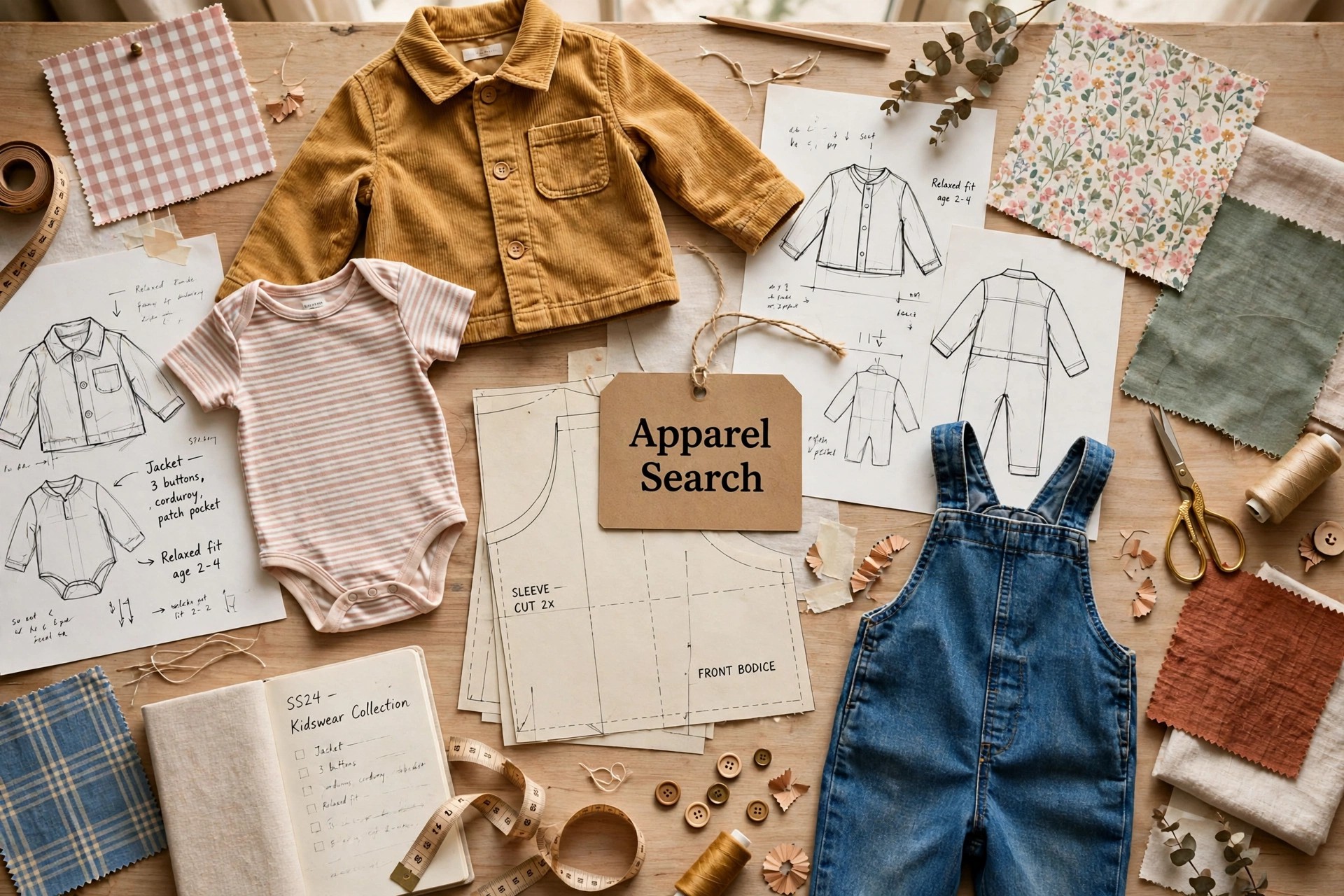
Find Current Children's Fashion Designer Job Listings
Apparel Search researches careers rather than posting openings, so the live listings sit with the job boards. These searches track current Children's Fashion Designer job listings:
The Work of a Childrenswear Designer
Childrenswear designers research each season's direction — colors, prints, graphics and themes that will appeal to children and to the adults buying for them — then sketch ranges, choose fabrics and trims, and work with pattern makers and sample rooms to turn drawings into garments. Age grading shapes everything: a design for a baby centers on soft seams, easy diaper access and no detachable parts; a design for a seven-year-old centers on movement, reinforced knees and closures that encourage dressing independently; older girls and boys ranges begin to follow fashion trends more closely while still answering to parents on price and practicality.
Licensed design is a large part of the children's market: characters from entertainment properties appear on everything from sleepwear to backpacks, and designers in licensed teams work within style guides while keeping garments age-appropriate. Technical work matters as much as sketching — size specifications, grading rules and fit sessions on child-size forms are how a design becomes a range that fits across the whole size run.
Who Employs Children's Fashion Designers
Children's clothing brands and manufacturers employ the largest design teams, followed by retailers developing their own-label children's ranges, licensed apparel companies, and suppliers who design and make clothing for store brands. Freelance and contract designers are common in this market, particularly for print, graphic and character artwork. Design roles divide into designer, assistant designer and technical designer grades, with print and graphic specialists sitting alongside garment designers in bigger studios.
Building a Route Into Children's Design
A fashion design education with a portfolio that includes a children's project is a strong start, but employers in this market look for evidence that a designer understands children as wearers: safe construction, sensible fabrics, realistic sizing and designs parents will actually buy. Assistant designer and design-room roles inside childrenswear companies are the standard entry point, and print and textile designers often cross into the children's market because surface pattern carries so much of a children's range. Keep your portfolio honest about the age group each design is for — a buyer or head of design reading it will judge the work against that child's real proportions and needs, not against adult fashion.
Designing for Play, Growth and the Wash Cycle
Three tests decide whether a children's design succeeds, and none of them is how it looks on a hanger. The play test: can a child run, climb, crawl and fall in it without the garment fighting back — reinforced knees, secure fastenings, no scratchy seams against skin. The growth test: does it forgive a growth spurt — adjustable waists, turn-up hems, stretch where it matters — so the garment earns its price before it is outgrown. The wash test: does it survive the laundry reality of family life, colors and prints intact, without special care no parent has time for. Designers who build those tests into their sketches — and can show them in a portfolio — are the ones childrenswear studios hire, because they are designing for the child who will wear the garment, not only for the adult who will admire it.
Common Questions
What makes designing children's clothes different from adult fashion design?
Fit, safety and practicality lead. Garments must suit growing bodies across many size grades, use safe fastenings and fabrics, allow movement and frequent washing, and appeal to both the child wearing them and the adult paying — a double audience adult design does not have.
Do childrenswear designers need a different portfolio?
Yes — show children's work at the right proportions for the age group, with the construction thinking visible: closures a child can manage, growth allowances, durable details and prints at the right scale. A children's project in the portfolio tells an employer you understand the market's specific demands.
Who hires children's fashion designers?
Children's brands and manufacturers, retailers with own-label children's ranges, licensed apparel companies and suppliers making store-brand clothing. Freelance work is common for print, graphic and character design within the children's market.
More to Explore
- Children's Clothing Jobs
- Fashion Careers by Category
- Fashion Careers by State
- Fashion Careers
- Fashion Jobs
- Employment Agencies
- Fashion Job Search
- View Fashion Jobs
- fashion designer definition
- fashion designers by name
- Children's Clothing Buyers Jobs
- Childrenswear Fashion Merchandiser Jobs
- Childrenswear Sales Jobs
- Search Job Categories
- Job Search Engines
- Fashion Career Internships
- Message to Employees About Fashion Career
- Message to Employers About Employees