Childrenswear Sales Jobs
Sales careers in children's clothing — showroom selling to retailers and store careers serving families
Childrenswear sales jobs come in two distinct forms. Wholesale and showroom salespeople sell children's clothing lines to retail buyers — presenting ranges, taking orders and looking after store accounts season after season. Retail salespeople work the other side of the counter, helping parents and gift buyers find the right garment in the right size inside children's stores and departments. Both are real careers with ladders to climb, and both reward the same underlying knowledge: children's sizing, the seasonal calendar, and what families actually need from clothing.
This page explains both branches of childrenswear selling, the employers behind them, and how candidates get started. It carries the sales job-search resources for the children's market, including the children's wear sales job description, which sets out the wholesale side of the role in detail.
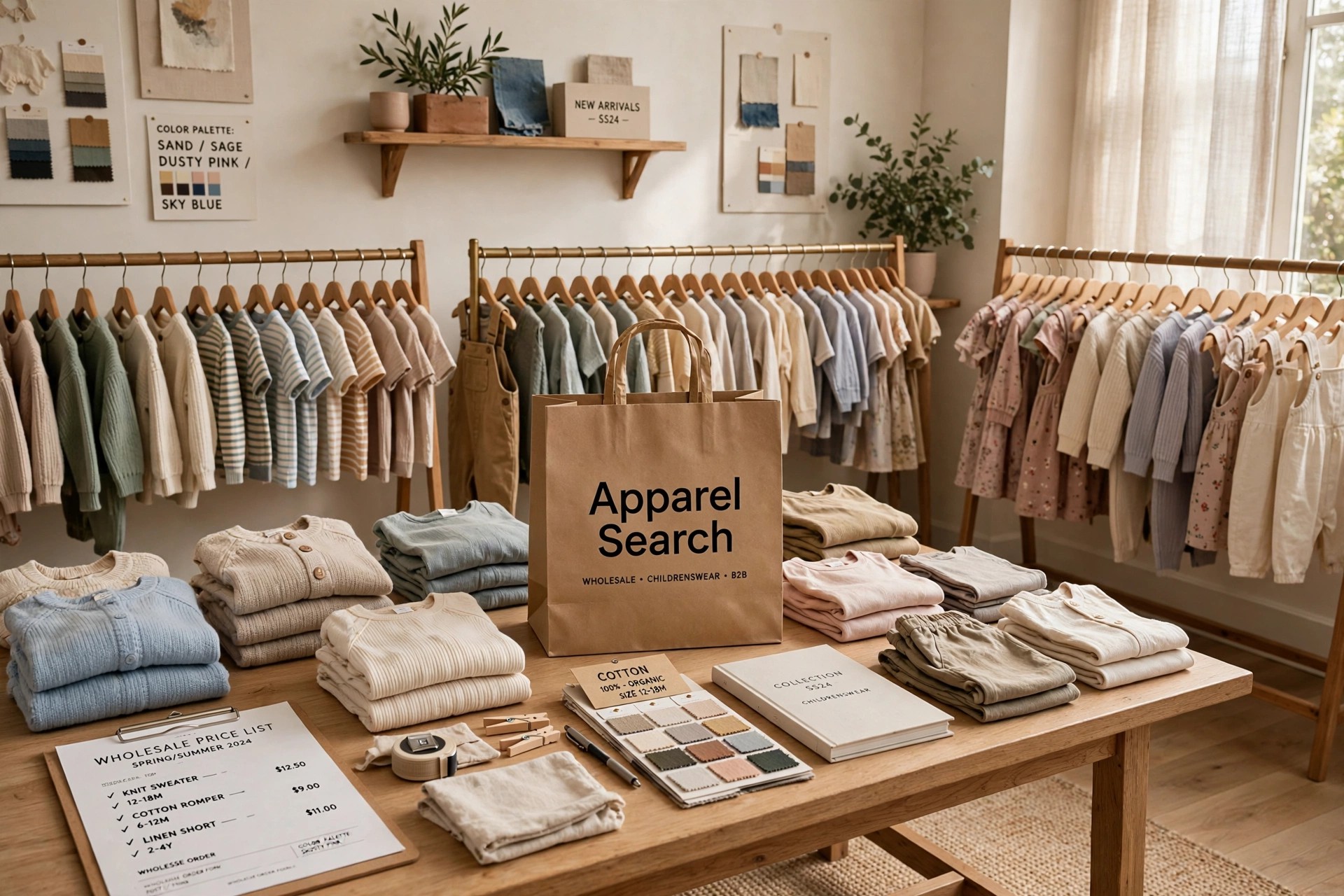
Find Current Childrenswear Sales Job Listings
Apparel Search researches careers rather than posting openings, so the live listings sit with the job boards. These searches track current Childrenswear Sales job listings:
Wholesale and Showroom Sales in Childrenswear
Wholesale sales staff represent a children's brand or manufacturer to the trade. Their season is built around selling appointments and trade shows, where they present the coming range to retail buyers, explain price points, size runs and delivery dates, and write orders. Between seasons they manage accounts: checking how lines are trading in stores, arranging replenishment of core sizes, and feeding buyer reactions back to design and merchandising. Territory representatives cover a region of independent children's shops; national account staff handle the chains. The job suits people who like product, travel and long-term relationships — a good representative may sell to the same children's stores for years, and trust in their judgment about what will sell is the currency of the role.
Children's lines have their own selling language: size runs rather than single sizes, growth and durability stories for parents, schoolwear programs and licensed ranges. A salesperson who can talk a buyer through a size curve and a back-to-school delivery schedule is selling competence, not just clothing.
Retail Sales Careers in Children's Stores
In stores, childrenswear sales roles run from sales associate through department specialist to children's department and store management. The work centers on service to families: fitting shoes and garments, advising on sizes with growth room, handling school uniform programs, and managing the intense back-to-school and holiday peaks. Children's retail is often a first fashion job, and it teaches the market from the customer's side — experience that employers in childrenswear buying, merchandising and wholesale sales all recognize, because it is where the industry's assumptions about sizes, prices and parents get tested daily.
Getting Into Childrenswear Sales
Wholesale roles usually ask for sales experience, ideally with product or territory selling, and a driving-based territory role needs the practical ability to cover it. Retail roles are the accessible entry point and the training ground. Either way, learn the market's vocabulary before interviews: age and size systems, the schoolwear calendar, safety talking points and the main children's brands in the employer's segment. Candidates who can discuss how a range sells by size — not only how it looks — stand out in both branches of childrenswear sales.
What Children's Buyers Expect From a Salesperson
Retail buyers of children's clothing judge salespeople on a short list of practical virtues. Know your size runs cold — which sizes your line is deep in, where it runs small or large, and how your grading compares with the store's other brands. Respect the calendar: a back-to-school range presented late is a range that will not be bought, whatever its merits. Talk about the parent, not only the garment — washability, durability, safety details and price per wear are the arguments that sell children's clothing in the store, so they are the arguments that sell it into the store. And service the account after the order: the representative who checks how sizes are selling in October is the one whose spring range gets heard properly in November.
Common Questions
What is the difference between wholesale and retail childrenswear sales jobs?
Wholesale salespeople sell children's lines to retail buyers at showrooms and trade shows and manage store accounts; retail salespeople sell to families inside children's stores and departments. Both have career ladders — wholesale leads to territory and national account roles, retail to department and store management.
Do childrenswear sales jobs require fashion experience?
Retail sales roles often do not and are a common first fashion job. Wholesale and showroom roles usually expect sales experience and product knowledge, since the representative advises buyers on ranges, size runs and delivery programs.
What knowledge matters most in childrenswear selling?
Children's sizing systems and growth patterns, the back-to-school and holiday calendar, safety and durability talking points parents care about, and the structure of size runs for wholesale orders. That market knowledge is what separates a childrenswear salesperson from a general salesperson.
More to Explore
- Children's Clothing Jobs
- Fashion Careers by Category
- Fashion Careers by State
- Fashion Careers
- Fashion Jobs
- Employment Agencies
- Fashion Job Search
- View Fashion Jobs
- Children's Clothing Buyers Jobs
- Children's Fashion Designer Jobs
- Childrenswear Fashion Merchandiser Jobs
- Search Job Categories
- Job Search Engines
- Fashion Career Internships
- Message to Employees About Fashion Career
- Message to Employers About Employees