Men's Fashion Designer Jobs
Design careers in menswear — silhouette, cloth and construction inside a steadier design cycle
Menswear design works inside a different rhythm from womenswear. The men's designer designs for customers who buy less often, keep garments longer and notice changes in fit and cloth before they notice changes in silhouette. The craft sits in the details: the roll of a lapel, the weight of a flannel, a collar that sits correctly, knitwear that holds its shape. Designer jobs in menswear span tailoring houses, casual and denim brands, shirting specialists, knitwear companies, sportswear labels and retailers' own-label studios.
This guide covers what menswear designers do, where they work, and how design careers in the men's market are built. It carries the menswear design career resources for this category, including the menswear designer job description, so the expectations behind the title are visible before you apply.
Find Current Men's Fashion Designer Job Listings
Apparel Search researches careers rather than posting openings, so the live listings sit with the job boards. These searches track current Men's Fashion Designer job listings:
The Work of a Menswear Designer
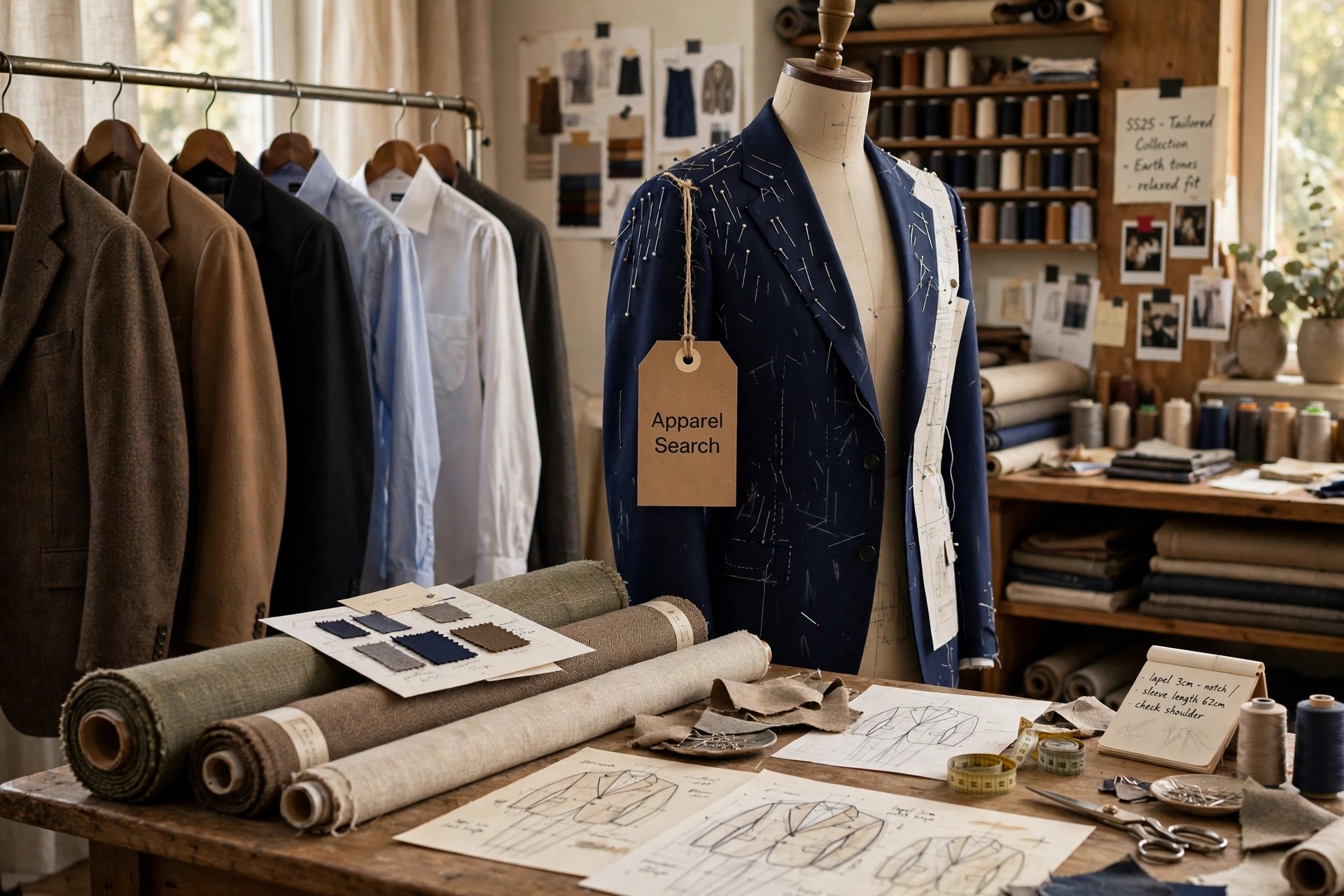
A menswear designer develops ranges season by season: researching direction — often fabric-led, starting from mill ranges and cloth stories — sketching garments, specifying construction and trims, and working with pattern cutters and sample machinists through fittings until each piece sits and wears as intended. Tailoring designers live in construction detail: canvassing, shoulder shape, lapel and pocket placement, trouser fits. Casualwear and denim designers work more with wash, graphics and branding; knitwear designers with yarn, gauge and stitch. Across all of them, technical packs and specifications carry the design into production, and cost engineering — hitting a price without gutting the garment — is a daily design skill, not an afterthought.
Because men's ranges carry core styles forward, designers also manage continuity: improving a proven shirt block, extending a successful knit program, refreshing color and cloth inside silhouettes customers already trust. That blend of new design and custodianship of standards is characteristic of the men's market.
Who Employs Menswear Designers
Menswear brands, tailoring and shirting specialists, denim and casualwear labels, knitwear manufacturers, sportswear companies and retailers designing own-label men's ranges all employ menswear designers. Freelance designers serve smaller labels and specific categories, and print and graphic designers feed the casual and sportswear end of the market. Studios divide work into designer, assistant designer and technical designer roles, with heads of design setting range direction.
Building a Menswear Design Career
Portfolios for menswear roles are judged on garment realism: correct proportions, believable construction, fabric choices that suit the garment, and ranges that hang together commercially. Tailoring knowledge is the market's premium skill — designers who understand pattern, fit and make are scarce — and it is built through assistant roles in tailoring-led studios, sample rooms and technical design. Assistant designer posts in menswear brands are the standard entry; from there designers specialize by category (tailoring, shirting, knitwear, denim, outerwear) and that specialization, more than general fashion flair, is what senior menswear design hiring rewards.
Fabric-Led Design: How Men's Ranges Really Begin
In many menswear studios the range does not begin with sketches; it begins with cloth. Designers visit mills and fabric fairs first, handling shirting, flannel, tweed, denim and jersey, and the season's direction — its weights, textures and color stories — comes out of what the mills are offering and what the brand can afford to buy. Only then do silhouettes and details get drawn, inside the possibilities the fabrics set. This is why fabric knowledge is tested so hard in menswear design interviews, and why junior designers are encouraged to spend time in fabric libraries and on mill visits: in menswear, the designer who knows cloth can design garments that factories can actually make at the target price, and that practicality is a creative skill, not a constraint on one.
Common Questions
How is menswear design different from womenswear design?
Menswear evolves more gradually and sells on fit, cloth and construction, so design work is more fabric-led and detail-led: lapels, collars, fits and fabric performance matter more than silhouette reinvention, and core styles are carried forward and refined between seasons.
What skills do menswear designers need most?
Garment construction and pattern understanding, fabric knowledge (weights, weaves, fiber behavior), technical specification skills, and commercial range-building. Tailoring knowledge is especially valued because it is comparatively rare among designers.
Who hires menswear designers?
Menswear brands, tailoring and shirting specialists, denim and casualwear labels, knitwear makers, sportswear companies and retailers with own-label men's ranges. Freelance menswear design is also common for smaller labels.
More to Explore
- Menswear Jobs
- Fashion Careers by Category
- Fashion Careers by State
- Fashion Careers
- Fashion Jobs
- Employment Agencies
- View Fashion Jobs
- fashion designer definition
- fashion designers by name in our directory.
- men's clothing
- men's fashion brands
- men's apparel
- Search Job Categories
- Job Search Engines
- Fashion Career Internships
- Message to Employees About Fashion Career
- Message to Employers About Employees
- Clothing Industry Jobs
- Fashion Job Search
- Designer Search