Big Lots Careers
Working at Big Lots — closeout retailing, store teams and a business under new ownership
Big Lots is an American discount retailer built on closeouts: branded and unbranded goods — furniture, home products, seasonal lines, food and a clothing offer — bought opportunistically and sold cheaply through neighbourhood stores. Headquartered for decades in Columbus, Ohio, it employed the full discount-retail workforce: store associates and managers trading very broad ranges, large distribution centres, and corporate buying teams whose entire craft is spotting and pricing other companies' surplus stock.
The company's recent history is essential context for any applicant. Big Lots filed for bankruptcy protection in 2024 and its business was sold, with a large number of stores closing and a group of locations continuing under new ownership arrangements from 2025. Openings therefore depend entirely on which stores and functions the current owners operate in your area. Apply only through the official careers channels of the operating company, and read every posting's employer name and address literally — this guide explains the roles, not a live vacancy list.
Find Current Big Lots Job Listings
Current openings at Big Lots are posted through the company's own careers pages and the job boards — these links lead straight to them:
Store Careers at Big Lots
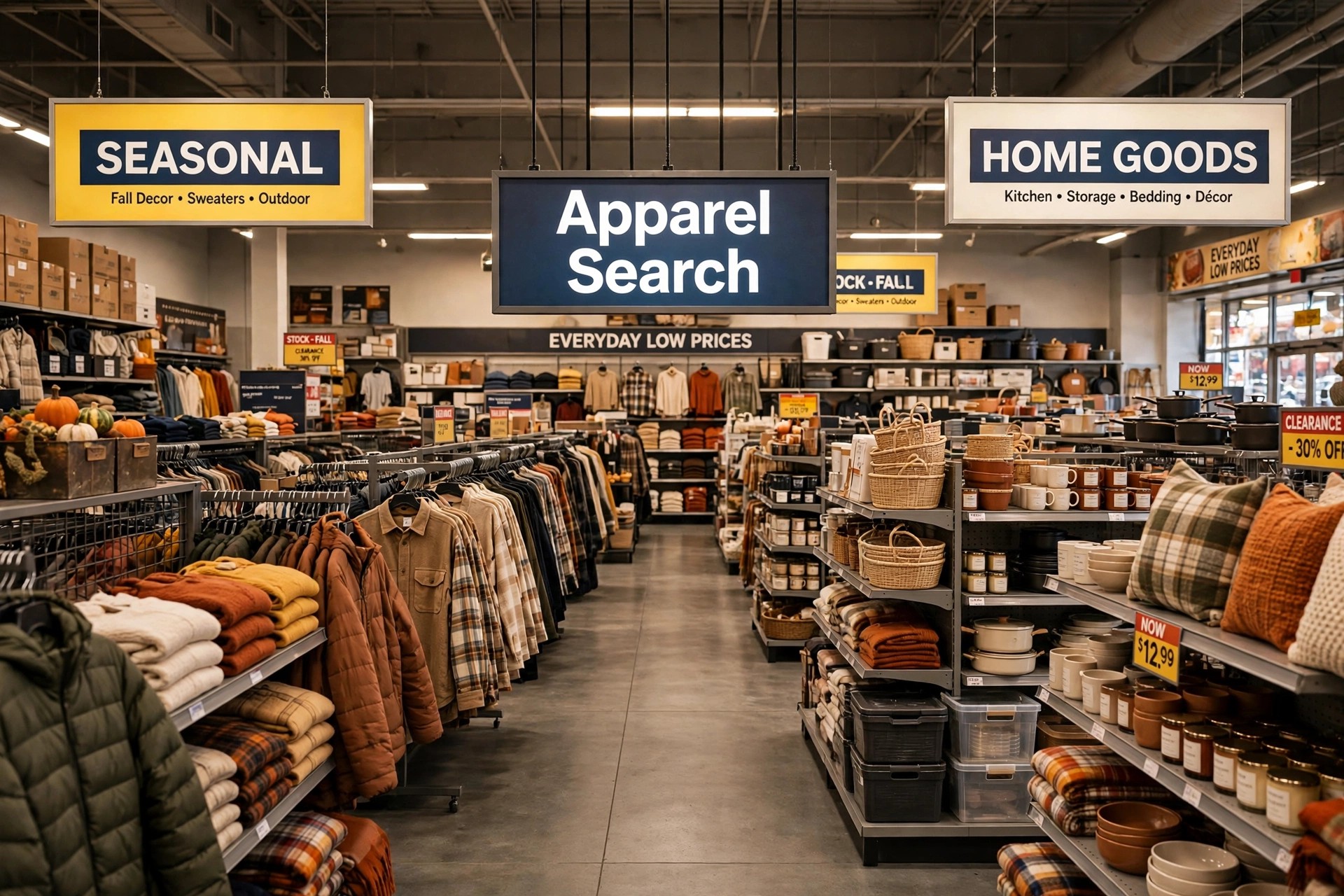
A Big Lots store associate covers more categories in a week than most specialty staff meet in a year: apparel and soft home alongside furniture, seasonal and grocery. The clothing work is closeout work — ranges arrive irregularly, sizes and colours are incomplete by design, and the selling skill is presentation and honesty about value rather than styling depth. Store managers run high stock-turn, constant floor change and heavy promotional calendars, with furniture handling and seasonal set-ups as major physical rhythms of the year.
That breadth is the career asset. Discount generalists learn receiving, stockroom flow, pricing integrity and shrink control across hard and soft lines at once, and assistant and store manager records from this format are respected by every value retailer. The apparel-specific element is real but secondary — soft-lines leads within stores typically own clothing, bedding and soft home presentation and markdowns.
Buying, Distribution and Corporate Roles
Big Lots buying is a distinct profession. Closeout buyers source overstocks, packaging changes, cancelled orders and manufacturer clearances across categories including apparel, negotiating price against speed and volume rather than building seasonal ranges to a plan. Merchandise support, planning and import roles sit behind them, and private-label and quality functions cover the goods the company commissions directly. It is trading in the oldest sense, and experienced closeout buyers are a small, mobile profession.
Distribution is the second corporate pillar: very large regional distribution centres receiving opportunistic freight and re-sorting it to stores, with careers in warehouse operations, transport, inventory accuracy and supply chain analysis. Store support, real estate, finance and technology roles round out a Columbus-centred head office, though any applicant should confirm the current corporate footprint through the official site, since the 2024 sale and restructuring changed the company's shape.
Applying After the Ownership Change
Start from the official Big Lots website carried in the references and follow its careers route, checking that the posting's employer and location match a store or facility actually trading near you. Where stores transferred to new operators, hiring may sit with those operators rather than the legacy company — the posting itself will say, and it is the document to believe. Be wary of archived listings describing the pre-2024 national estate as though it still exists.
For candidates with Big Lots history, the record remains legible and valued across discount retail: closeout buying judgement, broad-range store operations and high-volume distribution are all current skills. Present the era honestly — the company's 2024 bankruptcy and sale are public facts — and quantify what you ran: store volume, categories covered, distribution throughput or buying categories handled.
The Soft-Lines Corner of a Hard-Lines Store
Inside Big Lots, apparel staff occupy an instructive corner: a soft-lines business run on hard-lines logic. Clothing arrives as opportunity freight rather than planned ranges, so the department's craft is triage — grading what arrived, pricing the story clearly, and keeping a department shoppable when half its stock is single units. Soft-lines leads who learn that triage at Big Lots scale become unusually commercial merchants; department stores may teach range building, but only closeout teaches what to do when the range was never built at all.
Common Questions
What happened to Big Lots in 2024?
Big Lots filed for bankruptcy protection in 2024 and the business was sold. Many stores closed, while a group of locations continued trading under new ownership arrangements from 2025.
What jobs does Big Lots offer?
Store associate and management roles across apparel, home, furniture, seasonal and food ranges; closeout buying and merchandising roles; and large-scale distribution, transport and corporate support careers.
How do I apply for a Big Lots job?
Through the official website's careers route, carried in the References on this page. Check each posting's employer and location carefully, because some stores now trade under new operators.
More to Explore
- Fashion Careers
- Fashion Jobs
- Apparel Industry Employment Agencies
- Big Lots News
- Big Lots Financials
- Fashion Careers by Company
- Fashion Careers by Category
- Fashion Careers by State
- Fashion Job Description Categories
- Job Search Engines
- Fashion Career Internships
- Message to Employees About Fashion Career
- Message to Employers About Employees
- Fashion Job Search
- Clothing Industry Jobs
- View Fashion Jobs
- fashion business