Gildan Activewear Careers
Working at Gildan — a manufacturer's career map: plants, yarn and finished basics rather than shop floors
Gildan Activewear is not a store company, and its career map looks different from almost every other name in this section. Founded in 1984, headquartered in Montreal with United States operations including offices in Charleston, South Carolina, and listed on the New York and Toronto exchanges under the ticker GIL, Gildan is a vertically integrated manufacturer of basic apparel: T-shirts, fleece, underwear, socks and everyday essentials that it knits, dyes, cuts and sews in its own facilities. If your interest in fashion work is making things rather than selling them, this is one of the clearest large-scale examples in the industry.
The company sells most of its output as blank apparel through distributors to screen printers, decorators and promotional and event customers, and also supplies retail brands and its own labels, which include Comfort Colors and American Apparel, acquired in 2017. Its workforce is weighted toward manufacturing plants in the United States, Central America, the Caribbean and Bangladesh, supported by supply chain, quality, engineering, sales and marketing teams. Hiring runs through the official Gildan careers site, and this guide sets out those manufacturing-first role families rather than a retail structure the company does not have.
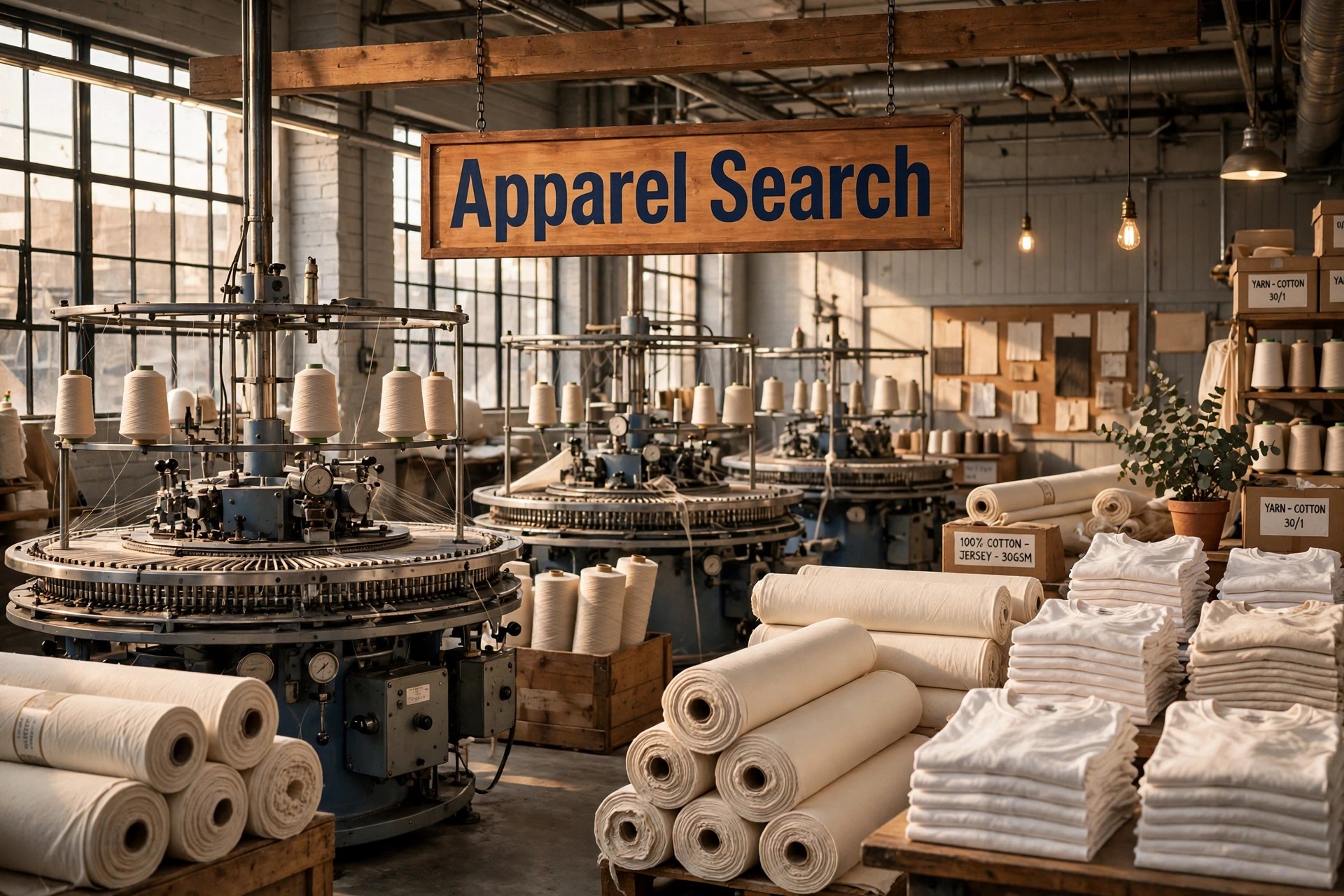
Find Current Gildan Activewear Job Listings
Current openings at Gildan Activewear are posted through the company's own careers pages and the job boards — these links lead straight to them:
Manufacturing Careers: Knitting, Dyeing and Sewing
The heart of Gildan employment is the production floor. Textile operations include yarn and fabric work, circular knitting, dyeing and finishing, where colour consistency and fabric hand across enormous volumes are the professional standards, and sewing operations where cut pieces become finished tees, fleece garments, underwear and hosiery. Roles range from machine operators and mechanics through production supervisors and plant management to textile and industrial engineers who improve throughput, quality and resource use. For applicants with vocational or engineering training, this is fashion-industry employment in its most literal form.
Quality runs through every stage as its own discipline: fabric inspection, laboratory testing, garment quality assurance and compliance with the specifications of distributor and retail customers who buy basics in very large quantities. Environmental, health and safety roles are substantial in a business operating dye houses and large sewing plants, and maintenance and utilities teams keep continuous production running. Shift structures and language requirements vary by country, so postings should be read carefully — a knitting role in one facility and a sewing supervision role in another are different trades sharing one company's methods.
Supply Chain, Sales and Corporate Careers
Around the plants sits the system that makes vertical integration pay. Supply chain and planning teams balance raw materials — cotton and yarn above all — against production capacity and customer demand across several countries; logistics and distribution staff move finished basics from plants to the warehouses and distributors who serve screen printers and retailers. Procurement, customer service and order management roles handle a business-to-business customer base that orders in volume and expects replenishment of core styles, sizes and colours rather than seasonal novelty.
Sales and marketing careers at Gildan are aimed at trade customers, not shoppers: distributor relationships, brand work for labels such as Comfort Colors and American Apparel, product management of fabric platforms and garment styles, and the trade shows, samples and shade cards through which blank apparel is actually sold. Corporate functions — finance, human resources, information technology, sustainability and legal — are centred on Montreal and Charleston with teams in operating countries. Applicants from retail backgrounds should note the translation: the transferable assets are product knowledge of basics, volume thinking and quality discipline, not store selling.
Applying to Gildan Activewear
Apply through the official Gildan careers site carried in the references on this page, filtering by country, facility and function; plant roles are listed where the facilities are, and corporate and commercial roles mainly around Montreal and Charleston, South Carolina. Manufacturing applicants should evidence the process they know — knitting, dyeing and finishing, sewing operations, maintenance or quality — with the machinery, materials or volumes they have handled, because hiring managers recruit by process. Engineering and supply chain applicants should expect questions about continuous improvement, cost and service balance across a multi-country network.
Treat this page as background reading, not a vacancy board: openings follow production and seasonal demand, and only the official careers site carries current postings. The broader point for a job seeker is that Gildan represents a whole wing of fashion employment that store-focused searches miss — the people who actually manufacture the world's basic clothing. Experience gained in its plants and supply chain is recognised across the global apparel manufacturing industry, wherever basics are made at scale.
Vertical Integration as a Career Advantage
Because Gildan controls its chain from yarn and fabric through dyeing, cutting and sewing to finished garments, its employees see cause and effect that fragmented supply chains hide. A quality problem in a finished T-shirt can be traced to a dyeing decision, a knitting specification or a sewing line, and the people who learn to trace it gain a whole-garment understanding that buyers, product developers and quality managers across the industry prize. The same structure makes internal movement unusually educational: a supervisor can follow product from textile operations into distribution without changing employer. For manufacturing careers, that breadth is the real promotion — expertise in one process, literacy in all of them.
Common Questions
What does Gildan Activewear make, and where is it based?
Gildan, founded in 1984 and listed as GIL in New York and Toronto, is a vertically integrated manufacturer of basic apparel — T-shirts, fleece, underwear and socks. It is headquartered in Montreal, has US operations including Charleston, South Carolina, and makes product in the US, Central America, the Caribbean and Bangladesh.
What kinds of jobs does Gildan offer?
Mostly manufacturing careers — knitting, dyeing, finishing and sewing operations, quality, maintenance, engineering and plant leadership — plus supply chain, logistics, trade sales and marketing, and corporate roles in Montreal, Charleston and operating countries.
How do I apply for a Gildan job?
Through the official Gildan careers site carried in the References on this page. Filter by country, facility and function, and describe your experience by process and volume, because manufacturing hiring at Gildan is organised around specific production skills.
More to Explore
- Gildan
- Fashion Careers
- Fashion Jobs
- Apparel Industry Employment Agencies
- Gildan News
- Gildan Financials
- Fashion Careers by Company
- Fashion Careers by Category
- Fashion Careers by State
- Fashion Job Description Categories
- Job Search Engines
- Fashion Career Internships
- Message to Employees About Fashion Career
- Message to Employers About Employees
- Fashion Job Search
- Clothing Industry Jobs
- View Fashion Jobs
- fashion business