Payless Careers
Payless ShoeSource — the closed US store chain, its 2020 online-led relaunch, and what remains of its careers
Payless ShoeSource was founded in Topeka, Kansas, in 1956 on a simple idea: sell shoes for the whole family at low prices in self-service stores, where shoppers browsed open shelves of boxed footwear and helped themselves to sizes. The model built one of the largest footwear chains in the United States, and its careers had a distinctive shape — small store teams running high-volume shops with lean staffing, backed by a Topeka head office that designed and bought the private label shoes the stores mostly sold. For decades it was a first employer for thousands of retail workers.
That employer no longer exists in its old form, and this page will not pretend otherwise. Payless filed for bankruptcy in 2017 and again in February 2019, and the second filing closed every one of its United States stores that year. The company emerged from bankruptcy in January 2020 and relaunched that August as Payless — the ShoeSource name dropped — with headquarters moved to Miami and a plan built around online selling. The announced return to hundreds of new American stores never rebuilt a national chain, and the brand's United States presence is now principally online and through marketplace and partner channels, while franchised and Latin American operations continued separately abroad.
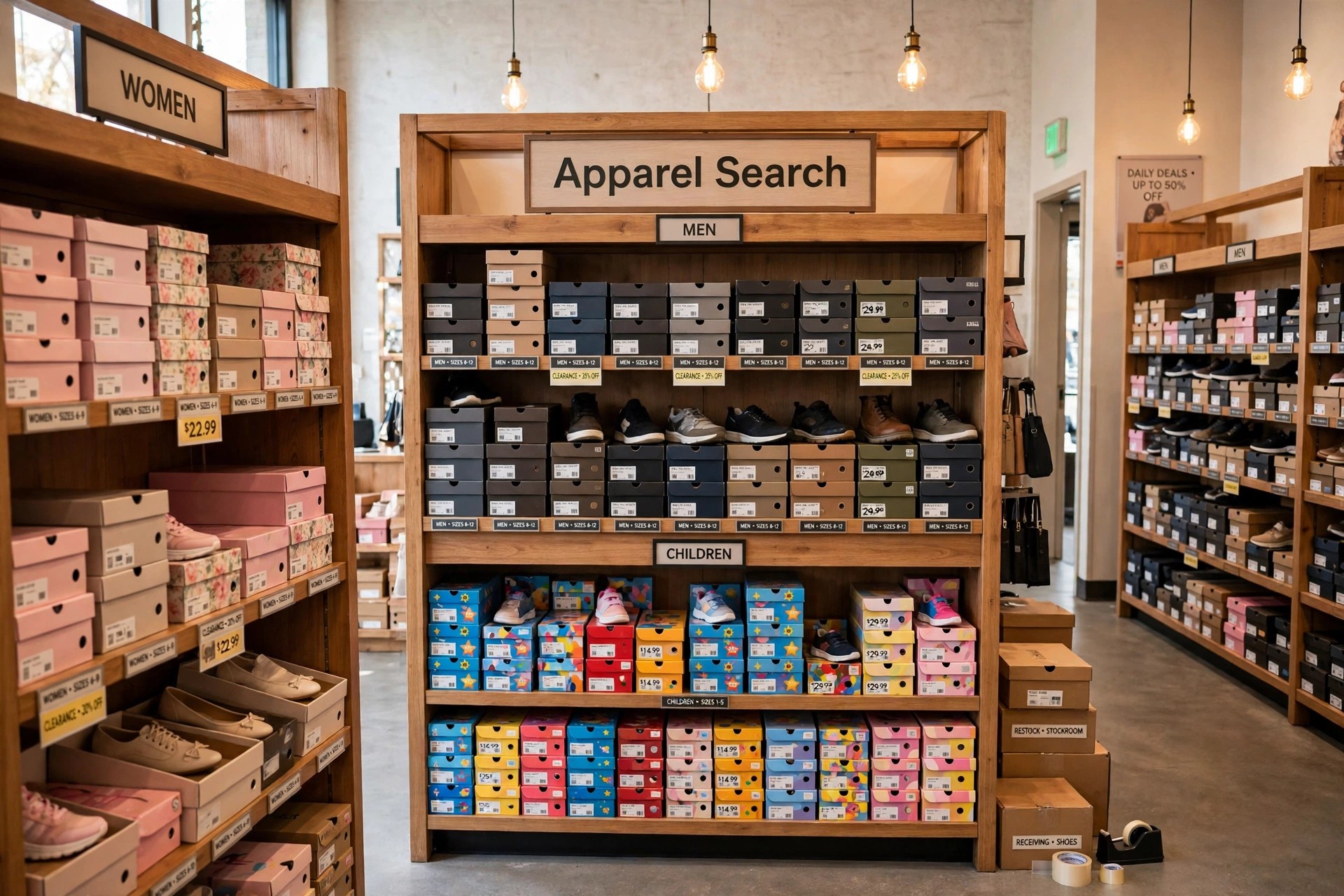
Find Current Payless Job Listings
Current openings at Payless are posted through the company's own careers pages and the job boards — these links lead straight to them:
Store Roles in the ShoeSource Era
A Payless store ran on a fraction of the staff of a traditional shoe shop, because the self-service format was the business model. Associates greeted and guided customers who largely served themselves, measured children's feet, kept size runs faced and complete on open shelving, handled the register and received constant replenishment deliveries. Store managers and assistant managers carried keys, cash, scheduling and shrink responsibility for shops that turned over inexpensive product at real pace, and district managers covered large territories of similar small units.
The work taught a specific retail craft: selling family footwear on value, managing back-to-school and holiday surges when a whole family's shoes were bought in one visit, and keeping thousands of boxed pairs findable by size in a compact space. Those stores all closed in 2019, and no United States Payless store workforce survived the closure. Anyone who worked in one should describe it in exactly those terms — small-team accountability, family fitting, self-service operations — because discount and off-price footwear employers still recognise and hire for that experience.
Topeka: Buying, Private Label and the Old Head Office
Because Payless sold mostly its own brands, its Topeka headquarters held the product heart of the company. Buyers and product developers created extensive private label ranges — women's, men's and children's shoes designed to hit opening price points — working with overseas factories on costing, materials and fit, while planners allocated enormous size ranges across the store estate. Shoe design at Payless was commercial rather than couture: the skill was engineering a wearable, current-looking shoe that could retail at a family budget price and survive hard wear.
Distribution centres, marketing, finance, information technology and store operations teams completed the Topeka picture, and all of it ended as a Kansas employer with the 2019 wind-down and the subsequent move of the relaunched brand's base to Miami. The product discipline, though, travelled with its people: value footwear buying, private label development and size-range planning are exactly the skills used by the discount chains, off-price retailers and marketplace sellers who now serve the customer Payless once owned.
The Relaunched Brand and Where Roles Sit Now
The Payless that exists today is a brand operation, not a store chain. A small organisation based in Miami manages the name, its product ranges and its online and marketplace selling, working through partners rather than employing shop-floor staff across the country. Roles attached to the brand are therefore in areas such as e-commerce, digital marketing, licensing, product and supply chain coordination — and they are few compared with the old company's payroll, advertised only through the current owner's own channels when they arise at all. There is no store application to make in the United States, because there is no store estate to staff.
Outside the United States the picture differs: Payless stores continued operating in Latin America and through franchise arrangements in other markets, businesses that were not part of the American store closure. Those operations employ their own retail and head-office staff regionally, and hiring for them is handled by the regional operator, not from Miami or Topeka. Anyone considering an overseas Payless posting should confirm which company is actually employing them, in which country, before sharing personal details or accepting terms.
Using Value Footwear Experience Today
If you arrived here looking for a Payless store job, redirect the search rather than abandoning it: discount footwear chains, off-price retailers, shoe departments in value general retailers and online footwear sellers all hire for the fitting, family-selling and self-service operations skills the old chain taught. If you worked for Payless, say plainly that the United States stores closed in 2019 and present your record on its merits. And treat any listing that promises Payless store openings or asks for fees to apply with real caution — verify the named employer through the brand's official channels before trusting it.
Common Questions
Are Payless stores still open in the United States?
No national store chain remains. Payless closed all of its United States stores in 2019 during its second bankruptcy. The brand relaunched online in August 2020, and its United States presence is now principally online and through marketplace and partner channels.
Can I apply for a job at Payless?
There are no United States store jobs to apply for. The relaunched brand is a small Miami-based online and licensing operation whose rare openings appear through its current owner's official channels; overseas Payless businesses hire regionally through their own operators.
What jobs did Payless ShoeSource offer?
Small-team store selling, fitting and management across its self-service shops, plus Topeka head-office work in private label shoe buying and design, planning, distribution, marketing and corporate functions.
More to Explore
- Payless
- Fashion Careers
- Fashion Jobs
- Apparel Industry Employment Agencies
- Collective Brands Profile
- Payless News
- Payless Financials
- Fashion Careers by Company
- Fashion Careers by Category
- Fashion Careers by State
- Fashion Job Description Categories
- Job Search Engines
- Fashion Career Internships
- Message to Employees About Fashion Career
- Message to Employers About Employees
- Fashion Job Search
- Clothing Industry Jobs
- View Fashion Jobs
- fashion business