Fabric Buyer Job Description
Buying the cloth garment production depends on — fibre, weave, price per metre and delivery
A fabric buyer purchases the textiles that garment manufacturers and own-label retailers turn into clothing. Unlike a retail clothing buyer, who selects finished garments for shoppers, the fabric buyer works earlier in the chain: choosing cloth by fibre, weave, weight, finish and colour, at a price per metre that allows the finished garment to hit its target cost, delivered on dates that production schedules are built around. Fabric is usually the largest single cost in a garment and the longest-lead component, so this buyer's decisions quietly determine what a whole season can cost and when it can be delivered. This page explains the fabric buyer's duties, technical knowledge, and career structure.
More Buying Job Descriptions by Letter:
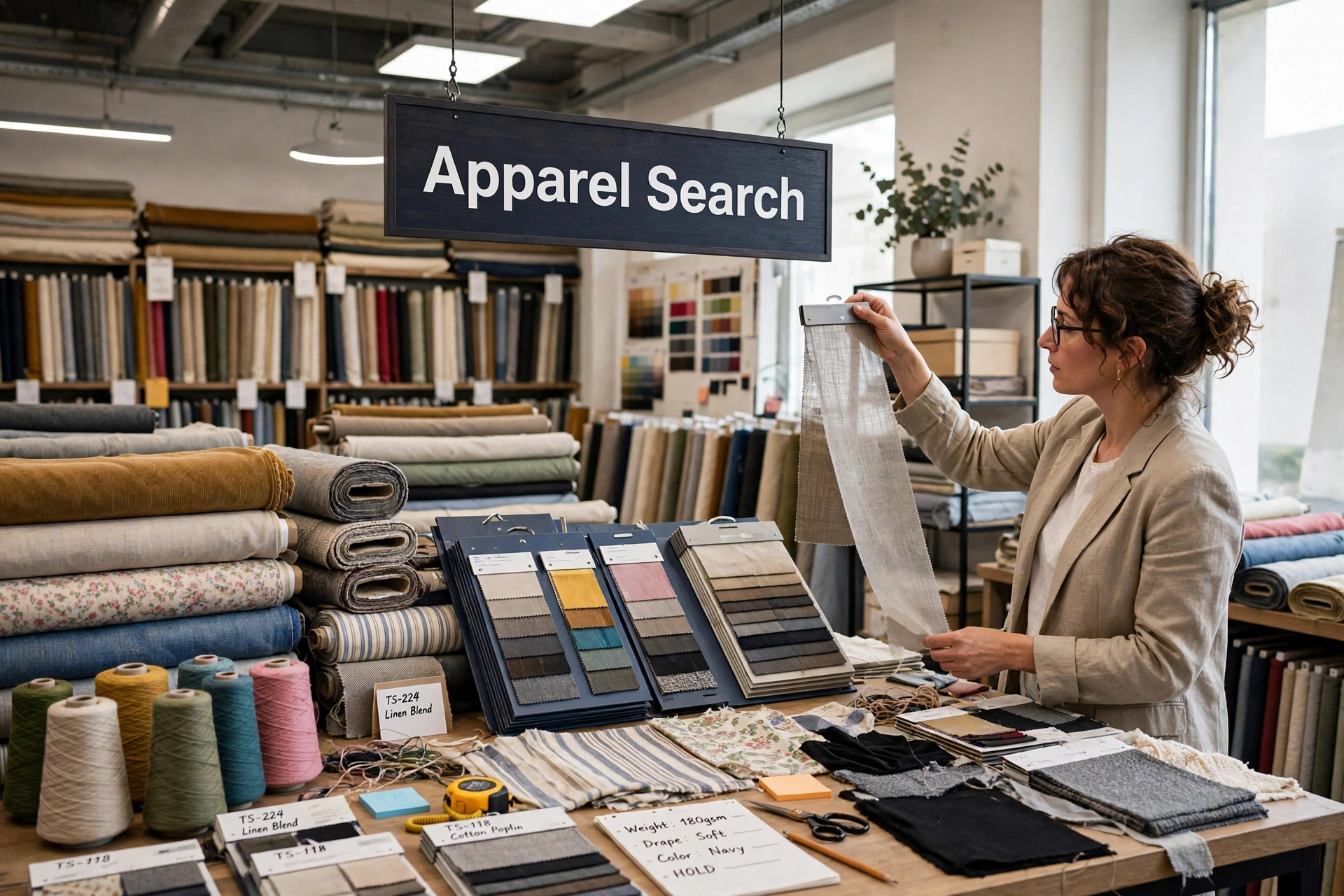
What a Fabric Buyer Does
The fabric buyer works from garment programmes: designers and product developers specify the cloth each style needs — its fibre content, construction, weight, width, colour and finish — and the buyer sources it. That involves maintaining a mill and converter supplier base, requesting and comparing offers, ordering sample lengths for development, and then placing bulk orders with agreed specifications, prices per metre or yard, delivery dates and quality tolerances. Because fabric lead times are long, bulk fabric is often committed before final garment orders are confirmed, so the buyer manages that exposure carefully with merchandising and production colleagues.
Quality control is continuous work. The buyer approves lab dips for colour, strike-offs for prints, and handloom or bulk samples against the standard; arranges or reviews testing for shrinkage, colourfastness, pilling and strength; and handles claims when bulk cloth arrives off-shade, under width or outside tolerance. Delivery management is equally central: fabric that arrives late delays cutting, sewing and the finished garment's selling window, so the buyer tracks mill production and shipping against the garment critical path and escalates problems early, when alternative cloth or revised dates can still be arranged.
Specification, Costing and Risk: The Fabric Buyer's Craft
Fabric buying is conducted in specifications, and precision in them is the craft. A complete fabric order fixes fibre composition, yarn and weave or knit construction, finished weight and usable width, colour references, finishes and performance standards — because any element left vague becomes the buyer's problem when bulk arrives. Small specification differences carry large money: a few cents per metre across hundreds of thousands of metres, or a width difference that changes how many garments a metre yields, can move a garment programme's margin more than any later negotiation.
Risk management distinguishes experienced fabric buyers. Cloth is bought ahead of confirmed garment demand, in colours that may not survive range finalisation, from mills whose capacity and reliability vary. The buyer balances commitment against flexibility: greige or undyed positions that can be dyed late, proven base cloths shared across styles, and deposits or staged orders where a programme is uncertain. Currency, freight and duty exposure sit inside fabric prices for imported cloth, and the buyer is expected to understand what is driving a mill's price rather than merely recording it.
Skills and Abilities the Role Requires
Technical textile knowledge comes first: fibres and their properties, woven and knitted constructions, dyeing, printing and finishing processes, and how each behaves in garment making and in wear. A fabric buyer must be able to handle a cloth and predict how it will cut, sew, press and wash — and to specify testing that proves it. Commercial skill follows: costing per metre and per garment, negotiation with mills and converters across cultures and time zones, and contract precision in writing.
Organisationally, the role serves many internal customers at once — designers who want novelty, production teams who want reliability, finance who want cost control — and the buyer must hold those interests together without losing the critical path. Record-keeping is exacting: shade standards, test reports, order confirmations and delivery records form the evidence base for every quality or lateness claim, and the buyers who win claims are the ones whose files were right before the dispute started.
Qualifications, Training and Career Path
Fabric buyers often have textile-specific education — degrees or diplomas in textiles, textile technology, or fashion with substantial textile content — because the role's knowledge base is technical. Others arrive from garment production, quality or merchandising roles inside manufacturers and buying offices, where cloth handling and mill contact were learned practically. Employers test for fibre and construction knowledge directly, and value experience with the specific fabric families their garments use, whether shirting, denim, jersey, tailoring cloth or performance fabrics.
Progression runs to senior fabric buyer or fabric manager responsible for a whole sourcing base, and sideways into production management, sourcing management and product development leadership, where fabric knowledge shapes entire ranges. Large manufacturers, own-label retailers, textile buying offices and agents all employ fabric buyers, and the specialism is internationally portable: mills, converters and garment factories trade in the same specifications worldwide, so an experienced fabric buyer's expertise travels well across the industry.
Common Questions
How is a fabric buyer different from a clothing buyer?
A clothing buyer selects finished garments for retail sale. A fabric buyer purchases textiles as a production input — specifying fibre, weave, weight, colour and finish, at a price per metre, delivered to the dates garment production is scheduled around.
Why is fabric usually committed before garment orders are final?
Fabric has the longest lead time in the garment chain, especially dyed or printed cloth from overseas mills. To protect delivery dates, buyers commit fabric ahead of final garment confirmation and manage the risk with flexible positions such as undyed greige cloth.
What testing do fabric buyers arrange?
Typical checks cover shrinkage, colourfastness to washing and light, pilling, tearing and seam strength, and appearance after washing — against the specification agreed with the mill, with results recorded before bulk production proceeds.