Headwear Buyer Job Description
Buying hats and caps where head sizes, fit and the occasion decide the sale
A headwear buyer — also advertised as a hat buyer — selects the hats, caps and other headwear a store sells: baseball caps and beanies, sun hats and bucket hats, flat caps, fedoras, fascinators and formal occasion hats. Headwear looks simple and is not. A hat must fit a head, not a body, so sizing works differently from every other garment; demand swings violently with weather and occasion; and the customer often arrives with a specific event — a wedding, a race meeting, a holiday, a season of outdoor work — already in mind. The headwear buyer plans for all three at once. This page explains the role's duties, its sizing and occasion knowledge, and how people build careers in it.
More Buying Job Descriptions by Letter:
What a Headwear Buyer Does
The headwear buyer plans a range that spans everyday and occasion wear. Everyday headwear — caps, beanies, sun hats and weatherproof styles — is bought for volume and replenishment, with depth in the sizes and colours that sell continuously. Fashion and occasion headwear — statement hats, fascinators and formal styles — is bought in smaller quantities against a calendar of events, and dates quickly if it misses its moment. The buyer splits the budget between the two deliberately, using sales history by style, material and size rather than by garment size curves borrowed from clothing.
Vendor work is specialised. Headwear comes from milliners, cap manufacturers and accessories suppliers, each with different materials and lead times: felt and straw need shaping and blocking, caps are embroidered and panelled, knitted styles are made like knitwear. The buyer assesses samples on the head — checking proportions against different face shapes and hairstyles as well as construction — negotiates costs and delivery dates, and phases orders so weather-driven stock can react: a cold snap or heatwave can empty or strand a headwear fixture in a week.
Sizes, Fit and Occasion: The Knowledge That Defines the Role
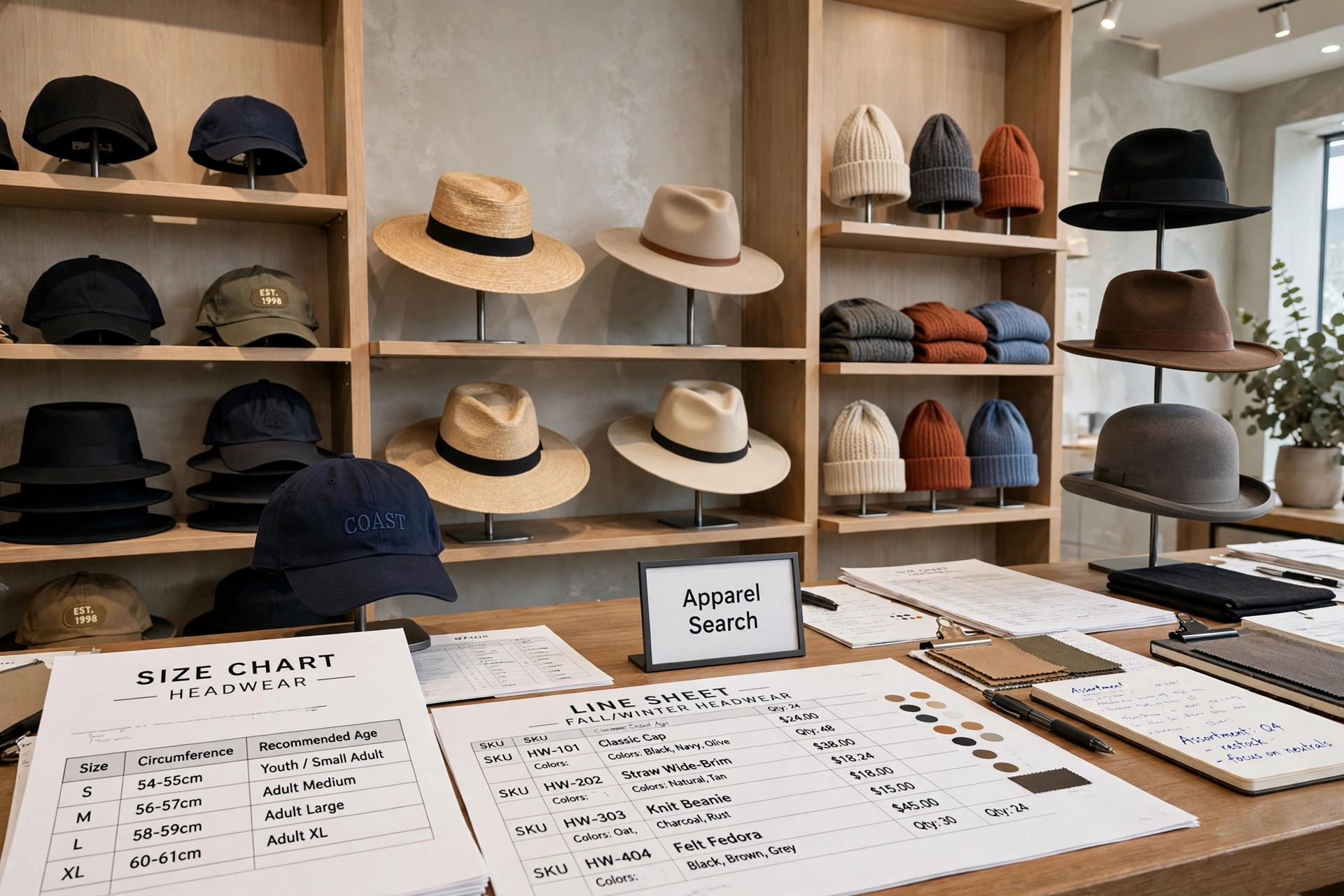
Head sizing is the role's technical core. Hats are sold in centimetre or inch head measurements, in small-medium-large bands, or as one-size styles with internal adjusters — and each system fails customers differently. A sized hat bought too shallow across the range generates returns and abandoned purchases; a one-size style with a poor adjuster fits nobody well. The headwear buyer must know the department's size profile, buy depth where heads actually measure, and brief suppliers on internal fit — crown depth, brim balance and band comfort — with the same seriousness a footwear buyer gives to shoe fit.
Occasion knowledge is the second specialism. Formal headwear follows the social calendar — weddings, race meetings and garden parties concentrate demand into a few months, with colour coordination against outfits driving purchases — while sun protection, sport and work headwear follow weather and activity instead. The buyer reads both calendars at once, coordinates colours with the clothing and accessories ranges for occasion season, and keeps enough flexible, reorderable everyday stock to chase the weather nobody forecast.
Skills and Abilities the Role Requires
Because headwear is a relatively small department in most stores, its buyer often carries it alongside other accessories, and must defend its space and budget with clear numbers: sell-through by style and size, margin per fixture, and the attachment of occasion hats to outfit purchases. Analytical care matters — headwear data is noisy, with weather spikes hiding underlying trends — and the buyer who can separate a genuine style winner from a sunny weekend makes far better rebuy decisions.
Product judgement is unusually visual. Proportion — crown height, brim width, how a style sits — decides whether a hat is worn or returned, and it cannot be assessed from a line sheet. Good headwear buyers try samples on different people, photograph them, and think about hair, glasses and face shape as part of fit. Negotiation and supplier knowledge complete the role, since specialist hat makers are few and their capacity in peak season is limited.
Qualifications, Training and Career Path
Headwear buyers generally come from accessories buying, where headwear often sits as one part of a wider accessories range before it justifies a dedicated buyer in larger stores and specialists. Assistant buyer experience in accessories, plus retail experience on a hat or accessories department, is the usual preparation; formal fashion buying qualifications help at entry to buying generally, but employers for this desk weigh demonstrated fit and occasion knowledge most heavily.
Career progression runs to senior buyer or accessories buyer roles with headwear inside a broader remit, to specialist headwear and millinery retailers and brands, where the buyer may also shape product development, and on to divisional merchandise management. The sizing and occasion expertise transfers naturally to other fit-sensitive accessories categories.
Common Questions
Why is hat sizing different from clothing sizing?
Hats fit the head, not the body, so they are sold by head measurement in centimetres or inches, by small-medium-large bands, or as one-size styles with adjusters. Buying the right depth in each size matters as much as choosing the style, because a hat that does not fit is not bought at all.
When does headwear sell best?
In two patterns at once: weather-driven demand for sun hats, caps, beanies and warm styles, which can spike within days, and occasion demand for formal hats and fascinators, which concentrates around weddings and race meetings in the spring and summer calendar.
Is headwear buying a standalone job?
In large stores and specialist retailers, yes. In smaller businesses the headwear range usually sits inside an accessories buyer's remit, and dedicated headwear buyer roles appear where the category is large enough to need its own sizing and occasion expertise.