Jeans Buyer Job Description
Buying denim where fits, washes and the balance of core and fashion decide the department
A jeans buyer selects the denim ranges a store sells — for women, men or both — across fits, washes, colours and price points. Jeans are the most fit-critical garment most stores sell and one of the most loyal: a customer who finds the fit that works tends to rebuy it for years, while a fit that disappoints is returned and remembered. The jeans buyer therefore works at the intersection of pattern, fabric and wash chemistry on one side and classic retail buying — range balance, size runs, replenishment — on the other. This page covers the role's duties, the denim knowledge it requires, and the career routes through it.
More Buying Job Descriptions by Letter:
What a Jeans Buyer Does
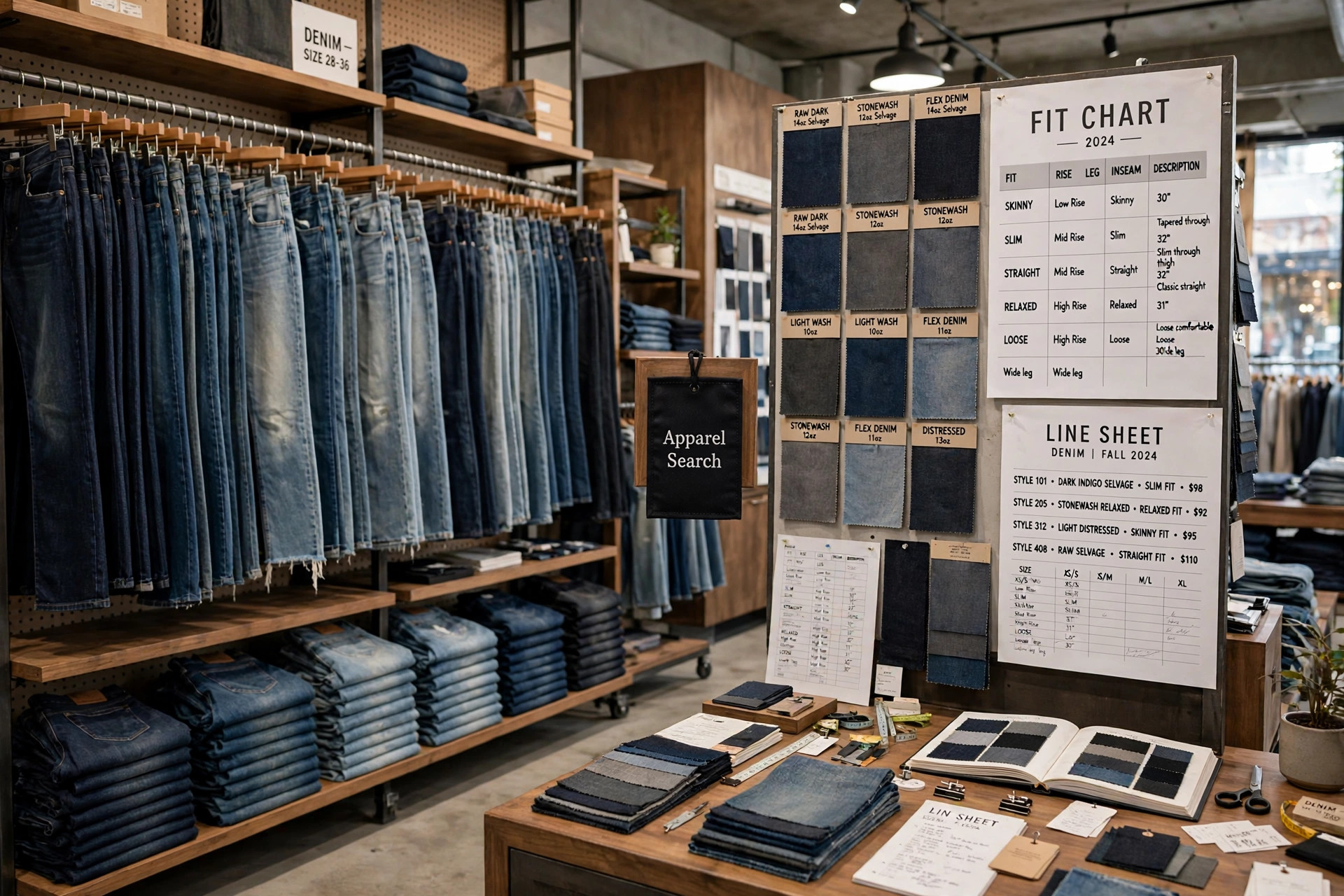
The jeans buyer builds the range in two layers. The core layer is the department's engine: a small set of proven fits in core washes — indigo, black, mid and light blue — held in stock continuously across waist and leg-length runs, replenished like a basic. The fashion layer changes seasonally: new silhouettes, washes, distressing, embellishment and coloured denim, bought in limited depth to keep the department current. Range reviews judge the two layers by different measures — availability and rate of sale for core, sell-through speed for fashion — and the buyer who confuses them either dates the department or starves it.
Product work is hands-on. The buyer assesses fit on models across sizes, not just on a sample size, checking rise, seat, thigh, knee and leg opening proportions and how each fit grades through the waist range. Washes are approved from production samples because wash results vary between laundries and batches, fabric is judged for weight, stretch and recovery, and costs are negotiated against the wash and finishing processes each style requires. In season, the buyer protects core availability above everything, repeats fashion winners only while their moment lasts, and reads returns data closely — denim returns are usually fit information in disguise.
Fits and Washes: The Product Knowledge at the Centre of the Job
Fit architecture is the jeans buyer's defining decision: which fits the department will stand for — skinny, slim, straight, relaxed, bootcut, wide-leg and their successors — and in what proportion. Each fit is a pattern commitment with its own customer, size curve and return profile, and adding a fit is easy while removing one loses loyal customers. The buyer manages the fit portfolio across fashion cycles, introducing rising silhouettes early enough to matter and retiring fading ones before their stock becomes a markdown problem.
Wash knowledge is equally specific. The buyer must understand what raw, rinsed, stonewashed, bleached, lasered, whiskered and coated finishes do to fabric hand-feel, shrinkage, strength and cost, and how stretch denim changes fit over a day's wear. Wash is where denim's environmental footprint concentrates too — water, chemicals and energy in laundry processes — so the modern jeans buyer also evaluates lower-impact wash methods and fabric compositions as part of range decisions, not as an afterthought.
Skills and Abilities the Role Requires
Size-run analysis carries unusual weight in denim. Jeans are bought across wide waist ranges and multiple leg lengths, so every style decision multiplies into a large stock commitment spread thinly across sizes. The buyer must plan depth by size from the department's own data, keep core sizes of core fits effectively never out of stock, and spot where demand is being lost to gaps in the run rather than to weak product. Fit sessions, wear trials and returns analysis are the qualitative partners to that data.
Commercially, the jeans buyer negotiates in a concentrated supplier market — denim mills, laundries and specialist manufacturers — where fabric and wash capacity shape what is possible. Trend judgement must be timed rather than merely right: denim silhouettes move in long cycles, and backing a new fit a season early or late is the difference between leading the department's market and clearing its mistakes. Collaboration with the trouser, casualwear and juniors or menswear buyers keeps fits and washes from duplicating across departments.
Qualifications, Training and Career Path
Jeans buyers typically progress from assistant buyer roles in denim, trousers or casualwear, or move across from denim specialist retailers and brands, where fit and wash knowledge is built daily. Fashion buying qualifications provide the usual entry into assistant roles, but the jeans desk itself is awarded on demonstrated denim knowledge — fits tried, washes approved, size runs managed — more than on certificates.
From jeans buyer, the path runs to senior buyer in casualwear or a whole denim department, into denim brand product and buying roles where ranges are developed rather than selected, and on to divisional merchandise management. Denim expertise is unusually portable between retailers, brands and manufacturers, which makes strong jeans buyers some of the most recruited specialists in the buying market.
Common Questions
What is the difference between core and fashion jeans in a range?
Core jeans are proven fits in staple washes, held in stock continuously and replenished like basics; they carry the department's dependable volume. Fashion jeans carry new silhouettes, washes and finishes, are bought in limited depth for the season, and are judged on sell-through speed rather than availability.
Why do jeans buyers fit samples on models in several sizes?
Because a denim fit changes as it grades: rise, seat and leg proportions that work in a sample size can fail at the ends of the waist range, and stretch fabrics behave differently under different loads. Fit failures are the main cause of denim returns, so fits are checked across the run.
How do you become a jeans buyer?
Usually from an assistant buyer role in denim, trousers or casualwear, or from a denim specialist retailer or brand, building fit, wash and size-run knowledge on live ranges before taking responsibility for a denim department.