Maternity Buyer Job Description
Buying a wardrobe for a changing body — size continuity and comfort across the months of pregnancy
A maternity buyer selects clothing designed to be worn during pregnancy: dresses, tops, trousers, jeans, knitwear, underwear and sleepwear cut to accommodate a changing body over a matter of months. No other buying desk serves a customer whose fit requirements change this predictably, this quickly, and for such a defined period. The maternity buyer therefore plans around a journey rather than a season — what a customer needs early on, what she needs later, and which garments can adapt across both — while keeping her in the same sizes and styles she trusted before, so shopping stays simple at a demanding time. This page explains the role's duties, its distinctive fit and continuity planning, and the routes into it.
More Buying Job Descriptions by Letter:
What a Maternity Buyer Does
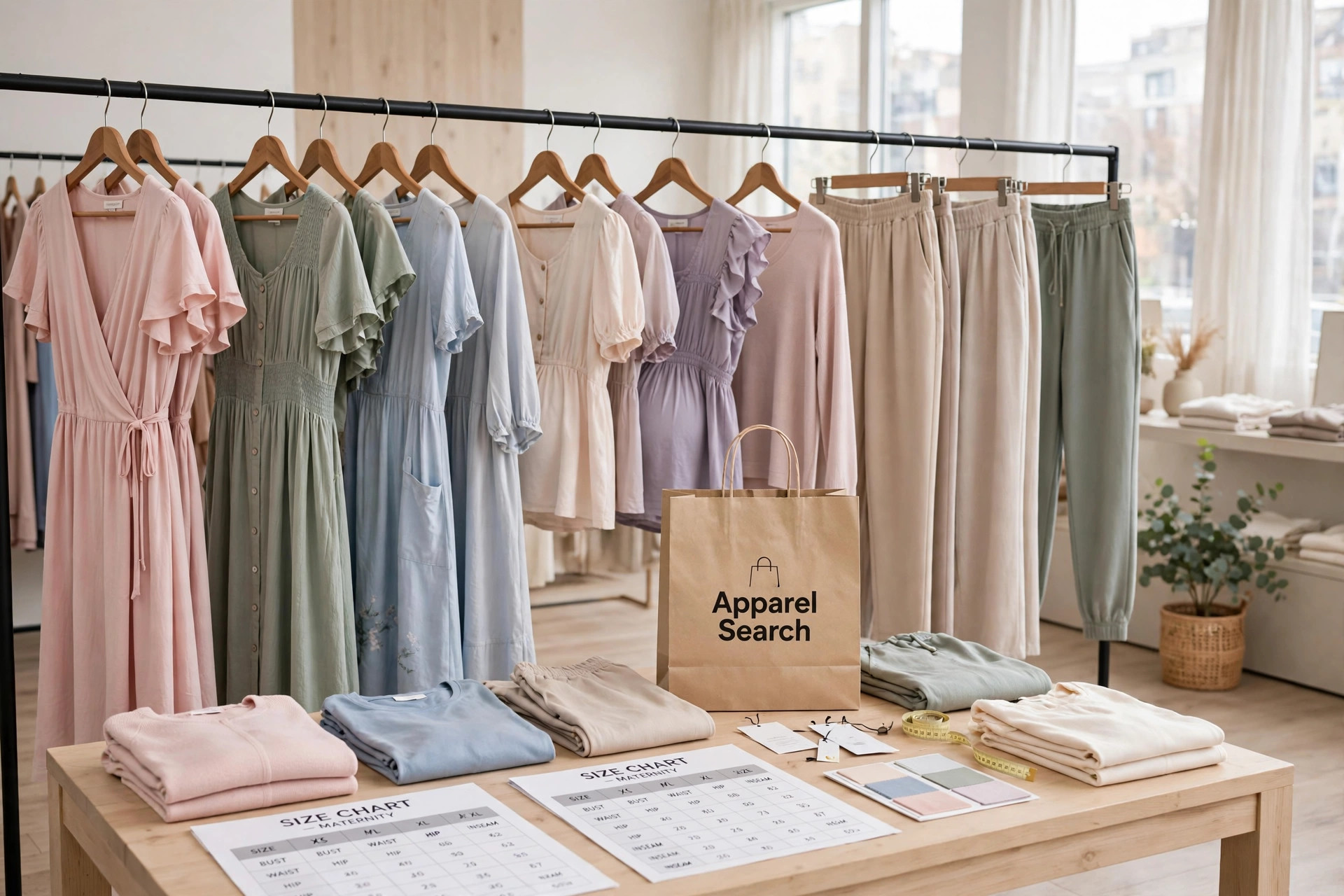
The maternity buyer builds a complete wardrobe, not a collection of special-occasion pieces: work clothing, everyday basics, jeans and trousers, dresses, knitwear, nightwear and maternity bras and support garments. Range planning starts from how customers actually shop the category — often a first purchase of a few adaptable essentials, followed by additions as the pregnancy progresses — so the assortment is weighted toward versatile garments that work hard across months: wrap and empire-line dresses, tops with ruching or stretch panels that grow, trousers with adjustable or elasticated waistbands in several designs for different preferences and stages.
The buyer selects samples by wearing logic, not just appearance: a garment is assessed on how it accommodates change, whether seams and panels sit comfortably, whether fabrics stretch and recover without strain, and whether the piece still looks like the customer's normal style rather than a departure from it. Orders are placed with size ratios drawn from the department's own history, deliveries are phased so essentials never leave stock, and in season the buyer watches which categories customers buy repeatedly — evidence of what genuinely works — and protects depth in those lines above all.
A Wardrobe Bought for a Changing Body
Continuity is this category's commercial foundation. Maternity ranges are normally bought in the customer's pre-pregnancy size, with the garment's cut doing the adapting — so the buyer's first responsibility is that a size means the same thing across every vendor in the range, and across every month. If a customer must re-learn her size with each brand, or finds her size sold out when she returns for later-stage pieces, the department has failed at the thing it exists to do. Size continuity, reliable core stock and consistent fit blocks are therefore planned as deliberately as style.
The second discipline is designing the range across time. Some garments serve a few weeks; the best serve the whole pregnancy and beyond, with nursing access or post-pregnancy wear extending their value. The buyer weighs that span in every selection: stretch and adjustable features that extend a garment's useful months, fabrics that keep their shape through repeated wearing and washing, and price points that respect that the customer is equipping herself for a temporary — if important — wardrobe. That respect shows up in the range architecture: strong value in the essentials every customer needs, with fashion and occasion pieces bought shallower, for the shorter window in which they will be worn.
Skills and Abilities the Role Requires
Empathy backed by evidence is the role's signature skill. The best maternity buyers listen systematically — to store colleagues, customer feedback and return reasons — about what is comfortable, what chafes, what stops fitting sooner than promised, and they convert that into specification changes with vendors. Fit judgement is specialised: assessing how a sample performs not on one body today but across stages of change, which is why experienced buyers test garments on fit models at different stages and scrutinise panel placement, waistband design and fabric recovery rather than silhouette alone.
Commercially, the role needs the full buying toolkit with a continuity twist: range planning, costing and margin, vendor negotiation, and stock management for a customer base that is constantly renewing itself — every customer leaves the category within the year, and new customers arrive continuously. Demand is steadier and less fashion-volatile than most womenswear, which rewards the buyer who masters availability and fit consistency over the one chasing trends. Coordination with the womenswear, lingerie and baby departments matters as well, since the customer's wider shopping journey crosses all of them.
Qualifications, Training and Career Path
Maternity buyers generally come from womenswear buying — assistant buyer roles in dresses, tops or related departments — where range planning and vendor management are learned, and then specialise. There is no maternity-specific qualification employers require; what hiring managers look for is evidence of fit sensitivity and customer understanding alongside buying results, because those are harder to teach than the category's product details. Retail experience in a maternity department is a strong foundation for the same reason: it teaches the customer's journey firsthand.
From maternity buyer, careers progress to senior womenswear buying roles, to divisional responsibility spanning related life-stage categories, or deeper into specialism with dedicated maternity brands, where the buyer may also direct product development. The continuity and fit expertise transfers naturally to adjacent fit-sensitive categories, and the category's emphasis on availability planning is valued in any continuity-driven department. It is a desk where specialist knowledge compounds: each season's fitting and sales evidence makes the next range measurably better.
Common Questions
How is maternity sizing supposed to work?
Maternity clothing is normally bought in the customer's pre-pregnancy size, and the garment's cut — stretch panels, ruching, adjustable waistbands, empire lines — accommodates the change. A maternity buyer's job is to keep that sizing consistent across vendors so customers can shop the whole range in one trusted size.
What matters most in a maternity range?
Adaptability and continuity. Garments should work across as many months as possible, core essentials should never be out of stock, and fit should stay consistent, because the customer is building a temporary wardrobe on a schedule she does not control.
How do you become a maternity buyer?
Most maternity buyers progress from assistant buyer roles in womenswear, developing fit judgement and range-planning skills, then specialise. Store experience in maternity departments is valuable preparation because it teaches how customers shop the category across a pregnancy.