Neckwear Buyer Job Description
Buying ties, bow ties and men's scarves — small items where silk, colour and occasion decide everything
A neckwear buyer is responsible for one of the smallest departments in menswear and one of the most exacting: neckties, bow ties, pocket squares and men's scarves. Almost everything in the category is bought as a finishing touch or as a gift, so the buyer is really trading in occasions — weddings, race meetings, job interviews, the festive gift season — and in the quality signals a customer can judge in seconds by running silk between finger and thumb. This page sets out how neckwear ranges are planned and bought, what separates good silk from disappointing silk, and how buyers build a career in this compact specialism.
More Buying Job Descriptions by Letter:
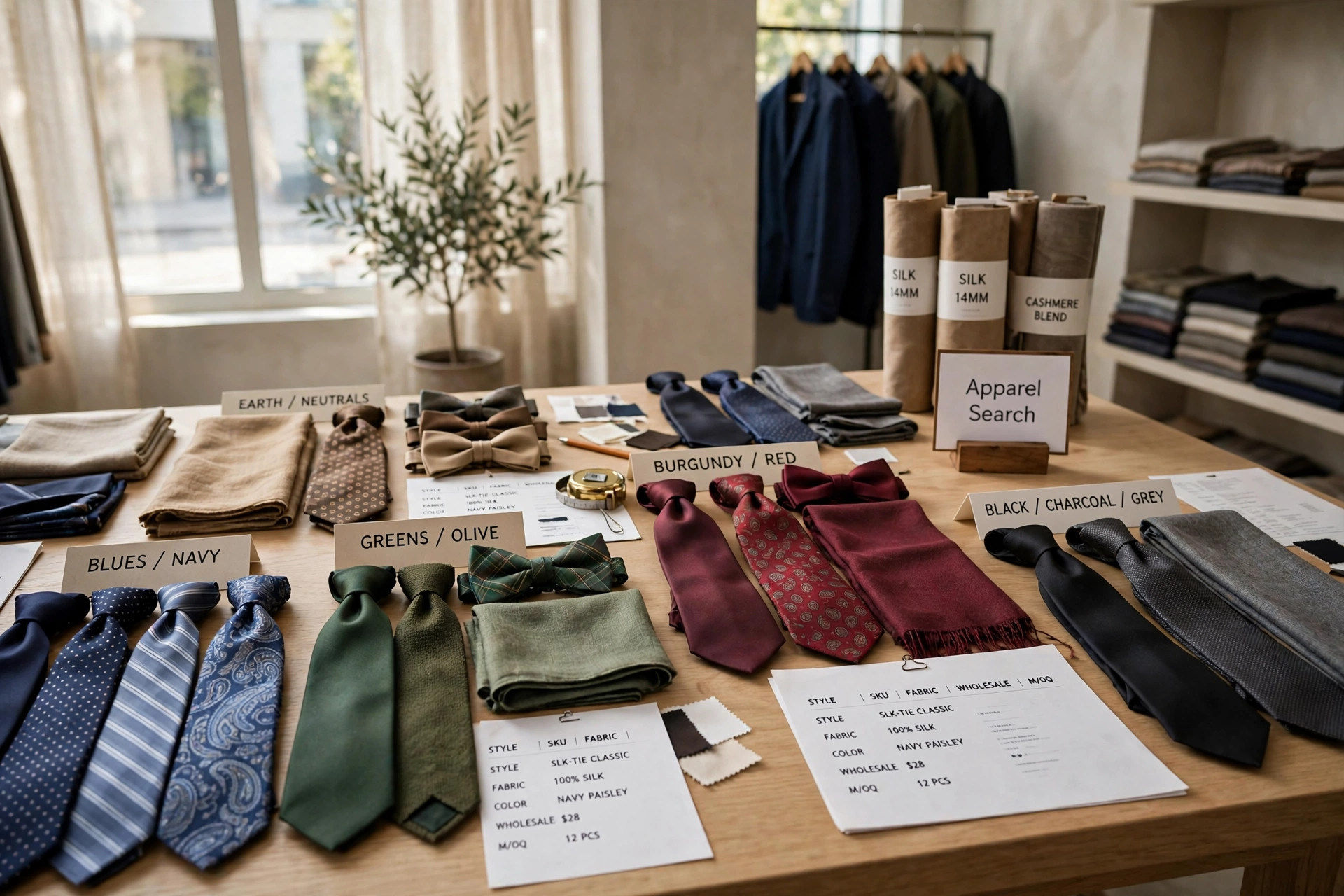
Choosing Ties, Bow Ties and Scarves for the Season
Range building starts from the clothing the neckwear must accompany. The buyer studies the season's suiting and shirting stories first — dominant suit colours, shirt stripes and checks, lapel widths — because a tie only sells when it completes outfits customers are actually putting together. Width follows lapel and collar fashion, so a season of slim tailoring calls for narrower blades, while a return to fuller cuts reopens the classic widths that conservative customers never abandoned.
Within that frame the buyer layers the assortment: dependable plains and small geometrics that replenish year after year, woven patterns tied to the season's palette, a small number of bold statement pieces for windows and features, bow ties in self-tie and pre-tied forms, and scarves that bridge into colder months. Wedding parties are a business of their own — matching sets for groomsmen in ivory, silver and pastel shades need depth in exactly the colours a bridal party will request at short notice.
Judging Silk and Construction Before Committing
Quality in a tie is tactile. The buyer handles every sample: weighing the silk, checking whether the interlining gives the blade body without stiffness, and tying an actual knot, because a tie that will not dimple or that slips loose within the hour will come back as a return however handsome it looked flat. Woven jacquard patterns are examined for clean motif edges; printed silks are checked for registration and for colour that survives dry cleaning without bleeding.
Scarves demand a different inspection — edge rolling on silk squares, fringe finishing on wool and cashmere blends, and pilling behaviour on knitted styles. Bow ties are judged on symmetry and on hardware: adjusters and hooks that feel flimsy undermine an otherwise formal product. Suppliers who specialise in neckwear, many of them long-established makers, are visited and compared on exactly these details before prices are even discussed.
Occasions, Gift Seasons and the Neckwear Calendar
Demand in this department arrives in waves the buyer can circle a year ahead. Spring brings wedding bookings and race-day dressing; early summer adds graduation and Father's Day gifting; December concentrates a remarkable share of annual tie sales into gift purchases, when boxed sets and presentation packaging matter almost as much as the silk inside. The buyer therefore orders gift formats and wedding depth far earlier than core replenishment lines, and protects open-to-buy for late wedding requests that arrive with little warning.
In season the work becomes stock choreography: best-selling wedding shades are reordered while makers still hold the fabric, slow patterns are moved into promotions tied to suit events rather than marked down in isolation, and scarf depth is built up or run down as forecasts turn colder or milder. Because unit prices are modest, volume discipline — many styles, shallow depth, fast reaction — is what keeps the department profitable.
Abilities That Mark Out a Good Neckwear Buyer
Colour confidence is the signature skill. The buyer must predict which combinations of suit, shirt and tie a customer will accept, and translate catwalk and tailor influences into patterns a mainstream shopper will wear to the office. That instinct is backed by arithmetic: sell-through by pattern family, margin after markdown, and repeat rates on core designs all feed the next season's commitments.
Supplier relationships carry unusual weight in a trade served by relatively few specialist makers. A buyer who is known to pay fairly and forecast honestly gets first sight of new weave designs and honest warnings about silk price movements. Presentation skills matter too, since neckwear sells from fixtures the buyer helps plan — colour-blocked displays beside suiting routinely outsell ties merchandised alone.
Training Routes and Where Neckwear Buying Leads
Most neckwear buyers arrive from menswear: assistant buying on tailored clothing, selling in a suiting department, or accessories buying where ties were already part of the range. Formal study in fashion buying or textiles helps an applicant explain silk grades and weave structures in an interview, yet employers weigh demonstrated pattern judgement and tidy order management more heavily than any single certificate.
Progression usually widens rather than climbs at first — from neckwear into the broader men's accessories brief, then to a full menswear buyer role carrying shirts or tailoring. Senior buyers who began with ties often credit the specialism with teaching them colour discipline and gift-season planning, two lessons that transfer to every department they manage afterwards.
Common Questions
Is neckwear buying part of menswear or accessories buying?
It can sit in either. Smaller retailers fold ties and scarves into a men's accessories brief, while larger menswear operations keep a dedicated neckwear buyer because wedding trade, gift seasons and silk sourcing each need focused attention. The job description is the same wherever the role reports.
How does a neckwear buyer judge tie quality?
By handling and knotting the sample. Blade weight, interlining resilience, weave clarity and whether the knot holds a clean dimple through a day of wear tell the buyer more than any specification sheet. Colourfastness and edge finishing on scarves are checked the same hands-on way.
When does a neckwear buyer place the biggest orders?
Well ahead of the two demand peaks the department lives by: the spring and summer wedding season, including matching groomsmen sets, and the December gift period, when boxed ties and scarf sets sell in volumes the rest of the year never matches.