Pants Buyer Job Description
Buying trousers and bottoms — the category where fit blocks, rises and leg shapes are the product
A pants buyer owns the trouser department: chinos, tailored trousers, cargo styles, wide-leg and tapered cuts, joggers and formal bottoms — everything below the waist that is not a skirt and not a pair of jeans. It is a deceptively technical specialism, because trousers succeed or fail on millimetres: a rise that digs, a waistband that rolls, a taper that bags at the ankle, and the customer quietly stops buying that label. This page explains how pants ranges are engineered through fit blocks and size curves, how fabric and construction choices are judged, and where the role leads.
More Buying Job Descriptions by Letter:
Fit Blocks: The Buyer's Most Valuable Asset
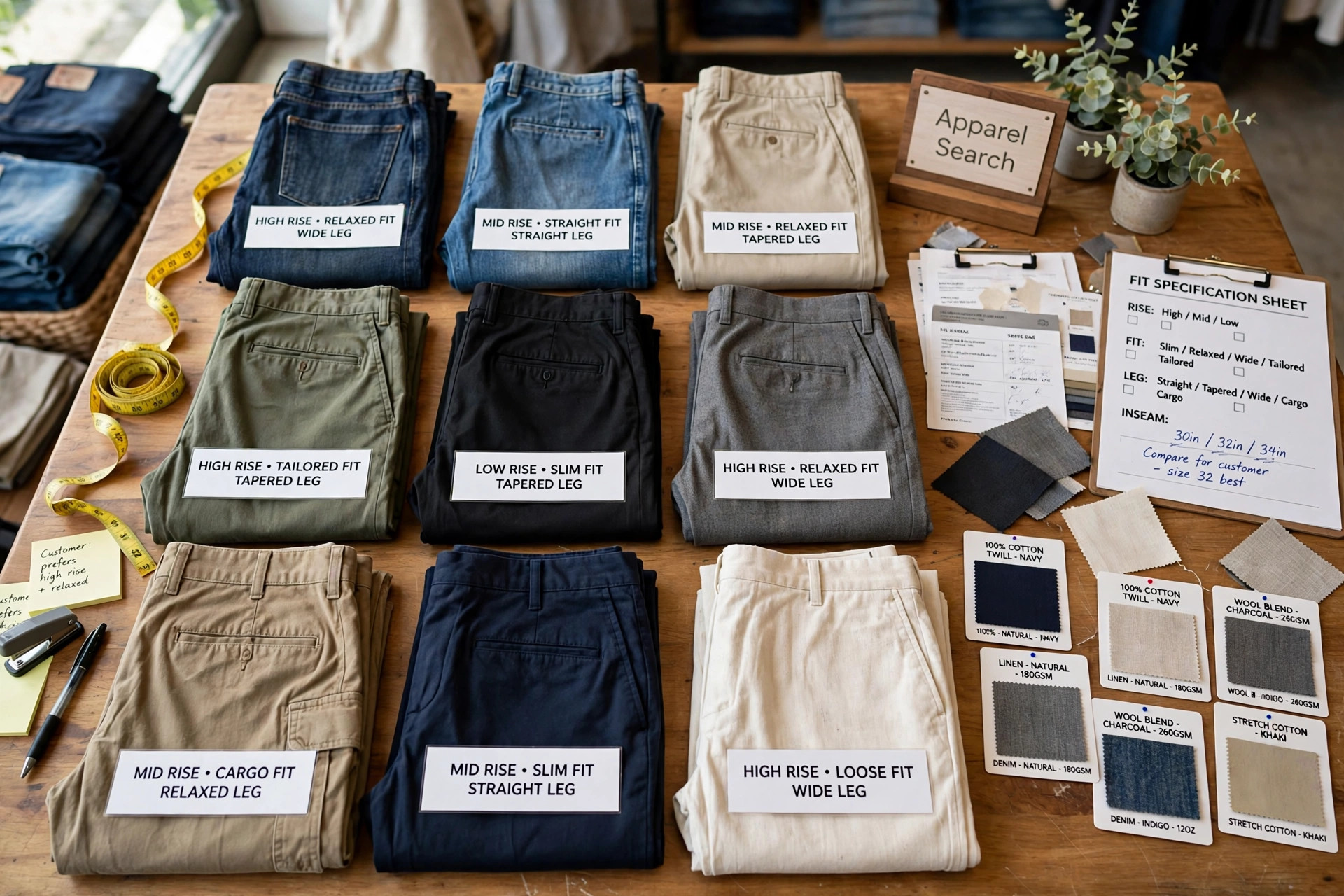
A fit block is the approved pattern set — waist, hip, thigh, knee, ankle and inseam measurements — that defines how a brand's trousers feel. The pants buyer guards those blocks across seasons, approving any change to a rise or taper only after wear trials, because customers who find a trouser that fits reorder it in new colours and fabrics with barely a glance. New blocks are introduced deliberately, perhaps a higher rise tracking a fashion turn, and are then tested in a limited set of stores before rolling across the range.
Fit sessions are the buyer's weekly reality. Production samples are tried on fit models representing the size curve's key points, and adjustments are written as tolerances — a centimetre of tolerance at the waist is a different garment from a centimetre at the ankle. The buyer learns to read a fit report the way other buyers read sales reports, since the two are inseparable in this department: fit failures surface as returns, and return rates by style are the most honest report card the buyer owns.
Rises, Leg Shapes and the Fashion Cycle
Trouser fashion moves through rises and leg shapes in cycles the buyer must time rather than chase. High-rise, mid-rise and low-rise waistbands each suit different bodies and eras, and the buyer stocks the transition deliberately — keeping the proven mid-rise core deep while testing a returning high rise in one fabric and price point. Leg shapes carry the same judgement: straight, tapered, wide, bootcut and relaxed each peak and recede, and committing an entire department to one silhouette at the wrong moment is the classic pants-buying error.
Length is its own discipline. Inseam ranges, cropped and full lengths, and the question of whether hems are finished or raw all interact with footwear trends — a wide leg needs a different hem treatment beside trainers than beside boots. The buyer plans lengths as part of the style, not as an afterthought, and reviews length returns separately from waist returns to keep the two problems distinct.
Fabric, Stretch and Waistband Engineering
Stretch content decides how a trouser behaves across a day. The buyer compares cotton-elastane blends, stretch twills and performance wovens for recovery — whether the knee bags out by evening — and for wash stability, since a trouser that grows a size after laundering is returned even if it fitted perfectly in the shop. Wrinkle recovery matters for work trousers, drape for wide-leg styles, and abrasion resistance at the inner thigh for heavier customers, all checked on lab reports and wear trials before bulk commitment.
Waistband construction receives disproportionate attention: elasticated, contoured, flat-front and button-fly options are evaluated for comfort under a tucked shirt and for longevity through washing. Pocket placement, fly strength and bar-tacking at stress points are inspected on samples, because these small hardware decisions generate most of the department's quality complaints. A pants buyer who skimps on construction review pays for it in returns, regardless of how fashionable the leg shape is.
Size Curves, Core Colours and Replenishment
Quantity planning in trousers is a size-curve exercise. The buyer models demand across waist and inseam combinations, knowing that extremes — very short or very long inseams — sell slowly but create fierce loyalty when stocked, while middle sizes turn fastest and must never stock out during peak trading. Core programmes in black, navy, charcoal and khaki are replenished continuously and protected from markdown, since their sales pattern is steady rather than seasonal.
Fashion trousers, by contrast, are bought in controlled bursts — a seasonal colour, a checked pattern, a cargo revival — with markdown exit plans agreed before the order is placed. In season the buyer watches sell-through by fit block and leg shape separately, so a struggling taper can be cut without damaging a thriving straight leg, and reorders proven core styles while suppliers still hold the cloth.
How Pants Buyers Are Made and Where They Go
The usual background is bottoms-adjacent: assistant buying on trousers or denim, tailoring departments, or retail selling in a store where customers ask for trouser advice daily. Formal buying or textiles qualifications help, but the interview test is practical — explain a fit block, read a size-curve report, and judge stretch recovery from a fabric sample — and employers weight those demonstrations heavily.
Progression opens into broader bottoms and then full menswear or womenswear buying, where the fit discipline learned on trousers transfers directly to every fitted garment. Some pants buyers specialise further into technical or workwear trousers, where performance specifications and durability testing dominate. The category's precision also suits range-planning and merchandising management roles, where the same analytical habits govern whole departments.
Common Questions
What is a fit block in pants buying?
The approved set of measurements — waist, hip, thigh, knee, ankle and inseam — that defines how a brand's trousers fit. Customers return to blocks that fit them, so pants buyers protect proven blocks and change them only after wear trials.
Does a Pants Buyer buy jeans as well?
No. Denim has its own buyer in this directory, because denim washing, fabric weights and fit culture form a separate specialism. The pants buyer covers trousers and non-denim bottoms, working alongside the jeans buyer where ranges overlap.
Why do trousers have such high return rates?
Because fit is unforgiving: a rise that digs, a waistband that rolls or a leg that bags at the ankle is felt all day. Careful fit approval and waistband construction review are the buyer's main defences, and return rates by style are tracked as a core performance measure.