Children's Outerwear Designer Job Description
Designing children's coats and jackets as products — safety, durability, warmth and room to grow
A children's outerwear designer designs coats and jackets for children's size ranges: winter coats, puffer jackets, rain jackets, snowsuits and school coats. The work is product design judged by a demanding standard — the garment must keep its wearer warm and dry, survive playground treatment and constant washing, fasten easily, comply with children's clothing safety rules, and still leave room for the growth that will happen before the season ends. This page describes the role purely in those product terms: the fabrics, the safety standards, the fit-for-growth decisions and the career route.
More Design Job Descriptions by Letter:
What a Children's Outerwear Designer Does
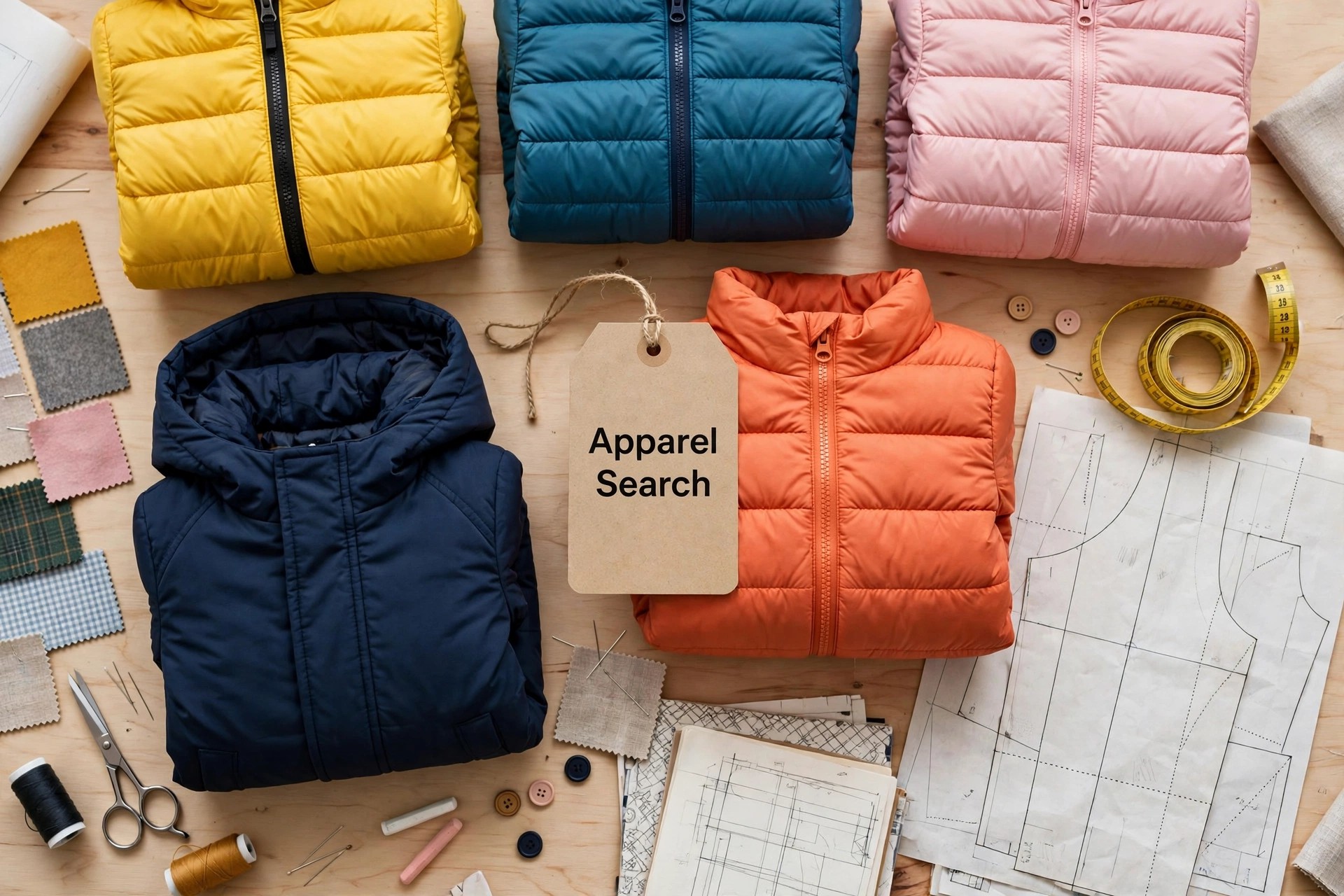
Working from the range plan, the designer covers the season's children's coat needs by size band and use: the everyday school coat, the warmest winter style, waterproof rainwear, and lighter jackets for the shoulder seasons. Each style is specified as a product — shell fabric, insulation weight, lining, hood construction, closure type and pocket placement — with the practicalities of children's wear designed in from the start: fronts that close without a struggle, cuffs that adjust, and lengths and fits checked against the activities the coat will actually be worn for.
Development runs through samples examined size by size. Because a style may be produced across many children's sizes, the designer checks that insulation, proportions and construction grade sensibly from the smallest size to the largest, that hoods sit correctly at each size, and that reflective or high-visibility details included for dark school-run mornings are placed consistently. Pre-production samples are assessed against the approved specification for seam strength, closure security and finish before bulk production is authorised.
Safety, Durability and Growth Room
Safety standards shape children's outerwear more directly than any other coat category. Drawstrings and cords at hoods, necks and waists are governed by strict rules in major markets, so children's styles are designed to those specifications or engineered without free cords at all; toggles, elastication and snap fastenings are selected with those rules open on the desk. Attachment security matters throughout — buttons, snaps and zip pullers must withstand pulling — and flammability and labelling requirements are checked with garment technologists as part of design, not as an afterthought.
Durability and growth are the other two design briefs. Children's coats are washed often and treated roughly, so designers choose shell fabrics and insulation that keep their warmth and appearance through repeated laundering, reinforce elbows, hems and pocket entries, and specify zips proven for heavy use. Growth room is designed deliberately: turn-up or extendable cuffs, generous ease through the body and lengths chosen so the coat serves a full season and beyond — features parents recognise as value and check for when they buy. Name-tape and lost-property-friendly details, easy-care finishes and replaceable components all belong to the same practical design language.
Skills and Abilities the Role Requires
The skill base is the outerwear designer's — technical specification, performance fabrics and insulation, pattern and construction awareness, costing — applied with specialist knowledge of children's sizing and the safety framework that governs it. Knowing how fit and proportion change across children's size bands, and which practical features decide whether a coat is re-bought in the next size up, is the category expertise employers in children's clothing specifically hire for.
Commercial judgement runs close behind. Children's outerwear is bought on warmth, durability and price by a purchaser who is not the wearer, so ranges must prove their value clearly: honest warmth ratings by style, visible quality at stress points, and colour and print choices that children like and parents judge practical. The designer works tightly with technologists and compliance colleagues, reads returns and parent feedback as design evidence, and keeps meticulous specification records across many sizes and sample rounds.
Qualifications, Training and Career Path
Designers in this specialism usually train in fashion design, with childrenswear or outerwear modules and placements where available, and enter through assistant designer roles in children's clothing companies, supermarket and high-street children's teams, or specialist outerwear brands. Portfolio work that helps most shows developed product ranges — flats, specifications and size-aware thinking — rather than styling alone, and any grounding in children's safety standards strengthens an application immediately.
Progression leads to designer and senior designer within children's outerwear, then to design responsibility across children's categories, where coats sit alongside the wider children's range. Some designers move between children's and adult outerwear during a career, carrying the fabric and construction science with them; many specialise permanently, because the sizing knowledge, safety standards and seasonal rhythms of children's clothing form a distinct professional expertise that the industry values.
Common Questions
What does a children's outerwear designer design?
Coats and jackets sold in children's size ranges: winter coats, puffer jackets, rainwear, snowsuits and school coats. Each style is specified as a product — shell, insulation, lining, hood and closures — checked size by size against children's clothing safety and durability standards.
Why do safety rules matter so much in children's coat design?
Children's garments are regulated in ways adult clothing is not: rules govern drawstrings and cords, attachment security, flammability and labelling. Designers build those requirements into hoods, fastenings and construction from the first sketch and verify them with garment technologists.
What is growth room in a children's coat?
Deliberate design allowance for a growing wearer: extendable or turn-up cuffs, adequate body ease and lengths chosen to serve a full season or more. Together with washable, hard-wearing fabrics, it is the value engineering parents look for in children's outerwear.