Sourcing Manager Job Description
Owning a product or country portfolio — selecting factories, negotiating cost and capacity, and being accountable for delivery
A sourcing manager owns a slice of a brand’s production: a product category, a country or a set of factories, and is accountable for what that slice costs, when it delivers and how well it is made. Coordinators track the orders; the sourcing manager decides where the orders go, at what price and on what terms, and answers for margin, delivery and compliance results across the portfolio. It is a commercial role with a factory floor at the end of every decision.
More Production Job Descriptions by Letter:
Selecting and Developing Suppliers
Supplier selection is the manager’s defining judgement. Factories are assessed on capability for the product, machinery and capacity, quality history, financial stability, compliance and social standards, and cultural fit with the brand — then developed over seasons rather than used once and discarded. The manager builds a balanced base: a core of reliable partners, specialists for difficult products, and backup capacity for the season when a key factory is full, late or fails an audit.
Development work runs through the year: visiting factories, reviewing capacity and capabilities, agreeing improvement plans on quality or efficiency, and steering new products to the factory best equipped to make them. A manager who only chases the lowest price eventually pays in quality, late deliveries and audit failures; the strong manager buys the best total value — price, quality, reliability and compliance together — and defends that judgement with data when buyers push for cheaper.
Negotiating Cost, Capacity and Delivery
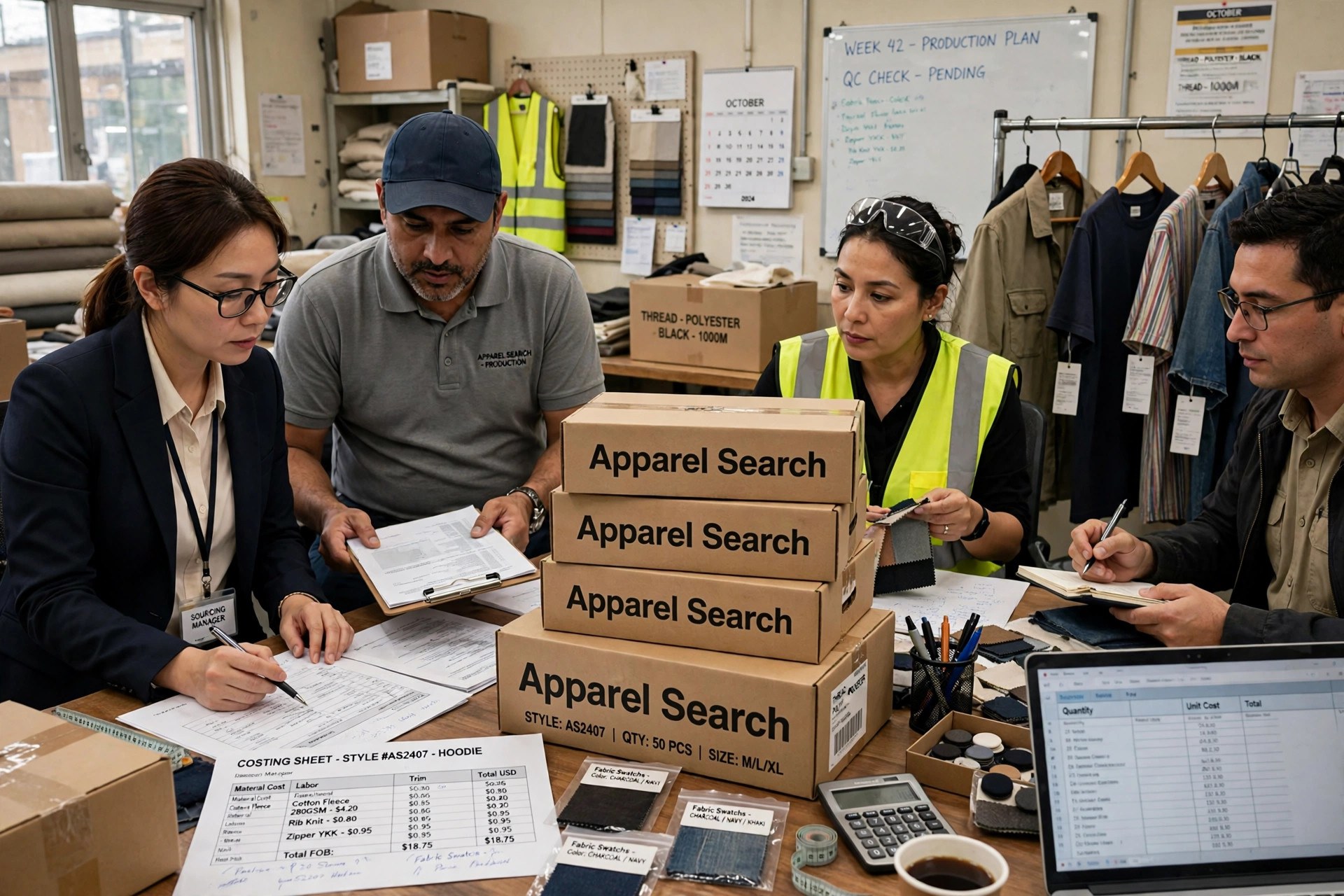
Negotiation is continuous, not seasonal. Managers negotiate garment prices against cost breakdowns — fabric, trims, labour minutes, overhead and freight — challenging each element with market knowledge, and they lock capacity months ahead, reserving lines for key styles so the brand is not hunting for space when orders firm up. Terms cover payment, minimums, lead times, flexibility for reorders and cancellation, and the remedies when a factory or the brand fails to perform.
Delivery accountability follows: the manager reads the time-and-action position weekly, intervenes on the orders slipping — expediting materials, splitting production, re-sequencing styles — and reports honestly to merchandising when a date will move. Margin is the manager’s scorecard, reported as landed cost against target, and the experienced manager protects it as much by avoiding the bad order as by winning the good negotiation.
Cost engineering sits alongside negotiation as the manager’s second lever: working with designers and technical teams to simplify a construction, change a fabric specification or consolidate trims so a style can be made at its target price without visible loss. The sourcing manager is often the person who knows, style by style, exactly which detail costs the money — and which saving the customer would actually notice.
Quality, Compliance and the Team
Quality and compliance sit inside the manager’s remit, not beside it. The manager works with quality teams on inspection results and corrective action, ensures factories hold the social, safety and environmental standards the brand requires, and removes or rehabilitates suppliers that fail audits. Where a factory’s improvement stalls, the manager makes the hard call to move volume — a decision that affects real livelihoods and is never taken lightly.
Most sourcing managers lead a small team of coordinators and assistants, setting their priorities, reviewing their order books and developing them toward manager roles of their own. The manager is also the brand’s face to its factories: the person suppliers call when problems arise, whose fairness and reliability decide whether factories prioritise this brand’s orders when capacity is scarce.
Skills, Qualifications and Career Path
The role demands commercial numeracy, negotiation skill, deep product and factory knowledge, cultural fluency across sourcing countries, and the resilience to manage problems in distant time zones. Managers usually arrive from coordinator roles, merchandising, technical or buying positions, often with fashion, business or supply-chain qualifications — but a track record of delivered margin and on-time shipments outweighs credentials.
Work is office-based with substantial travel to factories, buying offices and trade events. Progression runs to senior manager and vice president, owning larger categories or whole sourcing regions, and onward to senior vice president and chief sourcing officer roles. Some managers move to the factory side as merchandising or business-development leaders, or found sourcing agencies, taking their supplier knowledge into businesses of their own.
Common Questions
What does a sourcing manager do that a sourcing coordinator does not?
The manager decides: which factories to use, what price and terms to agree, and how capacity is booked. The coordinator supports those decisions by tracking orders, samples and documents. The manager is accountable for the portfolio’s cost, delivery and compliance results.
How do sourcing managers negotiate garment prices?
Against a cost breakdown — fabric, trims, labour minutes, overhead and freight — challenging each element with market knowledge and factory understanding, then agreeing the best total value rather than the lowest headline price.
How do you become a sourcing manager?
Most commonly by progressing from a sourcing coordinator or merchandising role, building product and factory knowledge and a record of delivered orders, then taking a product or country portfolio. Fashion, business or supply-chain qualifications support the move but do not replace results.
More to Explore
Sourcing Resources
References & Further Reading
More Job Description Categories
- Buying Job Descriptions
- Design Job Descriptions
- Marketing & PR Job Descriptions
- Miscellaneous Job Descriptions
- Planning & Allocation Job Descriptions
- Production & Sourcing Job Descriptions (current)
- Sales & Selling Job Descriptions
- Transportation & Warehouse Job Descriptions