Corporate Fashion Jobs in New York City
New York City — the headquarters floor: merchandising, marketing, supply chain and the business of brands
New York City is often called the fashion capital of the world, and for corporate careers that label has a concrete meaning: an unusual concentration of brand headquarters and corporate offices, set above and around the showrooms, design studios and sample rooms of the Garment District. People who want to run fashion as a business — not only design it — come here to do it.
Corporate fashion work spans merchandising and planning, marketing and public relations, e-commerce, supply chain, finance, licensing and sustainability, for companies ranging from global powerhouses to ambitious young labels. This page explains what those headquarters jobs involve, why employers cluster them in New York, and how candidates realistically compete for them. For the wider New York market, including design and retail, see the companion New York fashion jobs guide linked below.
Headquarters Functions: Who Sits on the Corporate Floor
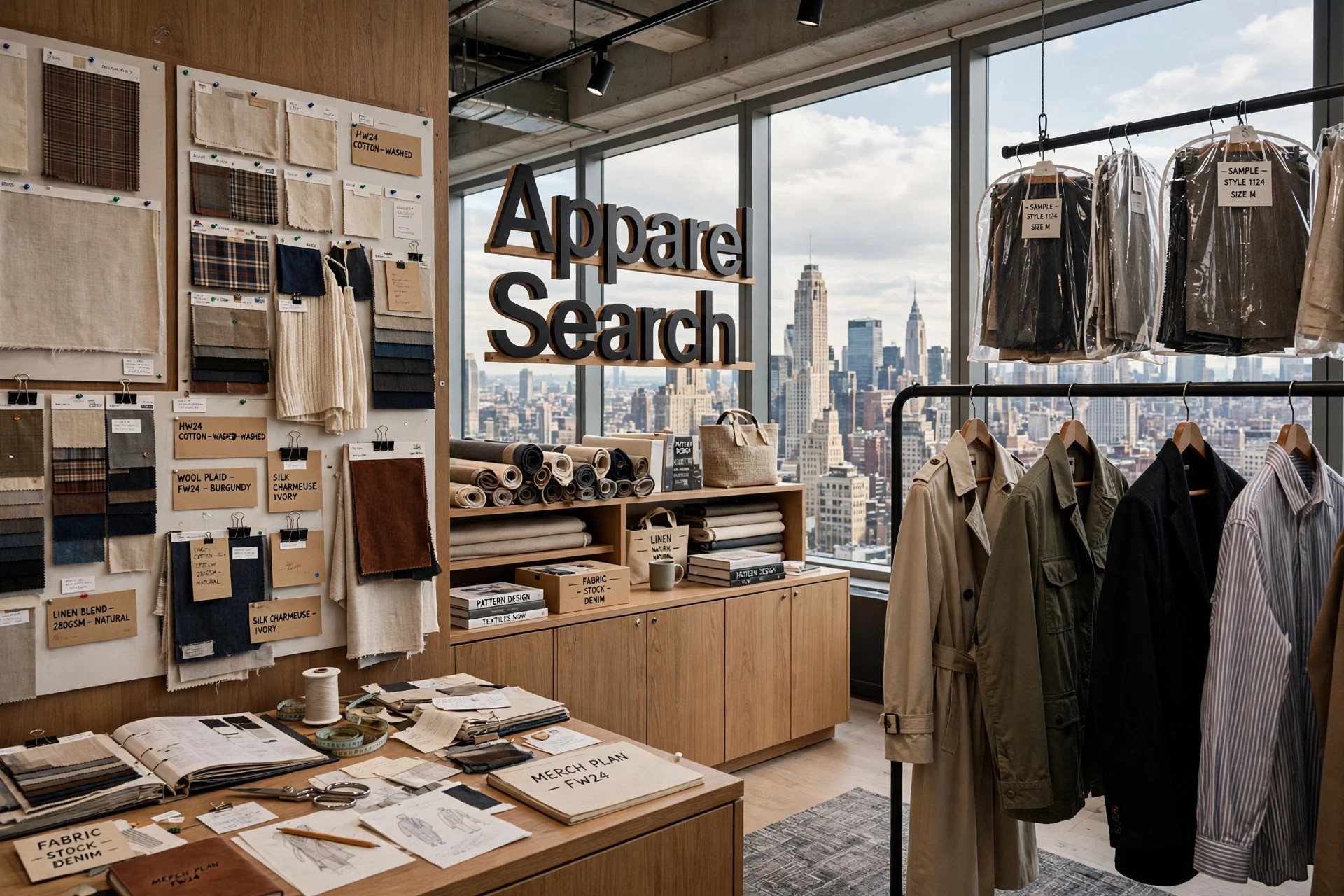
Merchandising teams decide what a brand sells: line planning, assortment building, pricing and open-to-buy management, working between design and sales. Planners and allocators translate those decisions into quantities and store allocations, while product development and production staff manage costing, factory communication and delivery calendars across overseas suppliers.
Around them sit the brand's other engines. Marketing and public relations manage campaigns, press, influencers and events; e-commerce teams run the digital storefront and its data; licensing staff build and police brand extensions; finance, legal and human resources provide the corporate spine; and sustainability and compliance specialists handle materials standards, factory audits and reporting that regulators and customers increasingly demand.
Why Brands Concentrate Corporate Teams in New York
History started it: the Garment District's factories, showrooms and suppliers made New York the industry's meeting point, and the corporate offices grew where the trade already gathered. Fashion Week — one of the industry's Big Four alongside Paris, Milan and London — keeps the world's press, buyers and executives cycling through the city, which makes it a natural seat for brand leadership.
The supporting cast reinforces the choice. Advertising agencies, photographers, publishers, showrooms and sales organisations, finance and legal specialists all sit within a few neighbourhoods, and prestigious schools such as the Fashion Institute of Technology and Parsons School of Design supply graduates who want corporate careers and stay to build them. Cultural diversity in the workforce mirrors the global customers these brands serve.
Skills and Routes into Corporate Roles
Corporate hiring is function-specific. Merchandising and planning candidates are tested on numeracy and commercial judgement; marketing candidates on campaigns they have actually run; supply chain candidates on costing, lead times and factory realities; e-commerce candidates on platforms and analytics. Internships, assistant roles and agency placements remain the standard first steps, and the guide to selecting fashion employment agencies linked below is worth reading before you choose one.
Movement between functions is common once you are inside: a production assistant becomes a product developer, a planner moves into merchandising. Employers also value candidates who have spent time in stores or showrooms, because headquarters decisions land better when the person making them has watched a customer decide. Career maintenance matters too — the linked guides on when and how to ask for a raise address the corporate ladder directly.
Competing for Corporate Fashion Jobs in NYC
Be candid about the competition: headquarters roles attract applicants from every fashion school and every rival brand, and many openings are filled through internal moves and referrals before they are widely advertised. Persistence, a network built at industry events and through school alumni, and a precise match between your evidence and the job's function are what separate placed candidates from perpetual applicants.
Use the city's density as a tool. Attend trade and networking events, follow the NYC-specific careers resources linked below, and read the summary of New York's fashion-capital claim to understand the market you are entering. For those who land them, corporate roles here offer the steepest learning curve in the industry — challenging projects, visible brands and advancement that rewards continuous development.
Common Questions
What counts as a corporate fashion job?
Headquarters work rather than store or studio work: merchandising, planning and allocation, product development and production management, marketing and public relations, e-commerce, licensing, supply chain, finance and sustainability. In New York these functions sit in brand offices concentrated around Midtown and the Garment District.
Do corporate fashion roles require a fashion degree?
Not uniformly. FIT and Parsons graduates fill many seats, but planning, finance, e-commerce and supply chain teams also hire business, analytics and operations graduates who can prove fashion literacy. What every function demands is evidence — internships, projects, measurable results — matched to that function's actual work.
How competitive are corporate fashion jobs in New York?
Very. The same concentration of brands that creates the opportunity draws applicants from everywhere, and referrals fill many roles early. Candidates improve their odds by targeting one function precisely, building industry contacts steadily, and treating assistant and internship roles as the genuine entry points they are.
More Fashion Job Locations
- Fashion Jobs in Los Angeles
- Fashion Jobs in Miami
- Fashion Jobs in Chicago
- Fashion Jobs in New Jersey
- Corporate Fashion Jobs in New York City (you are here)
- Fashion Jobs in New York
- Fashion Jobs in North Carolina
- Fashion Jobs in South Carolina
- Fashion Jobs in Texas