Fashion Jobs in Los Angeles
Los Angeles — Garment District production, West Coast design rooms and entertainment-adjacent fashion work
Los Angeles runs a different kind of fashion economy from New York. Where Manhattan concentrates headquarters and media, LA concentrates making: design rooms, pattern makers, sample sewers, dye houses, contractors and wholesale showrooms sit close together downtown, and a garment can move from sketch to sample without leaving a few city blocks. That density shapes every job described on this page.
The market also reaches well beyond the Garment District. Westside and beach-city brands build surf, skate, denim and contemporary labels; studios and streaming productions employ costume and wardrobe crews; and celebrity styling, photo shoots and red-carpet work create a freelance layer that few other American cities can match. This guide maps those workplaces honestly, without promising openings that may not exist today.
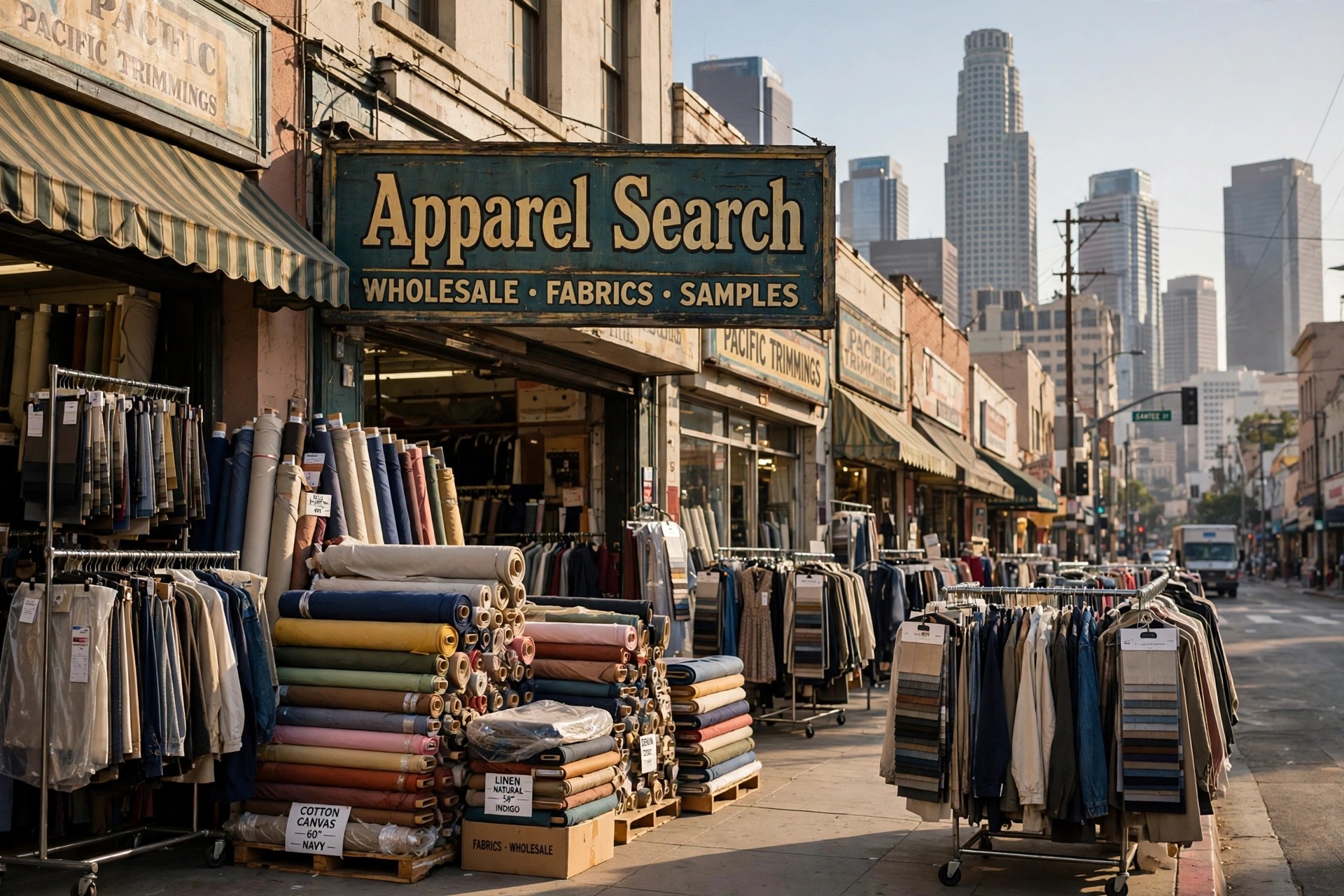
The Garment District and Downtown Production Work
Downtown, the Fashion District's wholesale buildings house showrooms where independent retailers place orders, while nearby factories and contractors cut and sew for labels large and small. Jobs here include pattern makers, sample makers, graders, markers, production coordinators, fabric buyers and quality inspectors, alongside showroom sales representatives who know both the line and the stores that buy it.
Production work rewards people who can speak both languages of the trade: the creative shorthand of designers and the practical vocabulary of a sewing floor. Bilingual English and Spanish communication is a genuine asset in many downtown workplaces, and experience with costing, yields and delivery calendars is often valued more than a famous school name.
Design, Denim and West Coast Brand Roles
LA labels are especially strong in denim, juniors and young contemporary clothing, activewear, swim and surf-inspired sportswear. Their design rooms hire assistant and associate designers, technical designers who write specification packs, textile artists creating prints and graphics, and merchandisers who plan assortments for a climate where layering means a hoodie in July.
Technical design is a reliable entry route in this city: employers need people who can measure a sample, compare it against a tech pack and communicate corrections clearly to factories overseas as well as across town. Fit knowledge travels well between employers, and a portfolio of corrected samples and clear specification sheets demonstrates it better than any cover letter.
Entertainment, Styling and Image Work
Film, television, music and advertising production generate steady demand for costume designers, assistant costume designers, wardrobe supervisors, shoppers and set costumers, much of it project-based and union-organised for larger productions. Commercial styling for photography, e-commerce and social campaigns adds another freelance tier, hired through agencies, photographers and producers rather than through job advertisements.
Breaking into this side of the city is mostly a matter of credits and reliability. Assisting established stylists, keeping a clean kit, understanding continuity and showing up calm under time pressure matter more than a large social following. Many stylists balance entertainment work with editorial and personal-shopping clients to smooth out the gaps between productions.
How Hiring Works in Los Angeles
A large share of LA apparel hiring happens through relationships: former sample-room colleagues, showroom neighbours and contractors recommend people they have watched work. Staffing agencies that specialise in apparel place many production and design-support roles, and trade resources such as the job search engines and employment agencies linked below are worth checking alongside direct applications to brands.
Practical preparation helps. Bring a portfolio or tech-pack samples that show your actual hand in the work, be ready to discuss costing and timelines, and expect trial or freelance-to-hire arrangements in smaller companies. Spread your search across downtown, the Arts District, Vernon and the beach cities rather than assuming every employer sits in one neighbourhood.
Common Questions
What part of Los Angeles has the most fashion jobs?
Downtown's Fashion District holds the densest cluster — showrooms, design rooms, fabric suppliers and contractors within walking distance of each other. Significant employers also sit in Vernon, Commerce, the Arts District and the beach cities, so a serious search covers several neighbourhoods rather than one postcode.
Do I need entertainment contacts to work in LA fashion?
Only for the costume, wardrobe and styling tier, and even there assistants are hired for reliability and credits rather than fame. Design, production, technical design, sales and merchandising roles downtown and at West Coast brands recruit through ordinary channels: agencies, referrals and direct applications.
Is Spanish useful for fashion work in Los Angeles?
Yes, particularly in production. Many downtown factories, contractors and fabric businesses work bilingually, and coordinators who can discuss a sample, a delivery date or a quality problem in both English and Spanish are consistently easier to place and harder to replace.