Fashion Jobs in South Carolina
South Carolina — Upstate textile know-how, performance fabrics and Charleston's visitor-facing retail
South Carolina's fashion employment rests on a textile foundation laid in the Upstate, where Greenville and Spartanburg grew up around mills and the companies that supplied them. Much of that world has changed shape — commodity cloth largely departed, technical and performance textiles stayed — and the state's apparel work now mixes mill technology, speciality manufacturing and coastal retail.
Charleston supplies the other pole: a visitor and wedding economy with boutiques, resorts and events that employ retail and styling staff at a level its size would not predict. Between the Upstate plants and the Lowcountry shops sits a practical, smaller market that rewards versatile people. This guide maps it.
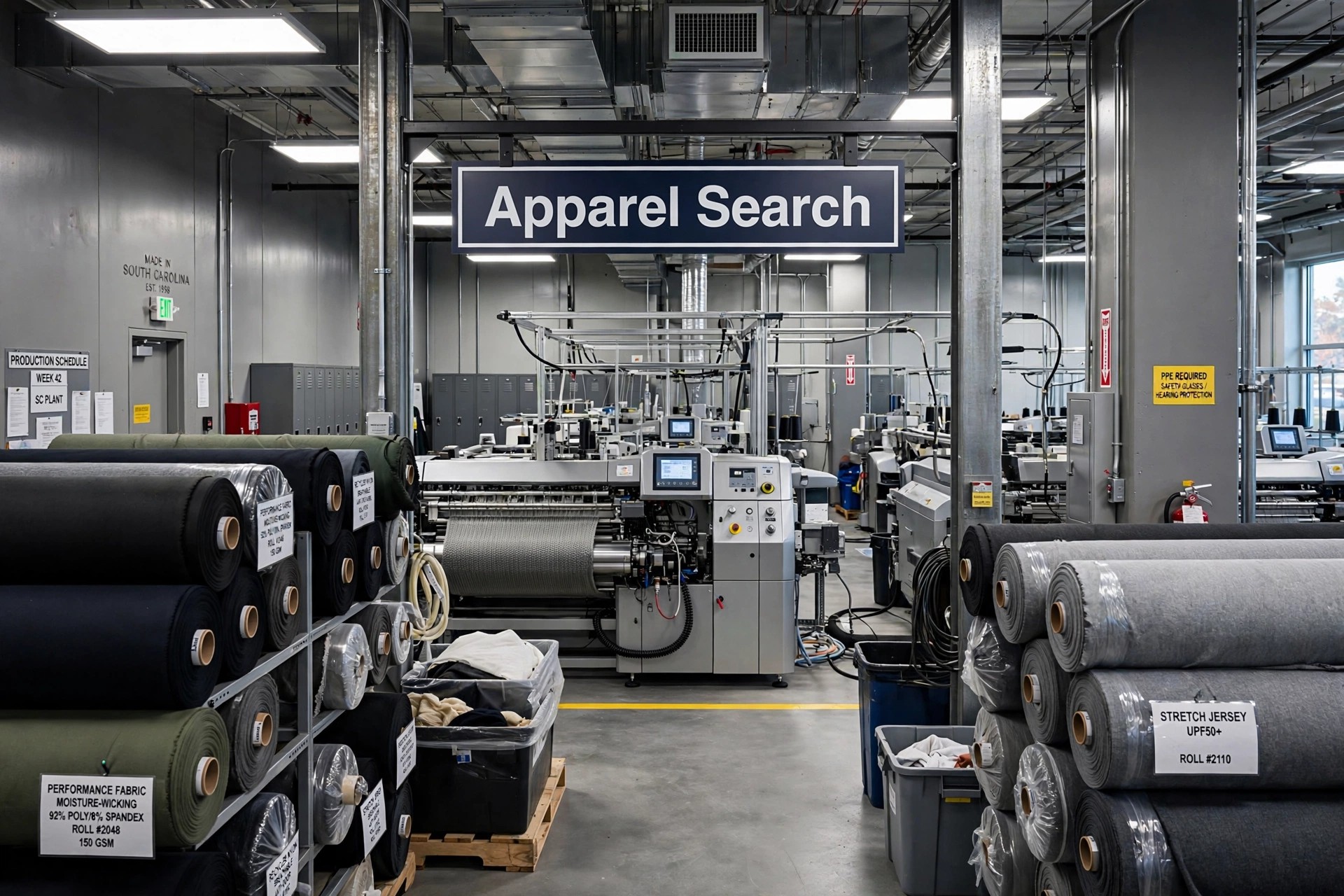
The Upstate: Greenville, Spartanburg and Textile Technology
Upstate employers produce and finish fabrics for apparel, automotive, protective and industrial customers, and hire textile technicians, quality and laboratory staff, production supervisors, dye and finishing specialists and the engineers who keep modern equipment running. Apparel-facing roles concentrate on performance and workwear fabrics: stretch, moisture management, durability and protective properties.
Heritage helps those who translate it. Workers and graduates who understand fibre and fabric behaviour can move into product development and technical sales for brands that source these materials, and employers here often train promising hires deeply rather than competing for ready-made specialists in a small labour pool.
Speciality Manufacturing and Workwear
Beyond the mills, South Carolina manufacturers make specialised sewn goods — uniforms, protective clothing, accessories and contract sewing for brands that need domestic production for speed, compliance or small runs. Their teams include pattern and sample makers, sewing supervisors, production planners and quality inspectors.
Domestic sewing skills are scarce and therefore employable. Experienced sample makers and supervisors who can train operators, balance a line and hold quality standards find that factories compete for them, and product developers who know what a local contractor can and cannot sew well are valuable to brands rebalancing production closer to home.
Charleston and Coastal Retail
Charleston's King Street boutiques, resort shops and bridal and occasionwear businesses serve residents, students and a heavy flow of visitors and wedding parties. Roles span boutique management and buying for independent stores, bridal consulting, alterations, visual merchandising and personal shopping, with seasonal peaks tied to tourism and the wedding calendar.
Independent retail teaches complete skills quickly: in a small boutique the same person may buy, receive, display, sell and manage social accounts in one week. That breadth makes Charleston retail experience a strong foundation for buying and brand roles elsewhere, provided you can point to numbers — sales, sell-through, event results — and not only tasks.
Columbia and How Hiring Works Statewide
Columbia adds institutional demand — university, government and healthcare communities buying uniforms and workwear — plus mainstream mall retail and distribution serving the state's centre. Across South Carolina, hiring runs on reputation and referral within compact professional circles, supplemented by agencies and the search resources below.
Versatility is the winning trait in a market of this size. A candidate who pairs fabric knowledge with sales ability, or retail management with e-commerce skills, fits more of the state's employers than a narrow specialist. Search the Upstate, Charleston and Columbia together, and let the state careers page below anchor the wider picture.
Expect a measured pace to hiring decisions. South Carolina employers in both the plants and the boutiques tend to interview carefully, check references thoroughly and then keep the people they choose for a long time. A patient, well-referenced application followed up politely will usually travel further here than a high-volume scatter of applications sent without local knowledge.
Common Questions
What fashion jobs is South Carolina known for?
Textile technology and production in the Upstate around Greenville and Spartanburg — especially performance and technical fabrics — speciality and workwear manufacturing, and boutique, bridal and resort retail in Charleston. It is a smaller, practical market built more on making and selling than on design headlines.
Are sewing and sample-making skills in demand in South Carolina?
Yes. Domestic contractors and speciality manufacturers consistently need experienced sample makers, pattern staff, sewing supervisors and quality inspectors, and the skills shortage means proven ability commands attention. These are among the most directly employable hands-on skills in the state's apparel economy.
Which South Carolina areas should a fashion job search cover?
The Greenville-Spartanburg Upstate for textiles and manufacturing, Charleston for boutique, bridal and visitor retail, and Columbia for institutional, uniform and mainstream retail work. Treating the three as one statewide search gives a realistic picture of what is available.
More Fashion Job Locations
- Fashion Jobs in Los Angeles
- Fashion Jobs in Miami
- Fashion Jobs in Chicago
- Fashion Jobs in New Jersey
- Corporate Fashion Jobs in New York City
- Fashion Jobs in New York
- Fashion Jobs in North Carolina
- Fashion Jobs in South Carolina (you are here)
- Fashion Jobs in Texas