Eleksen Group plc
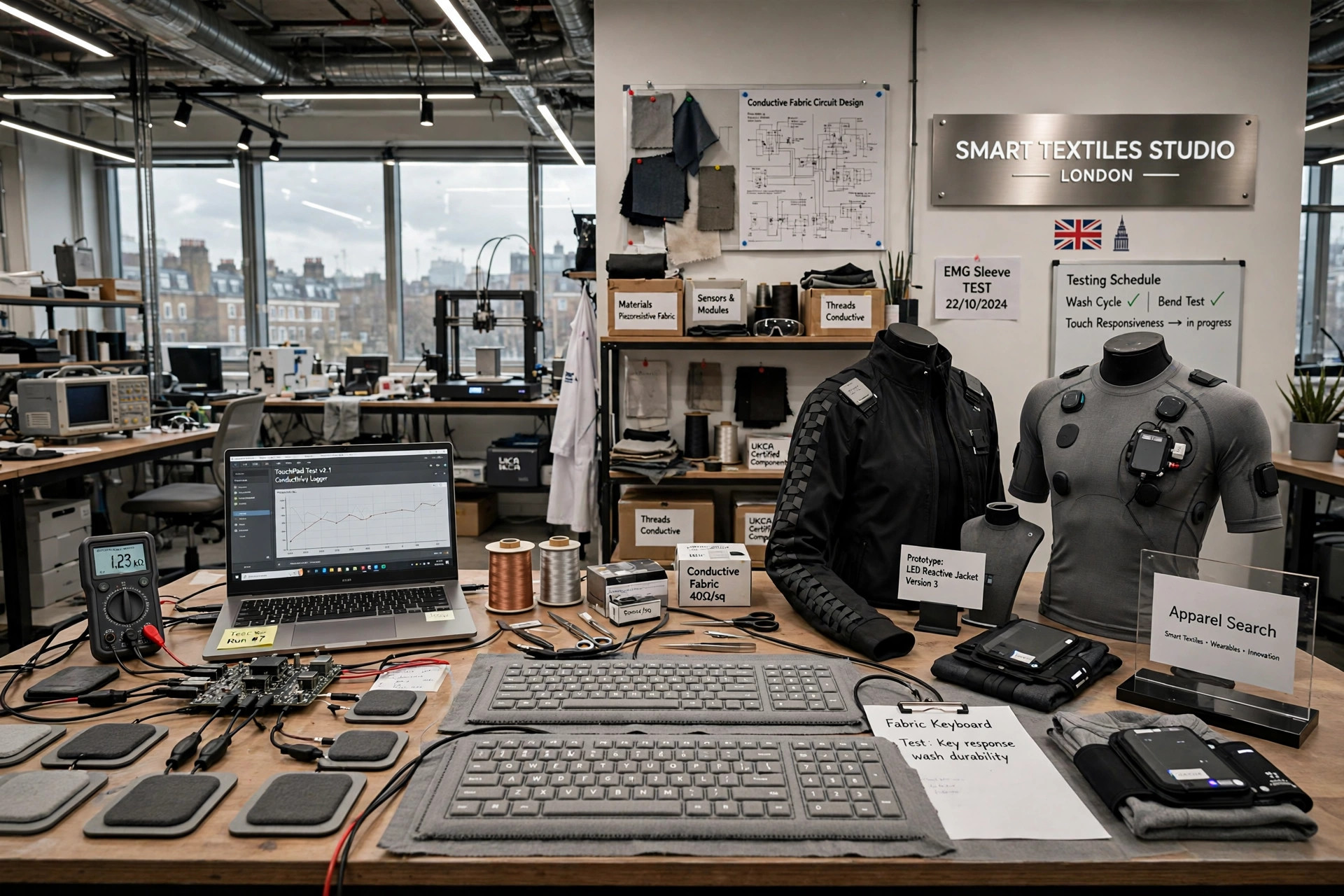
Eleksen Group plc, a UK company, was the record's world leader in touch-sensitive interactive textiles for electronics interface design. Its core technology, ElekTex, is an electro-conductive fabric touch pad — a flexible, durable, rugged fabric touch-screen interface for wearable controls and consumer electronics accessories.
Company Snapshot
- Location
- United Kingdom
- Fabrics & Products
- ElekTex electro-conductive fabric touch interfaces for wearable electronics and consumer products
Company Profile
Every other company in this directory sells cloth by its handle, weight or weave; Eleksen sold cloth that works as a switch. ElekTex senses touch position through a conductive fabric construction, letting a jacket cuff, bag or soft keyboard carry real controls — play, pause, volume, phone functions — without hard plastic parts. The record lists applications from wearable electronic controls for consumer electronics and industrial wear to lightweight, low-power touch interfaces for accessories and telematics.
This profile is kept as the directory recorded it: a snapshot of the smart-textiles industry's first commercial wave, when electronics brands experimented with fabric interfaces before touchscreens on phones absorbed most of those functions. Buyers researching conductive textiles today will find the field has moved on — which is exactly why the currency note below matters: check the company's own website for its present status and products before relying on the record's description of its market position.
ElekTex worked, in the record's description, as a fabric touch pad 'optimized for the creation of flexible, durable and rugged fabric touch screen interfaces' — position-sensing through layered conductive textiles, sealed into a soft panel. Its listed applications sketch the industry's early hopes: wearable controls stitched into jackets for music players and phones, industrial wear where gloves and hard switches fight each other, and low-power interfaces for accessories and telematics. The company's presence in a fabric mills directory is itself the point — for a few years, the most radical 'fabric' in the trade was one that behaved like electronics, and mills watched it closely.
Sourcing and Working With Eleksen Group plc
Smart textiles are sourced as components, not fabrics: the specification is electrical (sensor layout, connector type, controller compatibility, power draw) as much as textile (flex life, washability, abrasion). Anyone developing a fabric interface should start from the control functions needed and the garment's construction, then ask how the sensor integrates — sewn in, laminated, or built into a panel — and what testing covers repeated flexing and cleaning.
Because this corner of textiles evolves quickly, diligence matters more than usual: confirm the current product range, whether the technology is licensed to manufacturers rather than sold as fabric, and who provides the electronics module and software support. A directory record in a fast-moving field is a starting point for research, not a substitute for the maker's current documentation.
Understanding the Range
Technical textiles are bought on performance data, not on appearance, and Eleksen Group plc's field — 'ElekTex electro-conductive fabric touch interfaces for wearable' — is no exception. The professional approach is to start from the standard the end product must meet, work backwards to the material properties that decide it, and ask the maker for test evidence on the exact product variant being bought. Documentation is part of the product in this family: batch traceability, test reports and application guidance are what a buyer is really paying for alongside the material itself, because the material disappears inside a larger product whose safety or function may depend on it.
Directory Record
Eleksen Group Plc. Eleksen Group plc is the world leader in touch sensitive interactive textiles for electronics interface design. The company's core technology, ElekTex, is a unique electro-conductive fabric touch pad optimized for the creation of flexible, durable and rugged fabric touch screen interfaces. ElekTex is used in applications ranging from wearable electronic controls for consumer electronics and industrial wear to lightweight, low-power touch interfaces for CE accessories, telematics, military, transportation and space suits. It replaces the hard touch pads, flexi-circuits and polymer switches which have limited the growth of the wearable electronics markets. Eleksen licenses ElekTex and reference design to manufacturers for use in custom electronics design and also markets a range of ready-to-integrate solutions for garment, bags and accessories manufacturers. Eleksen is headquartered in Pinewood Studios near London, England, and in San Francisco, California. Learn about Smart Fabrics and Technology Based Clothing here on Apparel Search.
The details above are the company's directory record as listed with Apparel Search, including its address, contact details and product classification. Details can change — for the most current information, check with the company directly.
Common Questions
What is ElekTex?
Eleksen's electro-conductive fabric touch pad technology: a flexible, durable fabric sensor that works as a touch-screen-style interface for wearable controls and electronics accessories.
What was ElekTex used for?
Wearable electronic controls for consumer electronics and industrial wear, and lightweight, low-power touch interfaces for consumer electronics accessories and telematics, per the record.
Is this profile current?
It reproduces the directory record of Eleksen Group plc. Smart textiles move fast — check the company's website, linked above, for its current status and products.
More to Explore
- A K Dyeing
- Agion Technologies
- Ahmed Fine Textile Mills
- Alok Textile Industries
- Anping JuLong Animal By Product Co. Ltd.
- AnPing JinBoXin Garment Accessories
- Antex Knitting Mills
- Artistic Denim Mills
- Asaco Industries
- Basak Tekstil
- Basaltex
- Best Textiles International
- Beximco Group — Textile Division
- Birim Textile
- Carolina Apparel Group (Coville)
- Carolina Cotton Works
- Ceyteks Tekstil
- Changshu Huarui Knitting Textile
- Changshu Sunwell Knitting Textile
- Cholprapa Group
- Dimple International Corporation
- Dokuboy
- Dyed Fabrics
- Edley Associates, Inc.
- Flytex Fabric
- Freudenberg (Interlinings)
- G.S. Kankariya
- Gideon Textiles
- Glacial Exports Pvt. Ltd.
- Fabric Factory Directory
- Textile News Articles
- Fabric Mills
- Fabric Retailers
- Fabric Wholesalers
- Smart Fabrics
- Technology Based Clothing
- Yarn
- Fibers
- Textile Machinery
- Clothing Manufacturer
- Textile Industry
- Fabric Definition
- Textile Books
- Textile Industry Events
- Fashion Industry
- Fashion News
- Fashion Jobs
References & Further Reading
Looking for Fabric Mills and Suppliers?
The Fabric section hub lists every fabric category and mill directory on Apparel Search. Browse the Fabric Mills hub for fabric categories and mill directories, or the Fabric Manufacturers Directory for the wider directory of fabric manufacturers and suppliers.