Printed Fabric Guide
Welcome to the Printed Fabric hub. From this one page you can reach everything Apparel Search covers on patterned cloth — the printing process itself, its mills, its wholesalers, its stores and a page of textile links — with the essentials of textile printing explained along the way.
Start With the Print Itself
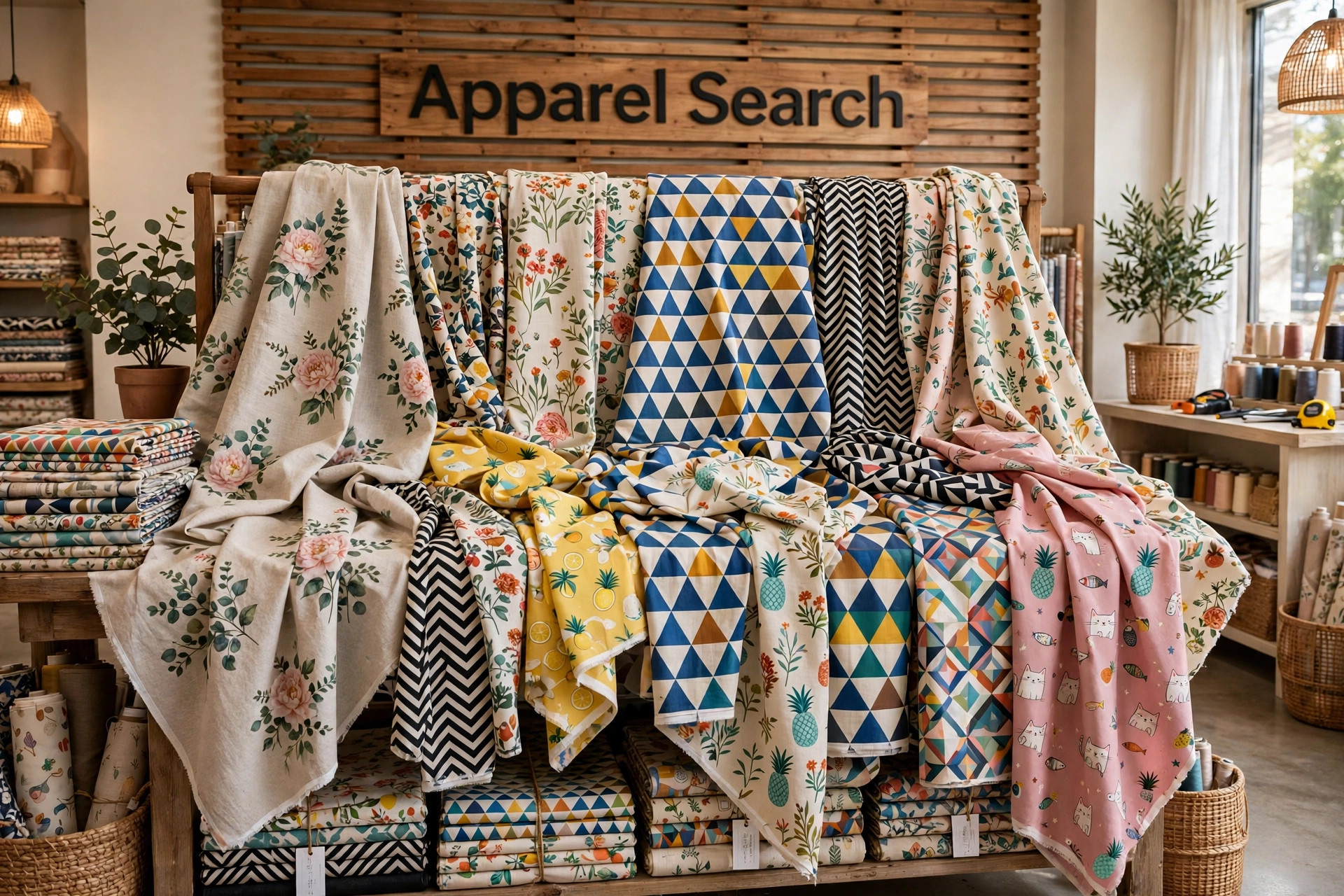
Textile printing is the process of applying color to fabric in definite patterns or designs. In properly printed fabrics the color is bonded with the fiber, so as to resist crocking during washing and friction. Textile printing is related to dyeing, but whereas in dyeing the whole fabric is typically — though not always — uniformly covered with one color, in printing one or more colors are applied to the fabric in certain locations only, and in sharply defined patterns. That single distinction drives everything else in this cluster: the machinery, the pricing and the skills involved.
Because the design sits on a finished base cloth, printing separates the two halves of fabric development. The base cloth — a cotton poplin, a silk twill, a polyester jersey — can be sourced, tested and stocked independently, and the pattern can change season by season without changing the cloth. That flexibility is why prints dominate fashion fabric: a brand can refresh a proven garment with a new floral or geometric each season, and a mill can offer one base cloth in dozens of designs.
The Machinery and Supplies Behind the Print
The original hub also pointed readers toward the equipment side of the trade: textile printing machinery and its wholesalers, textile printing inks, screen printing mesh and emulsion, squeegees, curing and drying equipment, and rotary screens. That supply chain explains how a design becomes yardage. Screens carry the pattern — one screen per color — inks and pastes carry the pigment or dye, and curing equipment fixes the color so the finished print survives washing and wear.
The method chosen shapes the result. Rotary screen printing runs fast and suits long yardage; flatbed screen printing allows larger repeats and suits furnishings; digital printing trades speed for freedom, printing photographic detail with no screens at all and making short runs and strike-offs cheap. Heat transfer printing applies the design from paper, common for polyester sportswear. A buyer who understands the machinery asks better questions about minimums, color counts and lead times, which is why this hub keeps the equipment links beside the fabric pages.
Find the Trade: Mills, Wholesalers, Stores and Links
This hub organizes printed fabric into the channels buyers actually use. The mills pages introduce the printers and integrated producers who apply pattern to cloth, from flannel printers to export groups. The wholesalers pages cover distributors holding printed stock — especially decorative and home furnishing prints — between printer and customer. The stores pages speak to retail buying by the yard, from designer decorator fabrics to mail-order fashion fabrics for home sewers. The links page steps back to fiber prices, neighboring fabric types and industry resources.
Use the channel that matches your quantity and purpose. A home sewer needs a store and a few yards of a print that catches the eye; a decorator needs a wholesaler's or retailer's decorator collections; a garment brand developing a seasonal print program negotiates with mills, approves strike-offs and commits to minimum yardage per colorway. Moving between the pages in this cluster, you can follow a printed fabric from artwork to screen to warehouse shelf to cutting table without leaving the guide.
Keep Exploring From Here
Printed fabric rewards comparison with the other ways cloth gets its pattern. Woven patterns — jacquards, dobbies, yarn-dyed plaids such as madras — build the design into the fabric's structure, while embroidery and appliqué add pattern after the cloth exists. Each route differs in cost, durability and hand, and the wider Apparel Search fabric guides let you weigh them side by side before choosing a route for a garment or furnishing project.
If you have suggestions on how we can improve our guide, please do not hesitate to let us know — it would be our pleasure to add helpful information and make this guide more informative. Thank you for taking the time to visit the Printed Fabric website; we hope the above resources assist you in finding information about printed fabric, whether you arrived as a sewer choosing a print, a decorator sourcing a collection, or a buyer planning a season's patterned cloth.
More to Explore
- About Us
- Contact Us
- Curing & Drying Equipment
- dyeing
- Emulsion
- fabrics
- fashion
- Fashion Blog
- Printed Fabric Links
- Printed Fabric Mills
- Printed Fabric Stores
- Printed Fabric Wholesalers
- printing
- Rotary Screens
- Screen Printing Mesh
- Screen Printing Squeegees
- Textile Printing Inks
- Textile Printing Machine Wholesalers
- Textile Printing Machinery
Looking for Fabric Mills and Suppliers?
Begin broader research in the Apparel Search fabric directory or return to the main Fabric Search hub for every fabric cluster.