Printed Fabric Stores
Printed fabric is the most browsable cloth in any store: bolts of florals, geometrics and novelty designs invite projects. This retail guide explains what good print retailers stock, how to judge a print before it is cut, and profiles the stores preserved from the original guide.
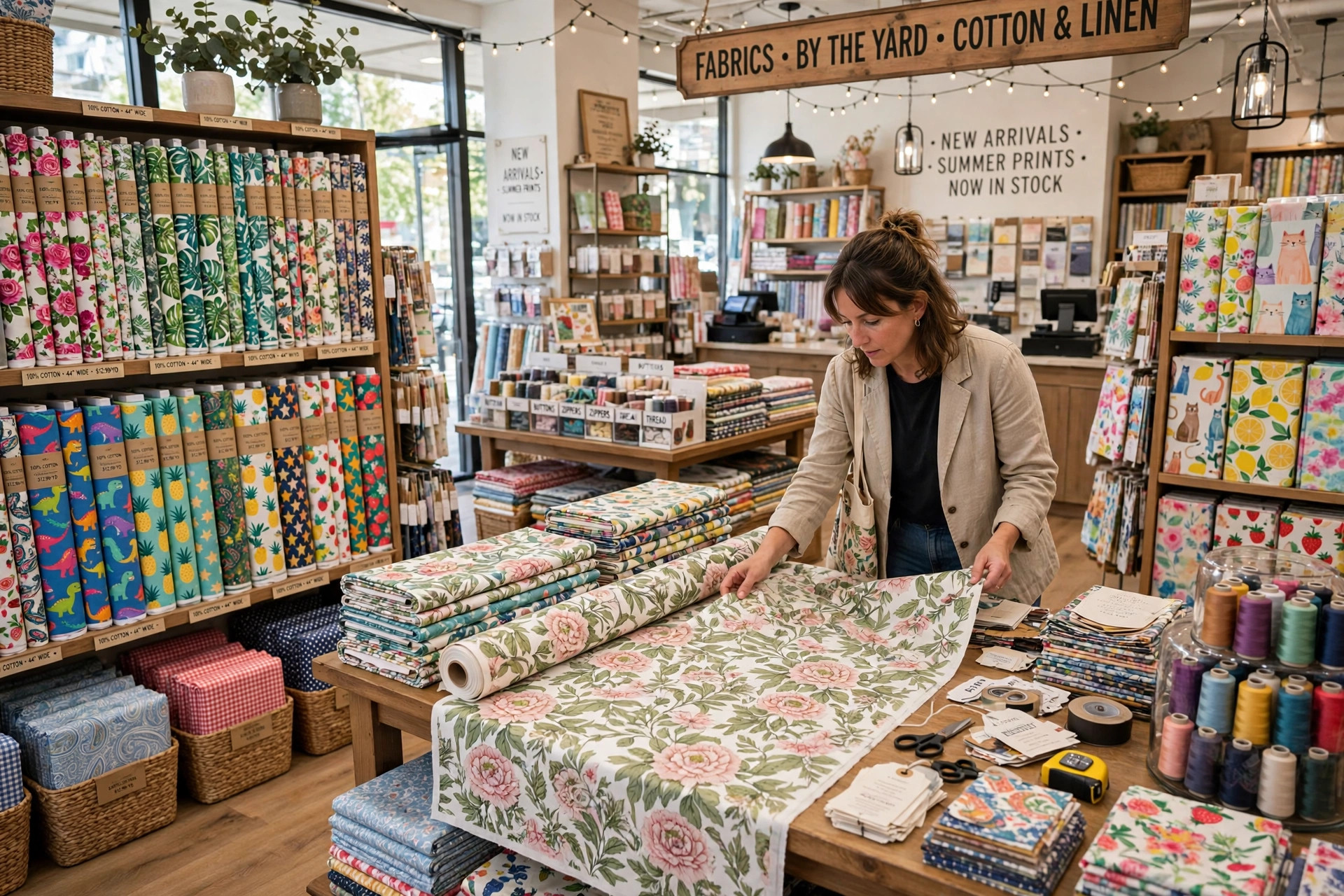
What a Good Print Retailer Stocks
Prints divide at retail into two broad families. Dressmaking prints — florals, spots, checks and novelty designs on cotton, lawn, poplin, jersey and silk — serve garment sewers. Decorator prints — larger-scale designs on heavier cotton, linen-look and blended cloths — serve curtains, cushions, upholstery and other home projects. A strong retailer keeps both families organized by fiber and use rather than by color alone, because a beautiful print on the wrong base cloth fails the project it was bought for.
The stores preserved below illustrate the range. One online store specializes in discount designer fabric for home decorators and interior designers, carrying named decorator collections. A British retailer describes more than forty years of sourcing interesting, beautiful and unusual quality fabrics. A mill outlet shop pairs its fabrics with sewing help such as tips and stain removal guidance, and stocks calico — the plain-weave cotton printed with small motifs that quilters and crafters use constantly. A mail-order fashion fabric service has served home sewers with distinctive fabrics since the 1970s.
Judging a Print at the Counter
Unroll a length before you buy. Check that the design sits square to the grain — a print that drifts off-grain will twist in a garment and fight you at the cutting table. Look at the registration where colors meet: crisp edges signal careful printing, while halos and overlaps signal a cheaper job that no amount of careful sewing will disguise. Turn the cloth over; on many prints the design shows through faintly, which is normal, but the face should be clearly stronger.
Then check scale and repeat against your project. Hold the fabric at arm's length and step back: small motifs read as texture from a distance, while large motifs need large, simple garment pieces or curtain drops to show properly. Note the repeat size and how much extra yardage matching it will consume at seams and across curtain widths. Finally, rub the surface with a dry white cloth to test for loose surface color, and ask whether the print is pigment or dye — pigment prints sit slightly stiffer on the surface and can soften with washing, while dyed prints keep the base cloth's hand.
How Much Printed Fabric to Buy
Prints consume yardage in ways plain cloth does not. One-way designs — motifs with a clear top and bottom — must all be cut in the same direction, which lengthens layouts. Large repeats need matching at side seams, pockets and curtain joins, and each match can add most of a repeat to the requirement. As a working rule, add at least one full repeat to your pattern's yardage for a garment with a large motif, and more for wide curtain drops that must match across several widths.
Buy from one bolt whenever the project is large. Print shades vary slightly between dye and print lots, and a top-up length from a later lot can differ enough to show at a seam. If the store offers swatches, take one home and live with it under your own lighting before committing to curtain or upholstery yardage — prints are the fabric most likely to change personality between store light and home light. Pre-wash dressmaking prints as the finished garment will be washed, before cutting, so any shrinkage happens first.
Retail Help Beyond the Bolt
Good print retailers earn their place with advice: which base cloth suits a lined dress, whether a decorator print's scale works on a small chair, and which lining or interfacing will not fight the print's hand. Mail-order and online sellers replace some of that counsel with swatch services — the listed mail-order house built its reputation over decades on quality and distinctive styling for home sewers — so use swatches whenever you cannot handle the bolt itself.
If you know of any additional resources that should be added to this section, please do not hesitate to let us know — it would be our pleasure to add beneficial listings to help make this section more informative. When researching fabric retailers generally, you may also want to visit the fabric store section on Apparel Search, which covers retailers across all fabric categories, then return here when a print is the project.
Printed Fabric Stores Listed Here
Retail listings preserved from the original guide. Print stock turns over quickly, so confirm current availability with the store.
Buy Fabrics
Online store for RichTex Fabrics offering discount designer fabric for home decorators and interior designers, including Premier Prints, Roth, Swavelle Mill Creek and Parisa fabrics, described in the original guide as a family business bringing wholesale fabric prices direct to the public.
Croft Mill
United Kingdom fabric retailer with over 40 years of experience sourcing fabrics, described as fanatical about fabric and passionate about finding interesting, beautiful, unusual and quality fabrics at the best possible price.
Mill Outlet Fabric Shop
Mill outlet fabric shops offering helpful sewing tips and stain removal techniques, and often carrying calico — plain-weave cotton fabric printed with small motifs — among their fabrics.
Sawyer Brook Fabrics
Mail order fashion fabric service providing high quality, unique fabrics to the home sewer, begun in 1974 in Orford, New Hampshire and run by its current owners since 1991, known for quality and distinctive styling.
Common Questions
How can I tell if a print is good quality?
Check that the design is square to the grain, that colors meet with crisp registration and no halos, and rub the surface with a dry white cloth to test for loose color. Also confirm the base cloth suits your project — the best print on the wrong cloth still fails.
Why do prints need extra yardage?
One-way motifs must all be cut in the same direction, and large repeats must be matched at seams and joins. Add at least one full repeat to your pattern's requirement for a large motif, and buy the whole project from one bolt to avoid shade differences between lots.
What is calico fabric?
In fabric-store use, calico is a plain-weave cotton fabric printed with small, often floral, motifs. It is a staple for quilting, crafts and lightweight garments, and mill outlet shops commonly stock it in many colorways.
More to Explore
References & Further Reading
Looking for Fabric Mills and Suppliers?
Find more retailers in the Apparel Search fabric directory and browse other fabric types from the Fabric Search hub.