Printed Fabric Wholesalers
Print wholesalers hold the patterned inventory of the fabric trade: decorator prints, apparel prints and vinyls stocked by the bolt for retailers, decorators and garment makers. This page explains how that channel works and profiles three wholesale distributors.
The Wholesaler's Place in the Print Trade
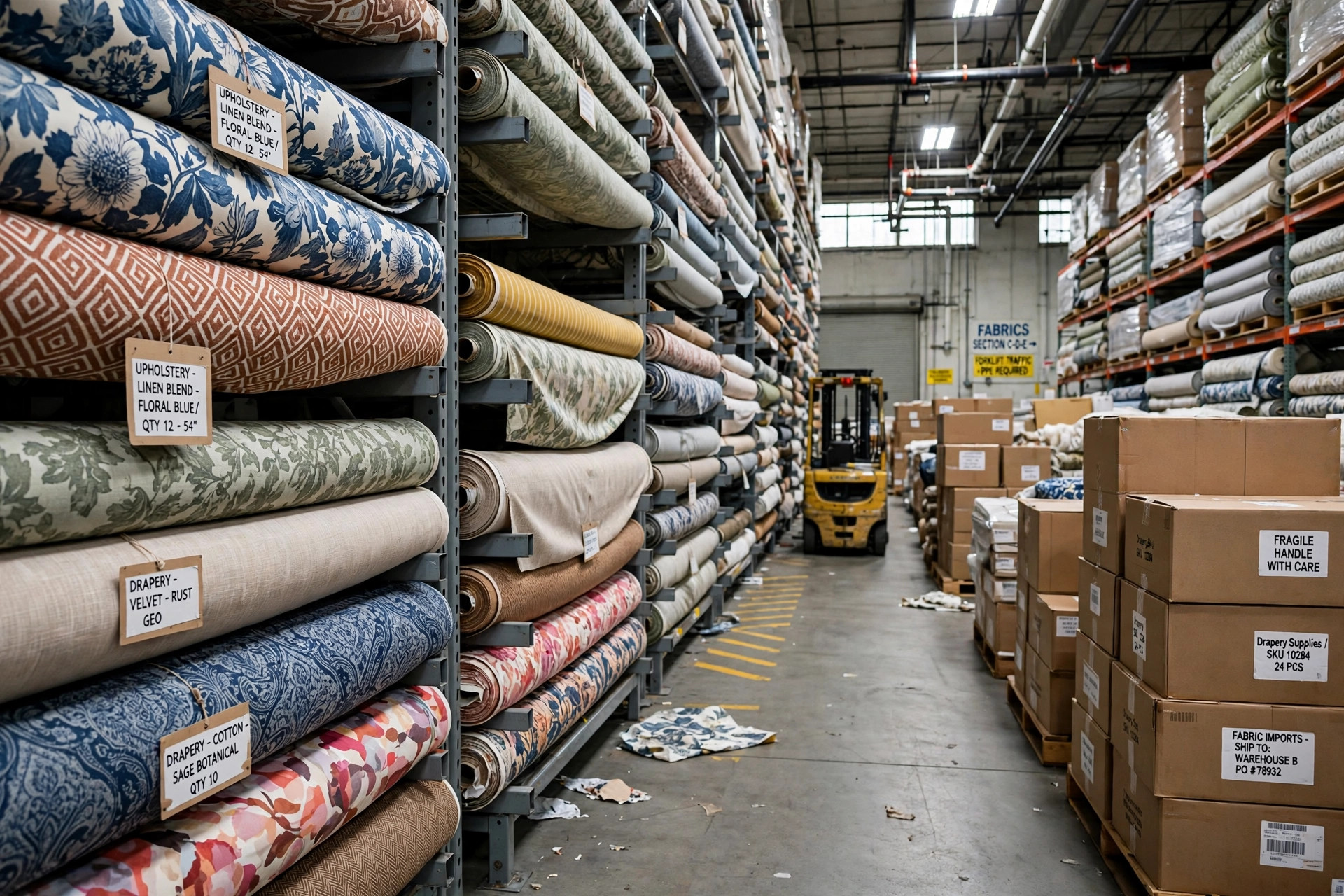
A printed fabric wholesaler buys patterned cloth in volume from printers and mills and resells it in bolt and piece quantities to fabric retailers, interior decorators, workrooms, garment makers and other trade buyers. The role suits prints particularly well, because no single retailer can stock a printer's full output: designs number in the hundreds each season, and the wholesaler's warehouse is where that breadth becomes buyable in practical quantities, pattern by pattern.
The listings below show the channel's center of gravity in decorator fabric. One Atlanta-based wholesaler describes more than sixty years offering true wholesale pricing on first-quality decorative upholstery and drapery fabric, vinyl and trim, from a 25,000 square foot distribution facility housing over a million yards. Another describes itself as one of the largest fabric wholesalers to the public in the New York metropolitan area, family-owned for over eleven years. A third offers home decorator discount fabric — upholstery, slipcover and drapery collections — at wholesale prices.
Buying Printed Fabric at Wholesale
Start with the collection books and stock position, not a single favorite pattern. Ask which prints are stock-supported and which are special order, the bolt size and minimum per pattern, and whether the design is a running line or a closeout — closeout prints can be excellent value, but once they are gone the pattern cannot be reordered, which matters for decorators mid-project and brands planning reorders. Confirm whether goods are first quality, since the decorator trade also moves seconds and job lots at lower prices.
Then settle shade and specification in writing: the base cloth and fiber content, the print method if known, usable width, and the shade tolerance between bolts. Prints complicate inspection because two faults can hide in one roll — base-cloth defects and print defects such as misregistration or streaks — so agree the inspection and claims terms before the first shipment, and check incoming bolts pattern by pattern against the approved sample, under consistent light.
Decorator Prints Versus Apparel Prints
Wholesale print stock leans heavily toward home furnishing because decorator demand is steadier and less size-sensitive than fashion demand. Decorator collections — houses and lines such as Waverly, Mill Creek, Braemore, P. Kaufmann, Sunbrella, Covington, Peachtree and Naugahyde, in fabrics from silk, tapestry and chenille to jacquard, suede, velvet and printed cotton — are sold for upholstery, drapery, slipcovers and recreational vehicle and commercial interiors as well as homes. Repeats are larger, cloths heavier and designs stay in the line longer than apparel prints.
Apparel print wholesaling moves faster and lighter: smaller minimums per design in some houses, quicker turnover, and base cloths such as cotton lawn, poplin, jersey and challis rather than upholstery weights. A buyer crossing between the two channels should not assume terms transfer — an apparel print that sells out is simply gone, while a decorator print may be reordered for years. Knowing which side of the trade a distributor serves, which the listings below make clear, saves both sides a wasted conversation.
Checking a Distributor Before You Commit
Judge a print distributor by its paperwork and its warehouse discipline: samples that match bulk bolts, honest stock answers, clear first-quality labeling, and prompt notice when a pattern is discontinued. Place a trial order across several patterns before committing a program, inspect incoming goods against the approved cuttings, and keep your own library of approved samples with dates and bolt references — in a dispute, the dated sample is the evidence both sides will look at.
If you know of additional printed fabric wholesalers that should be added here, please let us know — verified trade listings make this directory more valuable for every buyer who follows. When researching fabric wholesale distributors generally, you may also want to visit the wholesale fabric section on Apparel Search, then return here for print specialists.
Printed Fabric Wholesalers Listed Here
Three distributors are listed below. Confirm current collections and trade terms with the wholesaler before ordering.
Decorative Fabrics Direct
Atlanta, Georgia specialty retailer and wholesaler of decorative fabric, vinyl and trim for residential, commercial and recreational vehicle applications, offering true wholesale pricing on first quality goods for over sixty years, with a 25,000 square foot distribution facility housing over a million yards, including Waverly, Mill Creek, Braemore, P Kaufmann, Sunbrella, Covington, Peachtree and Naugahyde.
The Fabric Mill
One of the largest fabric wholesalers to the public in the New York metropolitan area, a family-owned business for over 11 years, emphasizing customer service, product range and a low price guarantee.
House Fabric
A division of Anatol's Fabric Outlet, offering home decorator discount fabric for upholstery, slipcovers and draperies, including designer collections from P. Kaufmann, Waverly, Robert Allen and Duralee at wholesale prices.
Common Questions
What does a printed fabric wholesaler do?
A wholesaler buys printed cloth in volume from printers and mills and resells it by the bolt or piece to retailers, decorators, workrooms and garment makers, holding breadth across hundreds of patterns that no single retailer could stock alone.
What does first quality mean in wholesale fabric?
First quality goods are free of the defects that downgrade fabric to seconds or job lots. In prints it covers both the base cloth and the printing — no weaving faults, misregistration or streaks — so confirm the quality grade in writing before ordering.
Why do decorator and apparel print channels differ?
Decorator prints use heavier cloths, larger repeats and longer-lived designs for upholstery and drapery, while apparel prints turn over seasonally on lighter base cloths. Minimums, reorder behavior and selling seasons differ between the two, so confirm which channel a distributor serves.
More to Explore
References & Further Reading
Looking for Fabric Mills and Suppliers?
Place printed fabric in the wider trade through the Apparel Search fabric directory and the Fabric Search hub.