Printed Fabric Links
Print research rarely stays on one fabric: a print buyer quickly needs fiber prices, base-cloth options and industry background. This page gathers price guides, neighboring fabric guides and industry resources, organized so you can move from printed fabric to the wider textile world in a click.
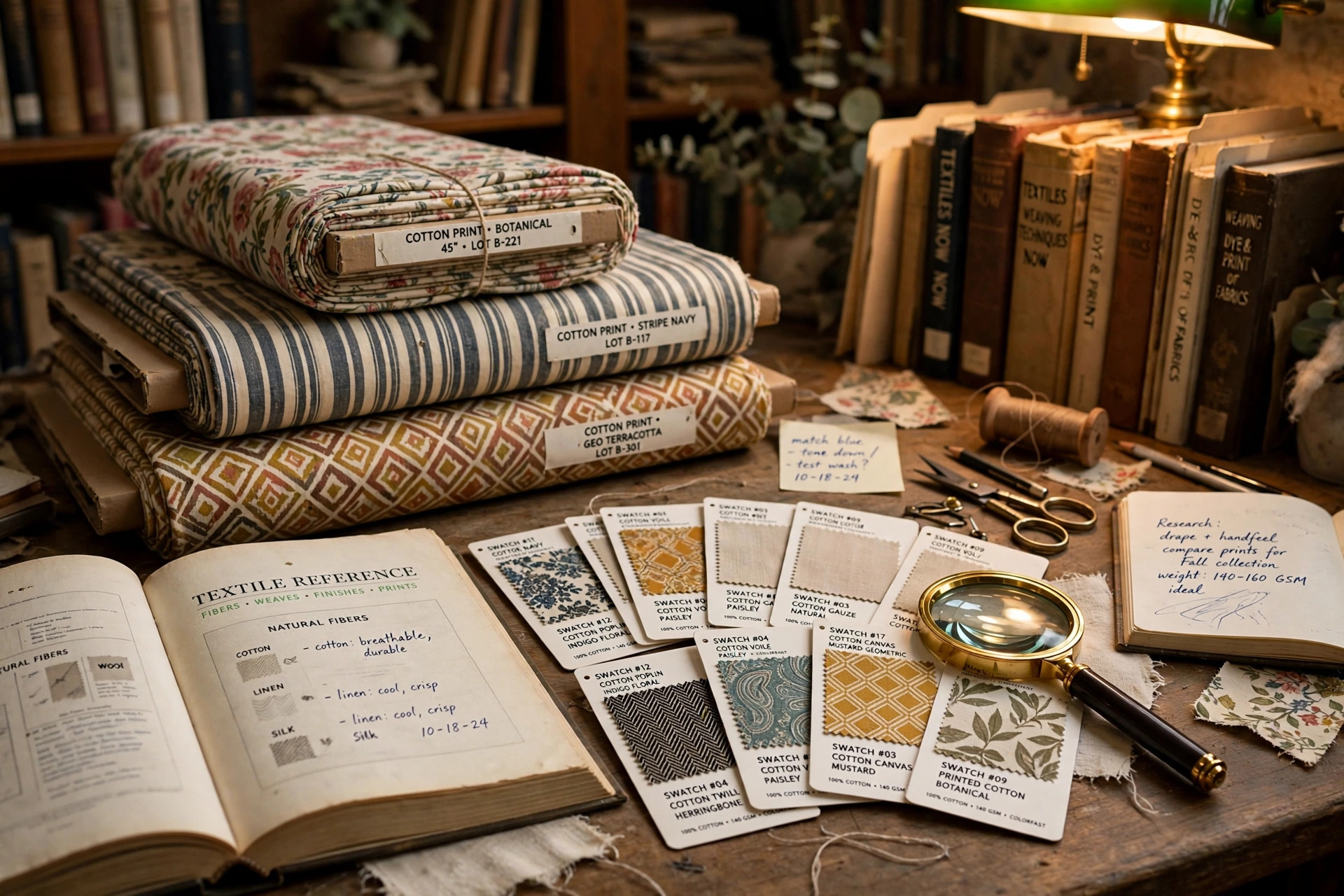
How to Use These Links for Print Research
A printed fabric is two products in one: a base cloth and a design applied to it. Researching one properly means looking sideways — at the fibers the base cloth might be woven from, at the other fabric types that compete for the same garment, and at the prices that decide whether a printed cotton, a printed silk or a printed synthetic makes commercial sense. The links below gather those resources in one place for trade buyers and consumers alike.
Used well, a links page is a map rather than a pile. The resources below fall into three groups: price guides for the major fibers and for yarn, the fabric clusters that sit beside printed fabric in this directory, and general textile industry resources — articles, books, news and the industry guide itself. Each group answers a different research question, and together they let a reader start from a single print and end with a grounded sense of the market it will be sold into.
Fiber and Yarn Price Guides
Dedicated pricing sites cover the fibers that printing most often lands on. The Silk Prices guide covers the fiber behind luxury printed scarves and blouses, while the Cotton Price guide addresses the workhorse base cloth of the print trade. The Wool Prices, Polyester Prices and Nylon Prices guides cover the remaining natural and synthetic options, and the Yarn Prices guide steps one stage earlier in the chain.
Those guides explain what each price category means and link out to the services that publish live figures, because mills and merchants set prices that move with fiber markets, energy costs and demand. A print designer costing a range uses them to sanity-check quotes: if cotton yarn and greige cloth have risen, a printer's higher quotation is easier to understand, and if they have fallen, it is easier to challenge. Prices are context for negotiation, never a substitute for a written quotation on the exact cloth and design you intend to buy.
The Neighboring Fabric Clusters
Printed fabric sits in a family of fabric types, with links across to them: corduroy, cotton fabrics, flannel, jacquard, jersey, knit fabric, madras and nonwoven fabric, among others. Each comparison teaches something: jacquard weaves its pattern in, madras weaves its plaid from dyed yarns, and printing applies pattern to a finished cloth — three different routes to a patterned fabric.
The remaining links complete the weaver's and printer's shelf: poplin, reflective fabric, ringspun cotton, terry, twill, velour, woven fabric and yarn dyed fabric. For a print buyer, these are the candidate base cloths and the alternative pattern routes; for a student, they are the vocabulary of the fabric trade. Start with the fibers and fabrics overviews if the terms themselves are new.
Industry Resources Beyond Fabrics
Fabric research eventually runs into the wider industry: how garments are designed, made, marketed and sold. Apparel Search maintains a textile industry guide, collections of textile articles, a textile books section for readers who want depth in print, and textile news coverage for readers tracking the trade. Those resources are the natural next step when a fabric question turns into a business question — who prints at scale, which markets are growing, and what machinery and methods are changing the work.
Suggestions for additional resources are welcome. Link pages stay useful only when they are maintained, so send strong textile resources, and notes about links that no longer work, whenever you find them.
Common Questions
Why do fiber prices matter when buying printed fabric?
Because a print's cost depends heavily on its base cloth, and base-cloth prices follow fiber and yarn markets. The price guides for silk, cotton, wool, polyester, nylon and yarn linked below help you understand a printer's quotation and judge whether it is fair.
What is the difference between printed, jacquard and madras patterns?
Printing applies color to the surface of a finished cloth in a defined pattern. Jacquard patterns are woven into the fabric on the loom, and madras plaids are woven from yarns dyed before weaving, so both show their pattern as part of the cloth's structure.
Where should a beginner start among these links?
Start with the fibers and fabrics overview pages on Apparel Search to learn the basic terms, then visit the fabric clusters closest to your project — cotton, jersey or twill, for example — before returning to printed fabric itself.
More to Explore
- About Us
- Contact Us
- Corduroy Fabric
- Cotton Fabrics
- Cotton Price
- Fabric Search
- fabrics
- fashion
- fibers
- Flannel Fabric
- Jacquard Fabric
- Jersey Fabric
- Knit Fabric
- Madras Fabric
- Nonwoven Fabric
- Nylon Prices
- Polyester Prices
- Poplin Fabric
- Printed Fabric
- Printed Fabric Mills
- Printed Fabric Stores
- Printed Fabric Wholesalers
- Reflective Fabric
- Ringspun Cotton
- Silk Prices
- Terry Fabric
- Textile Articles
- Textile Books
- Textile Industry Guide
- Textile News
- Twill Fabric
- Velour Fabric
- Wool Prices
- Woven Fabric
- Yarn Dyed Fabric
- Yarn Prices
Looking for Fabric Mills and Suppliers?
Explore the full range of textiles in the Apparel Search fabric directory and browse every cluster from the Fabric Search hub.