Color Trends for the Fashion Industry & Consumers
How color trends form, why they matter, and where to follow them.
Welcome to the Color Trends section of Apparel Search. The goal of this section is to help you learn more about color trends in the various segments of the fashion and textile market — to explore color palettes and pick your favorites for this year's market. Color has become an integral part of the fashion industry: it is used in clothing, accessories and makeup to express an individual's personality, mood and style, and designers use it to create looks that are unique and eye-catching, to build an atmosphere, or to evoke an emotion.
Start with the guides in the resources above: the Color Trend Resources collect the forecasters and researchers, while the subject guides cover fashion color trends, cosmetic color trends and hair color trends in depth. The Color Technology directory covers the measurement side — how the industry makes sure the trend color on the rack is the one that was planned.
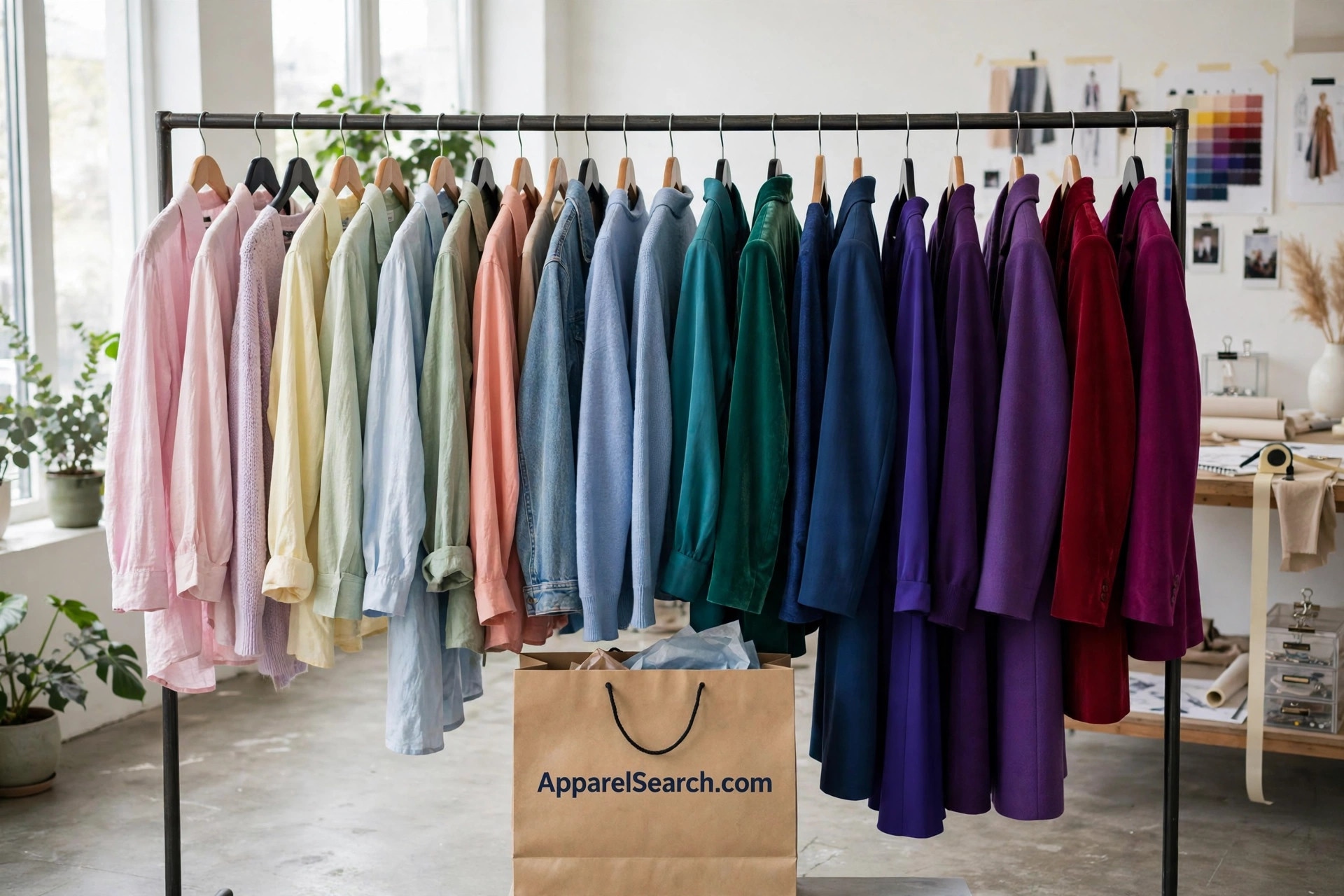
What Color Does in Fashion
Color can be used to make a bold statement and attract attention: bright colors are often used to stand out in a crowd. It can also reflect a person's mood or express individuality, and the choice of color often indicates the season or the trend — bright colors are associated with summer, while darker colors are associated with winter. Color can even create illusions: bright colors can make an outfit look bigger, lighter colors can make it look brighter and more vibrant, and familiar associations do quiet work too, since colors such as pink, blue and yellow are linked with certain personalities, letting a wearer express something without saying a word.
That expressive range is why color is an important factor in the fashion industry as a whole. Through color, designers create unique, eye-catching looks, set a mood, and give a collection its identity at a glance — long before cut, fabric or price are even noticed. In regard to clothing and fashion accessories, it is important to note that color trends from various industries influence fashion: when designers select colors for their collections, they are taking color trends from other areas of life into consideration.
Color Trends for Business: The Forecasting Problem
Fashion companies, hair care companies and cosmetic companies all face the same difficult task: forecasting color. Forecasting color means selecting colors for products before knowing for certain that consumers will actually like them. Production lead times make the guess unavoidable. If it takes four months to design, manufacture and transport clothing to a retail store, the colors must be selected at least four months before the selling season begins — and for many products the real lead time is far longer, stretching across fiber, fabric and garment stages in different countries.
A missed forecast is expensive in both directions: too much of a rejected color becomes markdown stock, and too little of a loved color is a season of lost sales that cannot be recovered once the selling window closes. That is why forecasting is a profession rather than a hunch — the forecasting guide in the resources above explains how forecasters read culture, retail data and street style to place their bets, and the resource directory collects the organizations whose forecasts the industry buys.
Following Trends Season by Season
Trends reward attention rather than prediction from a distance. Watch which shades repeat across designers, retailers and adjacent industries; notice whether the overall direction is warming or cooling, lightening or darkening, clearing or greying; and notice how trend colors are combined, since a familiar color in a new pairing can look entirely new. Seasonal habits help too: the hot fashion colors for fall differ from those for spring in weight and mood even when the hues overlap, and a shopper who understands that rhythm can buy trend pieces that keep working when the season turns.
Finally, remember that trends are a starting point, not a uniform. The most successful use of a trend color is personal — chosen in the garment, shade depth and proportion that suit the wearer. A trend supplies the palette; taste decides how it is worn.
Photos

Common Questions
What makes a color a fashion color?
Use, not hue. Any color in the known universe can be a fashion color — a fashion color is simply the color of an article of clothing, fabric, footwear or a fashion accessory. A shade becomes fashionable when designers and consumers adopt it, not because of anything intrinsic in the color itself.
Why must fashion companies forecast color so far ahead?
Production lead times force it. If it takes four months to design, manufacture and transport clothing to a retail store, the colors must be selected at least four months before the selling season begins — a reasoned guess made long before anyone knows what shoppers will actually want.
Do color trends come only from the fashion industry?
No. Color trends from many industries influence fashion. Designers selecting colors for a collection take into account what is happening in interiors, automobiles, cosmetics and popular culture, and hair color is fashion relevant for the same reason.