Christian Louboutin Runway
The red sole, walking — Louboutin on the catwalk, seen from behind.
The runway is the one place a shoe is seen the way Christian Louboutin designs it to be seen: in motion, from behind, at the moment the heel lifts. Every other footwear designer shows an upper; Louboutin shows a sole as well — shiny, red-lacquered and unmistakable as the model turns at the end of the catwalk. This page follows the runway strand of his record in this guide.
The Photos section gathers runway and collection footwear, including men's styles such as the Rollerboy Spikes pictured for 2014. Pair this page with the fashion week page for the calendar, the collections page for the season-by-season file, and the fall and spring pages for each season's runway output. The official Christian Louboutin website is linked in the references. The page treats the catwalk as a footwear event in its own right — the one stage where the underside of a shoe, the part Louboutin made famous, is guaranteed its moment in front of the cameras.
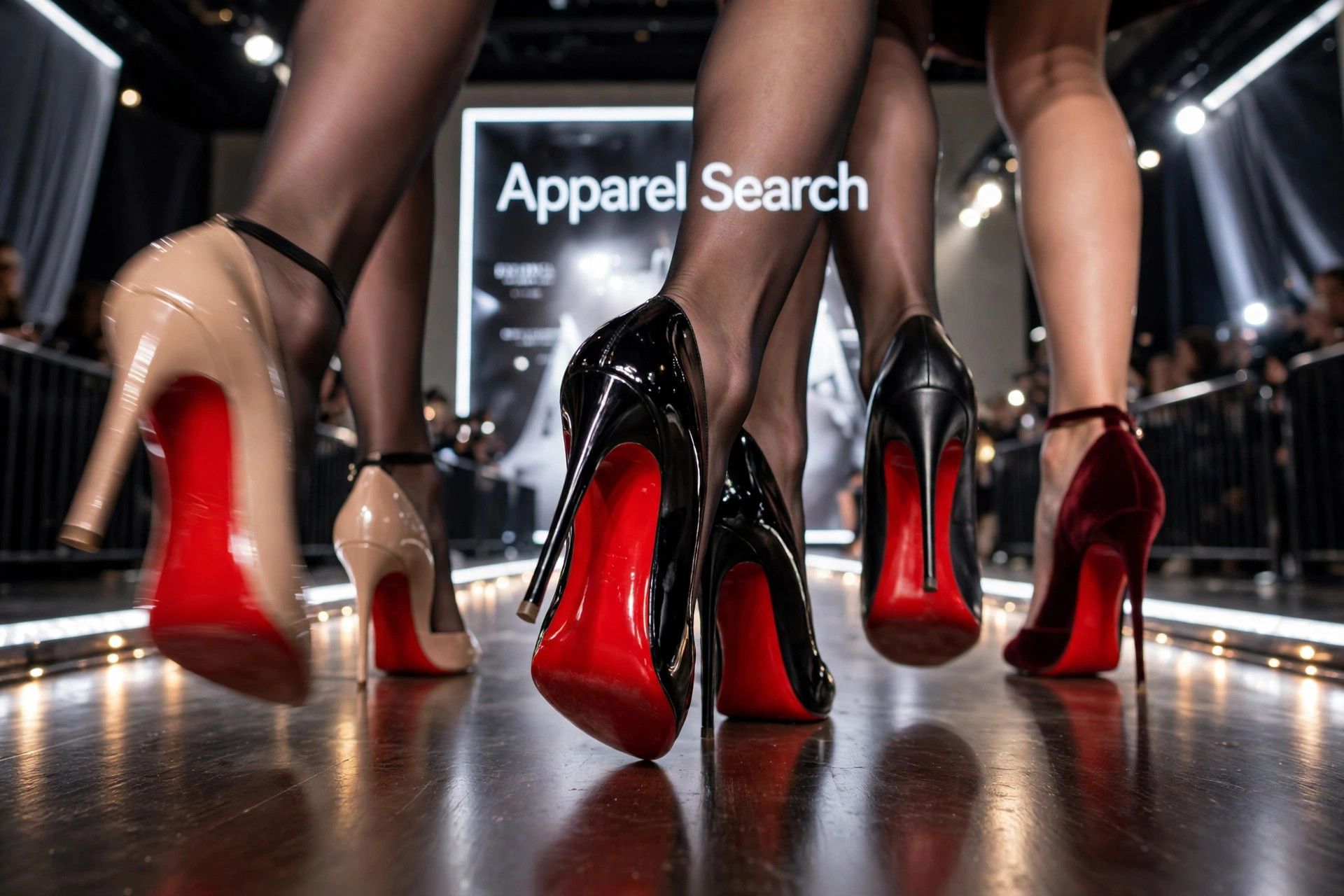
Illustrative image created for this guide — an artistic impression, not this designer's own garments.
News, Photos & VideoCollectionsFall FashionsFashion WeekNewsProfilesRunwaySpring Fashions
A Signature That Faces Backward
Most design signatures face the camera. Louboutin's faces away from it — and the runway is built for exactly that view. Models walk away from the photographers for half of every appearance; an audience watches heels recede down the catwalk; and in both cases the red sole is the last and clearest impression a look leaves. What began as a finishing choice in a Paris salon in 1991 turns out to be perfectly engineered for the runway's geometry.
The runway also gives the stiletto its strictest examination. Louboutin learned the spiked heel as an apprentice to Roger Vivier, who claims to have invented it, and his elaborate high heels are sculpture until they walk. On the catwalk they must perform as footwear — balance, stride and finish judged together, in photographs that the news page in this series then gathers as coverage.
The Runway Record
Filed show over show, runway appearances become the most vivid part of a footwear designer's archive: dated, photographed at ground level, and inseparable from the clothing collections the shoes completed. Louboutin's freelance years designing women's shoes for Chanel, Yves Saint Laurent and Maude Frizon were spent inside that system; the independent label's runway record shows the same understanding from the other side of the credit line.
Read the runway record against the collections record and the two views complete each other: collections are the shoes, organized; the runway is the shoes, proven — at walking pace, sole first, by the oldest test in fashion. For a footwear designer, that test is also the fairest one available: clothes can be pinned, padded and lit into looking right, but a heel either walks or it does not, in front of everyone, and the runway record preserves the verdict without editing.
Photos


Common Questions
Why are Louboutin shoes so visible on the runway?
Because of the sole. Runway photography catches shoes from behind and below as models turn and walk, and his shiny red-lacquered soles turn that angle into a signature — the house is identifiable in the very shots where most shoes are anonymous.
What does the runway test in a Louboutin shoe?
Height and balance at walking pace. A stiletto that photographs beautifully standing still must still carry a model down a catwalk; the runway is where elaborate high heels prove they are footwear, not sculpture.
How is this page different from the fashion week page?
The fashion week page covers the calendar and coverage around the shows. This page follows the shoes themselves on the catwalk — the looks, the motion and the runway record.
More to Explore
References & Further Reading
- Christian Louboutin Runway Search
- Christian Louboutin Runway News
- Christian Louboutin Runway Photos
- Christian Louboutin Runway Videos
- Christian Louboutin Runway
- Christian Louboutin Runway News
- Christian Louboutin Runway Images
- Christian Louboutin Runway Video
- official Christian Louboutin website
- Fashion Models