Coco Chanel Fashion Week
Chanel at fashion week — Paris, twice a year: the standard, re-presented.
Fashion week in Paris has a fixed point, and it is the house Gabrielle Chanel founded. The designer credited, along with Paul Poiret, with liberating women from the corseted silhouette — and with popularizing a sportive, casual chic as the feminine standard in the post-World War I era — built a house whose seasonal presentations became a fixture of the Paris calendar. This page covers that fixture: the fashion week strand of Coco Chanel's record in this guide.
Her collections debut here before they are filed anywhere else in this series: the runway page, in the following item, follows the shows look by look, the news page tracks the coverage, and the collections page files the results. The search routes in the references run Coco Chanel fashion week news, photo and video searches, and the official CHANEL website is linked there. The house's historic Paris home is 31 rue Cambon.
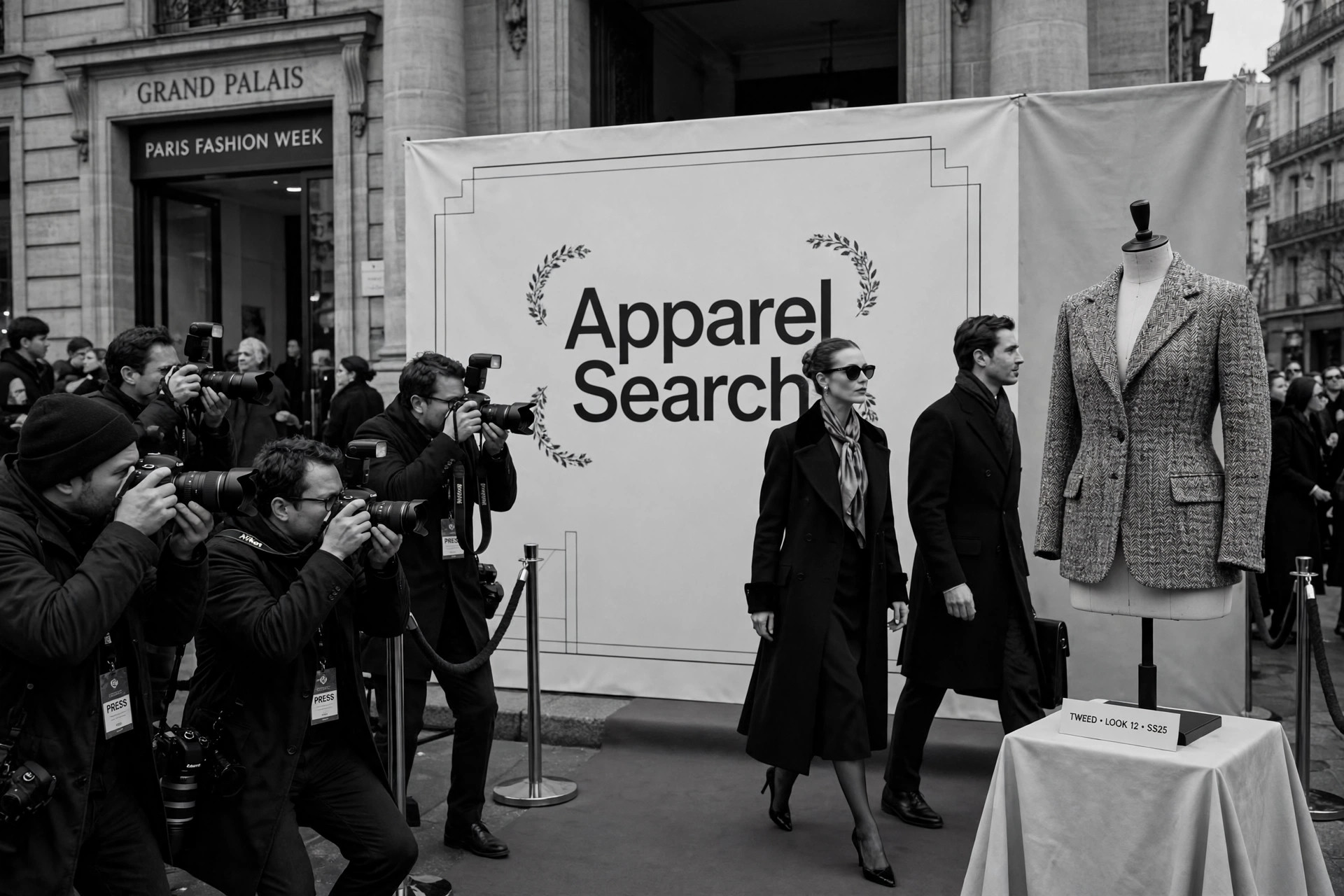
Illustrative image created for this guide — an artistic impression, not this designer's own garments.
News, Photos & VideoCollectionsFall FashionsFashion WeekNewsProfilesRunwaySpring Fashions
A Fixture of the Paris Calendar
A Chanel presentation is a renewal ceremony for a fixed standard. The signatures are known before the first look appears — the tweed suit, the little black dress, the relaxed day wardrobe in black, white and beige, pearls and camellias — and the interest lies in their seasonal variation: proportions adjusted, tweeds rewoven, the black dress recut for the moment. Buyers, editors and photographers judge exactly those adjustments, which is why a house built on permanent signatures suits fashion week so well: the calendar supplies the change, the house supplies the continuity.
That continuity extends past the clothing on the runway. Chanel's design aesthetic was always realized in jewelry, handbags and fragrance as well as couture, and a fashion week presentation shows the whole system at once — the accessories completing the looks, and behind them the signature scent, Chanel No. 5, which has become an iconic product and the house's invisible signature. A Chanel show is therefore the entire wardrobe world its founder designed, presented in one room.
From Show to Season
A fashion week appearance sets several clocks running: the reviews gathered on the news page in the following item, the orders that decide which pieces reach stores, and the photographs — gathered in the Photos section here — that fix how the season will be remembered. Following Chanel through fashion week is following the mechanism by which a founder's standard, set in the post-World War I era, stays current a century on: re-presented, re-judged and re-photographed, twice a year, in Paris.
Use the series links to move from this calendar view into the collections and fall pages in this item, and onward to the runway, news, profiles and spring pages that complete her series. The standard does not change; fashion week is where it proves, season after season, that it does not need to. For the house's audience, that reliability is itself the spectacle: editors and clients return to a Chanel presentation the way listeners return to a theme they know — not to be surprised by the melody, but to hear what a master tradition does with it this season, which notes are lengthened, which are restated, and which are quietly, permanently changed.
Photos


Common Questions
Where are Chanel collections presented?
In Paris, the city of Gabrielle Chanel's house at 31 rue Cambon, where her seasonal collections are shown during the Paris fashion calendar — the presentations this page follows as the fashion week strand of her record.
What are Chanel presentations known for?
The house signatures presented as a complete wardrobe: tweed suits, little black dresses and relaxed day looks in black, white and beige, with pearls and camellias — the casual chic she made the feminine standard, renewed season by season.
How does this page relate to the runway page?
This page covers her place in the fashion calendar and the season cycle. The runway page, in the following item of this guide, follows the shows themselves — the looks, the staging and the runway record.