Mary Quant
The main guide page — news, photos, video and the full series in one place.
Mary Quant is the Welsh fashion designer and British fashion icon who became an instrumental figure in the 1960s London-based Mod and youth fashion movements — one of the designers who took credit for the miniskirt and hot pants. This page is the front door to that record in this guide: from here, the series opens out into the collections filed season by season, the fall and spring strands taken separately, the fashion week and runway coverage of the shows themselves, the running news record, and the profiles page where the designer's story is set out in full.
Dame Barbara Mary Quant was born on 11 February 1934. She opened her boutique Bazaar on London's King's Road in 1955, selling clothes to a young generation that wanted a fashion of its own, and became a defining figure of Swinging London: hemlines rose into the miniskirt, hot pants followed, and the little daisy logo became the badge of a youth-driven revolution that treated fashion as a game. The search routes in the references run Mary Quant news, photo and video searches, and the designer's official website is linked there as well. Readers who already know the strand they want — a season, a show, the biography — can go straight to it from the series links on this page.
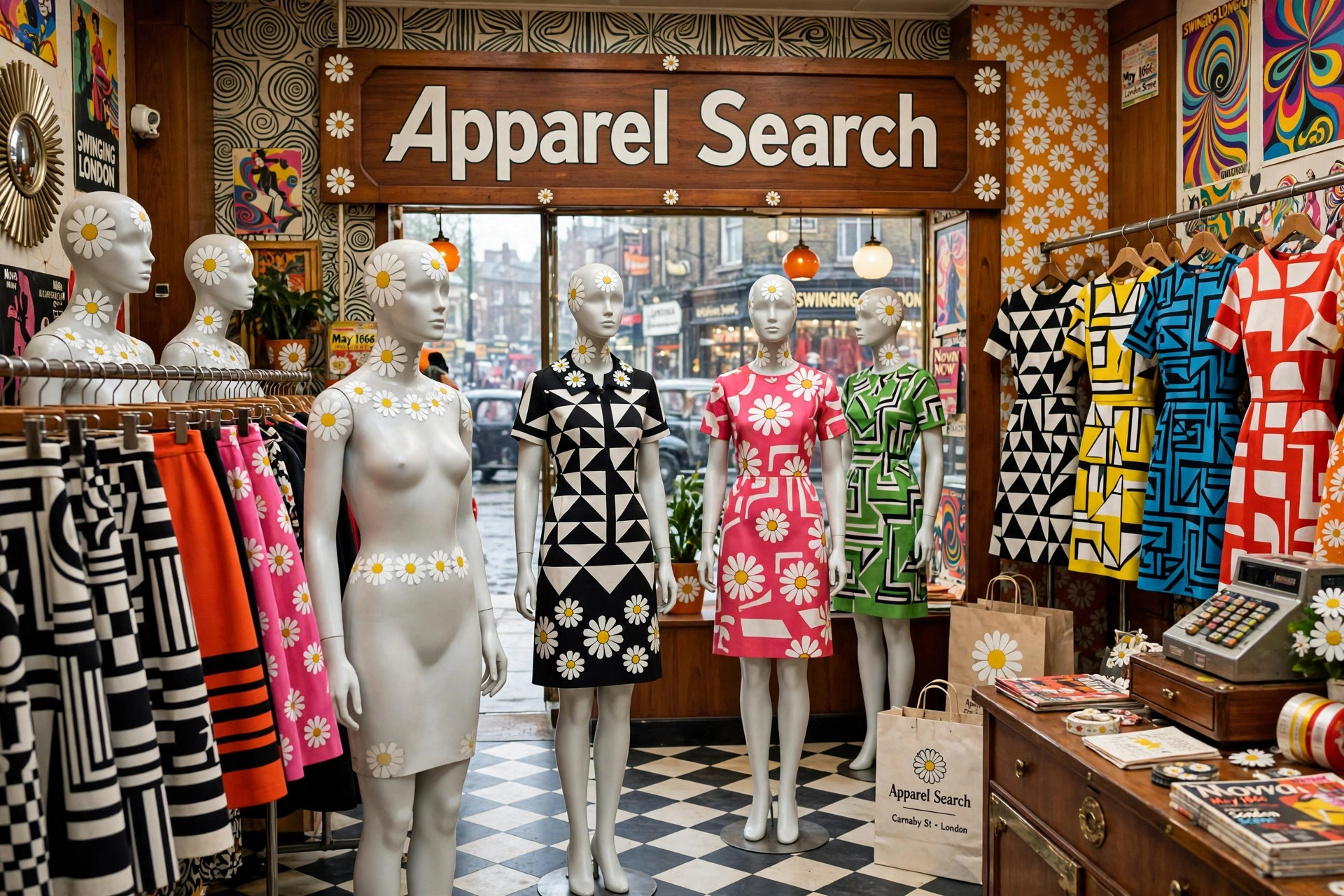
Illustrative image created for this guide — an artistic impression, not this designer's own garments.
News, Photos & VideoCollectionsFall FashionsFashion WeekNewsProfilesRunwaySpring Fashions
One Designer, Many Views
A designer of this standing cannot be covered honestly in a single summary, because the work operates on several levels at once. There is the garment level — fashion treated as a game — short, sharp clothes cut for movement, priced for young buyers and worn to please the wearer rather than the establishment — which the collections and product pages examine piece by piece. There is the show level, where each season's argument is made in sequence under lights, which the runway and fashion week pages follow. And there is the biographical level, the training, accidents and decisions that explain why the clothes look the way they do, which belongs to the profiles page. This main page exists to keep those levels connected rather than to repeat any one of them.
The signature that runs through every level is the miniskirt and hot pants, geometric shift dresses, colored tights and the daisy motif — fun, youthful clothes made to be worn to please yourself. It is recognizable in a single photograph and in a full season alike, which is precisely why the record rewards being read whole: the same hand appears in the earliest work and in the most recent collections, and the series is arranged so a reader can trace it — from the main routes here, into a season, onto the runway, and back to the life on the profiles page.
How to Use This Guide
Start here if you are arriving fresh: the links above the references divide the record by kind — news for the current story, photos and videos for the visual record, the named pages for the filed one. The Photos section gathers the imagery carried with this page, and the reference searches are kept current by the search engines themselves, so a story published this week is reachable from a page whose filed record may end earlier. Dates matter for the same reason: a photograph from an early season can illustrate coverage of any later one, and the season pages are the corrective.
For the background the headlines assume, the profiles page is the essential companion — it carries the dates, places and turning points in order. For the work itself, the collections page files the seasons, and the fall and spring pages separate the two registers of the youth-fashion signatures restated in every season. Read together, the pages in this series give a complete working picture of Mary Quant: the life, the clothes, the shows and the coverage, each in its own place.
Photos

Common Questions
Who is Mary Quant?
Mary Quant is the Welsh fashion designer and British fashion icon who became an instrumental figure in the 1960s London-based Mod and youth fashion movements — one of the designers who took credit for the miniskirt and hot pants.
What does this Mary Quant page gather?
It is the main page for this designer's record in this guide: the routes to news, photos and videos, and the links to the other pages in the series — collections, seasonal, fashion week, news, profiles and runway pages, and product pages where the series has them.
What is Mary Quant best known for?
The signature is the miniskirt and hot pants, geometric shift dresses, colored tights and the daisy motif — fun, youthful clothes made to be worn to please yourself — the work the collections, runway and profiles pages in this series each take up in turn.