Mary Quant News
The news desk — collections, the house, and a career still being covered.
Few names generate fashion news decades into a career, but Mary Quant is one of them. The collections each season are one story — the miniskirt and hot pants, geometric shift dresses, colored tights and the daisy motif — fun, youthful clothes made to be worn to please yourself renewed on the runway; the house behind them is a second, its stores, lines and campaigns; and the designer is a third, a career the industry keeps returning to when it takes stock of itself. This page is the news desk for that record in this guide.
The reference links run current searches for Mary Quant news, photos and videos, and the designer's official website is linked there for first-hand announcements. For the background the headlines assume, turn to the profiles page in this series; for the work itself, to the collections, fall and spring pages.
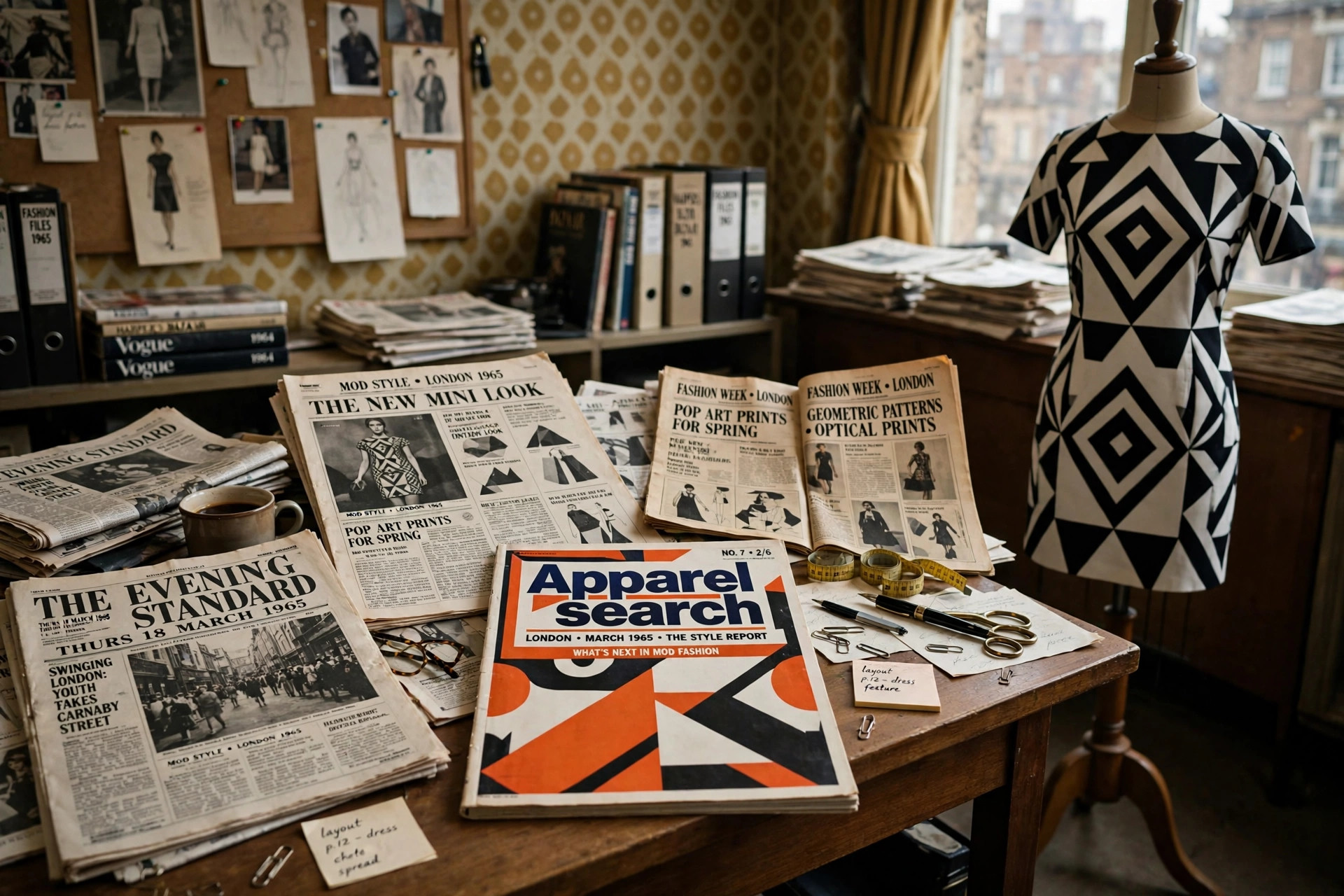
Illustrative image created for this guide — an artistic impression, not this designer's own garments.
News, Photos & VideoCollectionsFall FashionsFashion WeekNewsProfilesRunwaySpring Fashions
Reading the News Well
News about Mary Quant rewards context, because almost every story is also a story about the signatures. A headline about a new collection lands differently when the reader knows the standard it answers to — fashion treated as a game — short, sharp clothes cut for movement, priced for young buyers and worn to please the wearer rather than the establishment — and the career behind it: Dame Barbara Mary Quant was born on 11 February 1934. She opened her boutique Bazaar on London's King's Road in 1955, selling clothes to a young generation that wanted a fashion of its own, and became a defining figure of Swinging London: hemlines rose into the miniskirt, hot pants followed, and the little daisy logo became the badge of a youth-driven revolution that treated fashion as a game. That is the work the rest of this series does: each story can be traced back through the collections page to the garments, and through the profiles page to the life that produced them.
The rhythm of the coverage follows the rhythm of the calendar. It crests at fashion week, when the fall and spring collections are presented in London, and runs between seasons on the house's other worlds — a store opening, a fragrance or accessories story, an exhibition or anniversary revisiting the founding years. Following the beat across a full year gives a fair picture of how a settled reputation stays alive: the shows as the visible peak of a much wider enterprise.
News in the Record
Filed over time, news becomes history. The profiles page draws on the accumulated record to tell the career in order; the collections page files each season the news announced. Readers researching Mary Quant — for study, for buying, or for the history of design — can move between the running record and the filed one from the series links on this page. The main page routes the same searches by medium — news, photos and videos separately — for readers who want the coverage in a particular form.
One caution the news desk always applies: check dates. Fashion coverage recycles famous imagery across every era, and a photograph from an early collection can illustrate a story about any season since. The season-specific pages in this series are the corrective — each files its own strand, with its own imagery, so a story can be placed in its proper year.
Photos

Common Questions
What Mary Quant news does this page gather?
Coverage of the designer and the house behind the clothes — collections and showings, new lines and stores, and the continuing coverage of the career itself — with search routes to current stories in the references.
Why does Mary Quant still generate news?
Because the work remains a fixture of the London calendar and the signatures — the miniskirt and hot pants, geometric shift dresses, colored tights and the daisy motif — fun, youthful clothes made to be worn to please yourself — remain reference points the rest of fashion is measured against.
Where can I find the latest news?
The search links in the references run current news searches on Google and Bing, and the designer's official website, also linked there, publishes the house's own announcements.