Mary Quant Profiles
The life behind the miniskirt — Bazaar, the King's Road and Swinging London.
Dame Barbara Mary Quant was born on 11 February 1934. A Welsh fashion designer and British fashion icon, she became an instrumental figure in the 1960s London-based Mod and youth fashion movements — one of the designers who took credit for the miniskirt and hot pants, and, by promoting these and other fun fashions, encouraged young people to dress to please themselves and to treat fashion as a game. This profiles page tells that story in order: the King's Road boutique, the rising hemlines, and the daisy-branded empire that followed. Of all the pages in this series, this is the one the others depend on.
The biography searches in the references gather the wider coverage of her life and work. The collections, runway and seasonal pages in this series file the clothes themselves; this page keeps the chronology of the designer behind them straight.
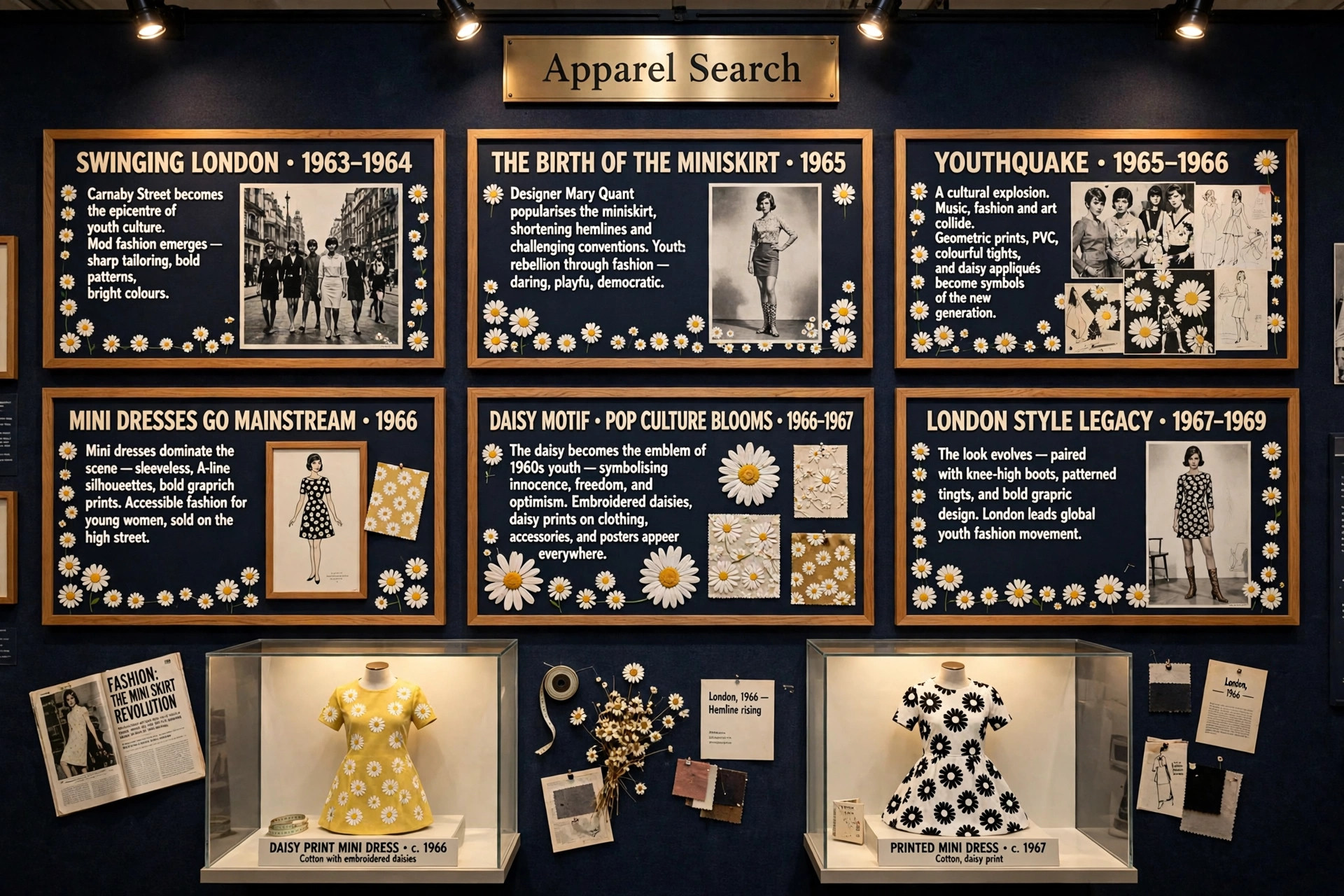
Illustrative image created for this guide — an artistic impression, not this designer's own garments.
News, Photos & VideoCollectionsFall FashionsFashion WeekNewsProfilesRunwaySpring Fashions
Bazaar and the King's Road, 1955
Quant's revolution began in a shop. Bazaar, opened on the King's Road in Chelsea in 1955, sold clothes where young Londoners actually gathered, at prices and in styles the established fashion houses did not offer: short skirts, simple shift dresses, bold color and tights instead of stockings. The boutique was a social center as much as a store, and its success proved a market the industry had ignored — teenagers and young working women buying fashion for themselves, with their own money, to please themselves.
From that base the miniskirt emerged as the decade's defining garment. Quant was one of the designers who took credit for it, and her genius was less the single garment than the attitude around it: fashion as a game, hemlines as a declaration of independence, and the little white daisy logo as the badge of the whole movement. The collections page in this series files the clothes; the fall and spring pages separate their seasonal strands.
The Daisy Brand and the Legacy
The name and the daisy spread far beyond the boutique — into licensed clothing, cosmetics and products that carried the Quant look around the world. The business model mattered as much as the clothes: a designer name, a recognizable symbol, and ranges at prices young customers could reach became a template the industry has followed ever since.
Read with the collections page, the profile completes its arc: a Welsh designer who opened a small Chelsea boutique in 1955 became, within a decade, the face of a youth fashion movement that permanently changed who fashion was for. The fashion week and runway pages follow how that legacy is presented; the news page gathers the continuing coverage and retrospectives her work still receives.
Photos

Common Questions
Who is Mary Quant?
Dame Barbara Mary Quant, born 11 February 1934, is a Welsh fashion designer and British fashion icon. She became an instrumental figure in the 1960s London-based Mod and youth fashion movements.
What is Mary Quant credited with?
She was one of the designers who took credit for the miniskirt and hot pants. By promoting these and other fun fashions she encouraged young people to dress to please themselves and to treat fashion as a game.
Where did Mary Quant start?
At Bazaar, the boutique she opened on London's King's Road in 1955, selling the short, sharp, affordable clothes a young generation wanted — the shop that put her at the center of Swinging London.