Tracy Reese Profiles
Detroit roots, joyful prints — and the women's uniforms of United Airlines.
Tracy Reese is an American fashion designer whose career is a study in how a strong, recognisable point of view can carry a designer from a New York runway label to one of the most closely watched sustainability projects in American fashion — and, along the way, to designing uniforms seen by millions of travellers. Born in Detroit, trained at Parsons School of Design in New York, Reese launched her namesake label in 1998 and built it on a simple, durable idea: rich, daring colour and unique prints, cut into joyful, feminine clothes that real women want to wear. Her dresses became fixtures of New York Fashion Week, her labels were carried by leading department stores and boutiques, and her work was worn by First Lady Michelle Obama. Two decades in, she stepped back from the conventional wholesale model, took part in a nine-month sustainability residency, moved her studio home to Detroit and launched Hope for Flowers, a label designed around the health of people, the planet and equity in profit. In parallel, she took on one of the largest design briefs in American fashion: the women's uniforms for United Airlines, created in partnership with Brooks Brothers and rolled out to customers on 28 May 2025. This profile follows that arc — training, label, signature, uniform and legacy — and explains why each stage matters.
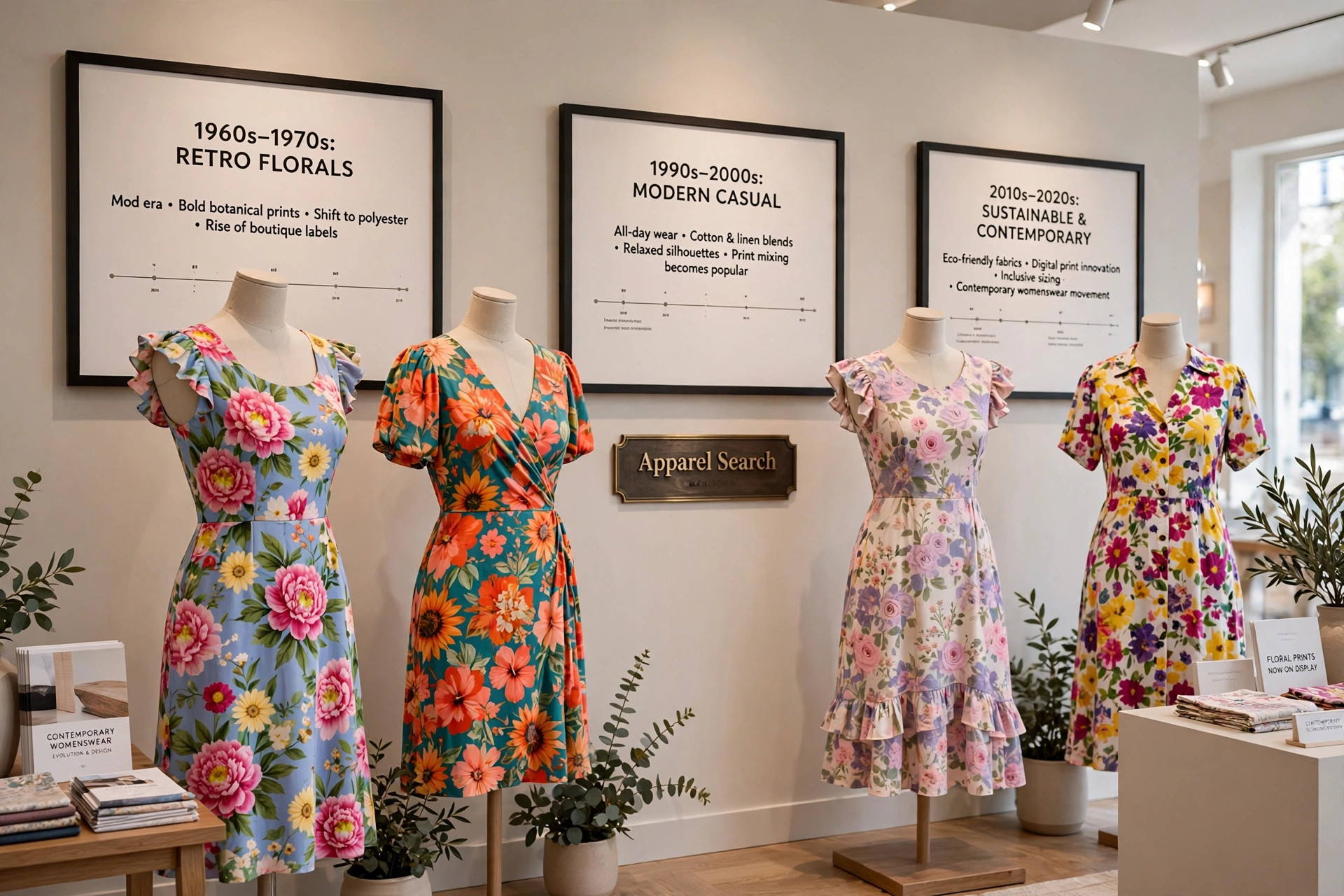
Illustrative image created for this guide — an artistic impression, not this designer's own garments.
Early Life & Training
Reese was born in Detroit in 1964 and grew up in the city she would later return to as an established designer. At eighteen she left her hometown for New York to attend Parsons School of Design, one of the leading American schools for fashion. The move set the pattern of her early career: Detroit supplied the roots, New York supplied the training and the industry. At Parsons she completed an accelerated degree, graduating in 1984 — a fast track that put her into the professional world while still very young.
On graduating, she apprenticed under the designer Martine Sitbon while working for the small contemporary firm Arlequin, an apprenticeship that gave her a grounding in the contemporary end of the market rather than in couture. She went on to work at several of the industry's top fashion houses, most notably Perry Ellis, where she became design director for the Women's Portfolio. That sequence is a classic American training, and it shows in her later work: the clothes are designed to be manufactured, sold and worn, not simply shown. By the time she launched her own label she understood both the creative and the commercial sides of a collection.
The Career
Reese launched her eponymous ready-to-wear label in New York City in 1998 and became a fixture of the runways at New York Fashion Week. The label grew quickly from a single collection into a small group of brands. Her secondary line, plenty by Tracy Reese, was introduced in 1998, embodying a modern bohemian spirit with joyful colour palettes and playful details — versatile everyday essentials rather than occasion pieces. Over the following years the business expanded to include the sub-brands Plenty, Frock! and Black Label, and a later dress line, plenty DRESSES by Tracy Reese, launched in spring 2014 for the customer who needs one dress to carry her from work to a special occasion.
The labels were sold nationwide in top department stores and specialty boutiques, and through retailers in Europe and Asia; her own site records strong partnerships with Barneys, Bergdorf Goodman, Neiman Marcus, Nordstrom and Anthropologie. Her designs were featured in the leading fashion publications, including Vogue, Elle, Glamour, InStyle, O, The Oprah Magazine, Essence and WWD, and her distinct point of view made her a celebrity favourite. In 2012, First Lady Michelle Obama wore a custom Tracy Reese dress to address the Democratic National Convention — the kind of public moment that fixes a contemporary designer in the wider public memory. Other notable wearers of the brand include Sarah Jessica Parker, Taylor Swift, Tracee Ellis Ross and Oprah Winfrey. Longevity is part of the record: Reese kept a namesake business running for more than twenty years before deliberately changing its model.
Design Signature
The signature is stated plainly in her Council of Fashion Designers of America biography: rich, daring colours and unique prints, crafted into joyful, feminine pieces for the modern woman. Each element of that sentence does work. The colour is not decoration applied afterwards; combined with bold prints and modern silhouettes, it is the design itself. The femininity is equally deliberate — dresses are the centre of the offer, from the main label's ready-to-wear and resort collections to the dress-focused Frock! and plenty DRESSES lines — and it is a femininity aimed at confidence rather than fragility, clothes for what her biography calls the confident, sophisticated woman.
Underneath the colour sits a philosophy her official biography states directly: a commitment to bringing out the beauty in women of all shapes, sizes and colours, with inspiration drawn from nature, art, dance, travel and global cultures. That breadth of reference explains the prints — floral, graphic and bohemian motifs that can sit inside one collection without contradiction — and it explains the bohemian spirit assigned to Plenty, the line where the same eye works at a more relaxed, everyday register. For a student of design, Reese is a useful case study in brand architecture: one recognisable hand, expressed at several price points and moods, so every customer is recognisably meeting the same designer.
The United Airlines Uniform
Reese's largest audience, by far, came not from a runway but from an airport. She designed United Airlines' women's uniforms in partnership with Brooks Brothers, and the credit needs to be stated precisely, because a modern airline uniform is a programme, not a single designer's collection. Brooks Brothers designed the pilots' and men's uniforms and manufactured the programme; Carhartt supplied the below-wing uniform for ramp and technical staff; and TUMI supplied the luggage. Reese's part of the brief — the women's uniform worn by flight attendants and customer-facing staff — is the part of the programme most passengers actually see, and it placed a designer known for colour, print and feminine dresses in charge of clothing a workforce that has to look polished at the end of a long-haul day.
The programme also illustrates how long serious uniform design takes. It was announced in 2017, the designs were shown in January 2019, and the customer-facing rollout did not take place until 28 May 2025 — a span that covers design development, wearer trials, manufacturing and the logistics of dressing a global workforce. That timeline is normal at this scale, and uniform work rewards exactly the skills her training built: garments produced consistently, in many sizes, to a fixed standard, then worn hard every day. A runway dress is judged for a season; a uniform is judged every shift. Her United work therefore belongs in this profile not as a footnote to the fashion career but as one of its largest chapters, and it is covered garment by garment in our United Airlines uniform guide, linked below.
Beyond the Uniform
The second half of Reese's career is defined by a deliberate change of direction. In 2018 she took part in the nine-month CFDA + Lexus Fashion Initiative, a residency focused on sustainable design organised by the Council of Fashion Designers of America and Lexus, studying everything from textiles and carbon footprint to human rights in the supply chain and waste in pattern making. The experience, by her own account, was an eye-opener — and it produced a blueprint she then followed through. That same year, after three decades based in New York, she moved back to her hometown of Detroit. In 2019 she launched Hope for Flowers by Tracy Reese, a sustainability-focused label designed and partially manufactured in Michigan, with early collections printed on organic textiles and made with local partners.
Hope for Flowers is run on three guiding principles — the health of people, the planet, and equity in profit — and its material choices show what that means in practice: bast fibres such as linen, which needs little water; organic cotton; responsibly forested wood-byproduct fibres such as Tencel; experiments with recycled wool; and biodegradable details such as natural shell or wood buttons, in garments designed to last and eventually to biodegrade. Alongside the label, Reese has worked to build the local capacity such a model needs, training and working with Detroit craftspeople and sewers and helping to develop small-batch production in the city. Her industry service runs in parallel: a member of the Council of Fashion Designers of America since 2000, she serves on its board of directors, and she has also served as president of the board of ISAIC, Detroit's Industrial Sewing and Innovation Center, alongside roles with the Nest Artisan Guild, the College for Creative Studies and the Kennedy Center's Turnaround Arts programme. Taken together, the later career reframes the earlier one: the designer of joyful dresses became an argument, made in garments, that American fashion can be made more responsibly — and that her own hometown can help make it.
Airline Uniform Designers
Common Questions
Who is Tracy Reese?
Tracy Reese is a Detroit-born American fashion designer known for joyful prints and feminine dresses. She launched her namesake label in New York City in 1998 and later founded Hope for Flowers, a sustainability-focused label based in her hometown of Detroit.
What is Tracy Reese known for?
Tracy Reese is known for rich, daring colours and unique prints crafted into joyful, feminine clothing for modern women, and for a design philosophy rooted in bringing out the beauty in women of all shapes, sizes and colours.
Did Tracy Reese design the United Airlines uniforms?
Tracy Reese designed United Airlines' women's uniforms in partnership with Brooks Brothers. Brooks Brothers designed the pilots' and men's uniforms and manufactured the programme, Carhartt covered below-wing staff and TUMI supplied luggage. The programme was announced in 2017, the designs were shown in January 2019, and the customer-facing rollout took place on 28 May 2025.
What is Hope for Flowers by Tracy Reese?
Hope for Flowers is the sustainability-focused label Tracy Reese launched in Detroit in 2019. It is designed and partially manufactured in Michigan and is produced following three guiding principles: the health of people, the planet, and equity in profit.