Fashion Marketing & Brand Building · Collaborations & Licensing
Fashion Brand Collaborations & Licensing
Two ways a brand grows beyond its own rails: collaborations that pair two names for one season's spotlight, and licensing that rents a name into whole new categories — with the discipline that keeps either from cheapening it.

Every other guide in the Fashion Marketing & Brand Building cluster is about a brand speaking for itself. This one is about brands speaking through each other. A collaboration joins two names on one product for a limited run. A license lends one name to another company's products, often for years. Both trade on the same asset — the meaning a brand has built, the subject of the brand identity guide — and both can destroy that asset if they are run carelessly. They are among the most powerful and most dangerous tools in fashion marketing, and they are governed by contract, which is why this guide keeps one hand on the practical marketing and points steadily to the fashion licensing legal guide for the law underneath.
Collaboration vs. Licensing, in One Line Each
A collaboration is two brands making something together, briefly: a capsule collection, a co-branded product, a designer range for a retailer. A license is a brand renting its name to a specialist manufacturer in a category it does not run itself, for royalties. Collaborations are marketing events with product attached; licenses are businesses with marketing consequences.
Collaborations: Borrowed Audiences, Concentrated Demand
The classic forms recur because they work. A designer or luxury house pairs with a high-street or sportswear brand, and each side trades what it has in surplus: credibility for reach, heat for scale. Two labels at similar levels co-create a capsule neither would make alone. A brand works with an artist, an athlete or a beloved institution whose world touches its own. The mechanics are consistent: a small, deliberately limited range; a launch treated as an event, with the PR and creator machinery of this cluster behind it; and a hard end date. Scarcity is not a side effect but the engine — the knowledge that the product exists once concentrates a season of demand into a few days, and the secondary-market prices that follow become part of the story. The failures are equally consistent: pairings with no real audience overlap, product that is a logo swap rather than a design, and collaborations repeated so often that the event stops being one.
Licensing: The Name as a Business
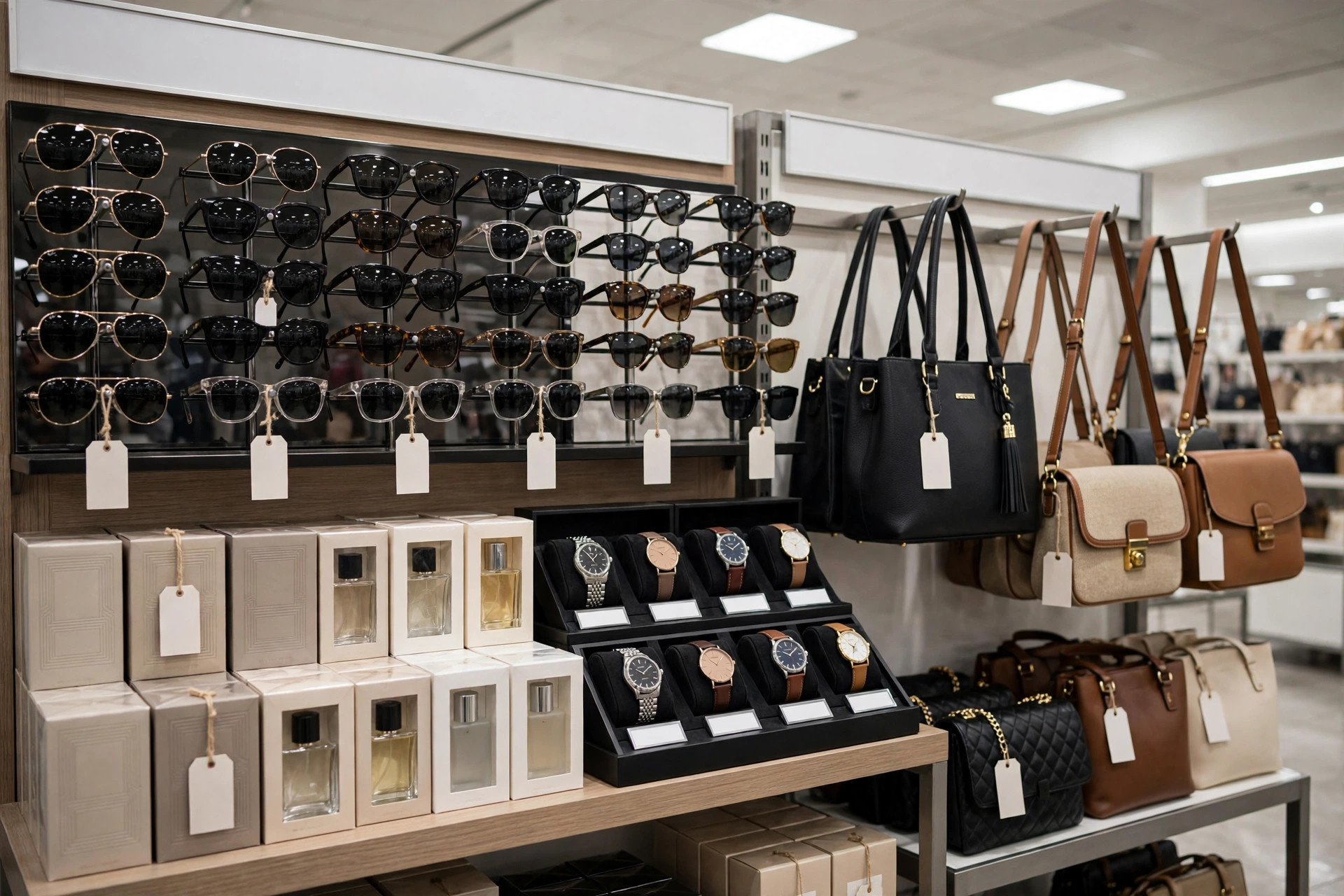
Licensing answers a structural problem: a famous clothing name could sell sunglasses, fragrance, watches, bedding and luggage, but the brand has no factories, expertise or distribution in any of those trades. So it rents the name to companies that do. The licensee designs (under approval), manufactures, distributes and sells; the licensor collects royalties and protects the asset. The protection is the real work: approval rights over product, materials, packaging, pricing and where the goods may be sold, plus quality standards with inspection behind them. Customers do not distinguish between the brand and its licensee — a badly made licensed product damages the name exactly as a badly made own product would, which is why licensing departments are staffed like guardians rather than sales teams. The legal structure of these deals — terms, territories, exclusivity, trademark duties — is covered in depth by the licensing guide in the Fashion Law cluster, and the trademark foundations beneath everything sit in the same cluster's trademarks guide.
The Dilution Line
Both tools spend brand meaning, and meaning is finite. Fashion's cautionary tales are licensing stories: great names that, in a decade of aggressive renting, appeared on everything at every price until the name itself became ordinary and the premium it once commanded was gone — recoveries that took a generation of buying back licenses and refusing income. The working discipline is therefore conservative: few partners, chosen for fit rather than fee; categories that extend the brand's world plausibly; floors on quality and price that approvals actually enforce; and periodic audits of where the name currently appears. A brand that can list every use of its name, and defend each one, is managing the asset. A brand that cannot has already begun spending it.
More in Fashion Marketing & Brand Building
Common Questions
What is the difference between a collaboration and a licensing deal?
In a collaboration, two brands design and sell a joint product together, sharing the work and the spotlight for a limited run. In licensing, one brand (the licensor) rents its name and designs to another company (the licensee), which manufactures and sells products in a category the brand does not operate itself — eyewear, fragrance, watches, home goods — and pays royalties on sales. Collaborations are events; licenses are ongoing businesses.
Why do fashion brands collaborate with each other?
Each partner brings what the other lacks: a luxury house gains a streetwear audience's energy; a mass retailer gains design credibility; both gain a news story, new customers and a limited product neither could have made alone. Scarcity does the rest — a capsule that exists for one season concentrates demand that an ordinary launch would spread thin. The arrangement works when the audiences genuinely overlap at the edges rather than merely being large.
How do licensing royalties work in fashion?
The licensee typically pays the brand a royalty — a percentage of sales — often with a guaranteed minimum payment per year, in exchange for using the name in an agreed category, territory and period. In return the brand protects its asset with approval rights: designs, materials, quality standards, pricing and distribution all require the licensor's sign-off, because the customer will blame the name on the label, not the company that actually made the product.
What is brand dilution, and how do brands avoid it?
Dilution is what happens when a name appears on so many products, at so many price levels, in so many places, that it stops meaning anything specific — and stops commanding a premium. Fashion history is full of labels that licensed themselves into discount ubiquity and took decades to recover. Brands avoid it with discipline: few categories, high quality floors, controlled distribution, and a willingness to turn down royalty income that costs more in meaning than it pays in money.
Back to Fashion Marketing & Brand Building
The Fashion Marketing & Brand Building hub maps the whole discipline — identity, public relations, advertising, influencer and social media marketing, and collaborations and licensing.