Fashion Marketing & Brand Building · Identity
Building a Fashion Brand Identity
Before a brand can be marketed, it has to mean something specific. This guide covers the three layers of identity — positioning, voice and visual design — and how they are built to survive contact with real customers.
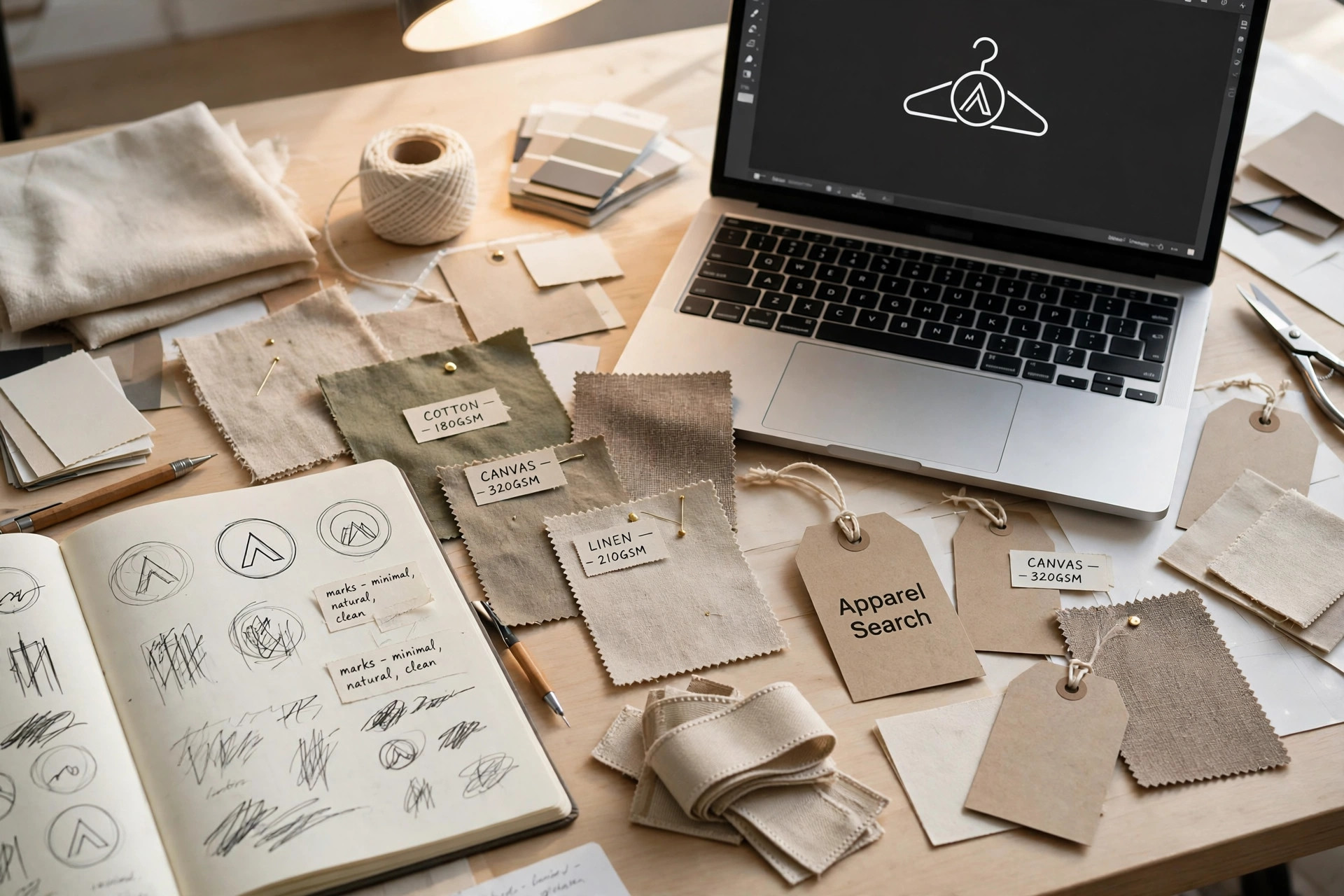
Every guide in the Fashion Marketing & Brand Building cluster spends something that this one creates. Advertising buys attention, PR earns it, creators lend it — but attention only turns into a business when it attaches to a meaning the customer can remember and repeat. That meaning is the brand identity, and building it is a sequence of decisions, most of them made before the first garment is sold: what the brand is for, who it is for, how it speaks, and how it looks. Identity work feels abstract only until it is skipped — then it reappears as a concrete problem, in the form of a collection that could belong to anyone and marketing that has nothing to say.
Positioning: Choosing the Ground You Own
Positioning is the decision everything else serves: the specific place the brand will occupy in a customer's mind, stated plainly enough that a stranger could repeat it. A workable position answers four questions, in order:
Who Is It For?
Not a demographic sketch but a real wearer: their life, their budget, the moments they dress for. “Women 25–44” is not a position; “the label working mothers buy when they want to look deliberate, not dressed up” is the beginning of one.
What Does It Promise?
The one benefit the brand will be known for — a fit that never needs tailoring, workwear fabrics in dress silhouettes, luxury construction at honest prices. The promise must be something the product can actually keep, season after season.
Against What?
Position is relative. Naming the alternative — the fast-fashion version, the stiff luxury version, the bland department-store version — sharpens what the brand is by contrast.
What Is It Not?
The most useful step, and the one founders resist. A brand that refuses nothing stands for nothing in particular; the exclusions (no logos, no synthetics, no discounting, no more than four colors a season) are what make the identity recognizable.
Identity, Image and Branding — Three Different Things
Brand identity is what the company builds: the intended meaning, expressed in positioning, voice and visuals. Brand image is what customers actually perceive, which may drift from the intention. Branding is the ongoing work of closing the gap between the two. Confusing the terms leads to a common error — treating a new logo as a new brand, when only the identity's surface has changed.
Voice: How the Brand Sounds
Voice is identity in language: the tone of product descriptions, social posts, customer-service replies and the words on the label itself. A brand selling rugged workwear and a brand selling bridal couture cannot sound alike, and neither should sound like a generic retailer. Voice is built by choosing a small set of traits — plain-spoken or poetic, playful or exact — and then applying them with unusual consistency. Consistency is the hard part: the voice must survive being written by different people across a website, a press release and a hundred short social posts, which is why the social media guide in this cluster treats the voice document as production equipment, not inspiration.
Visual Identity: The System People Recognize
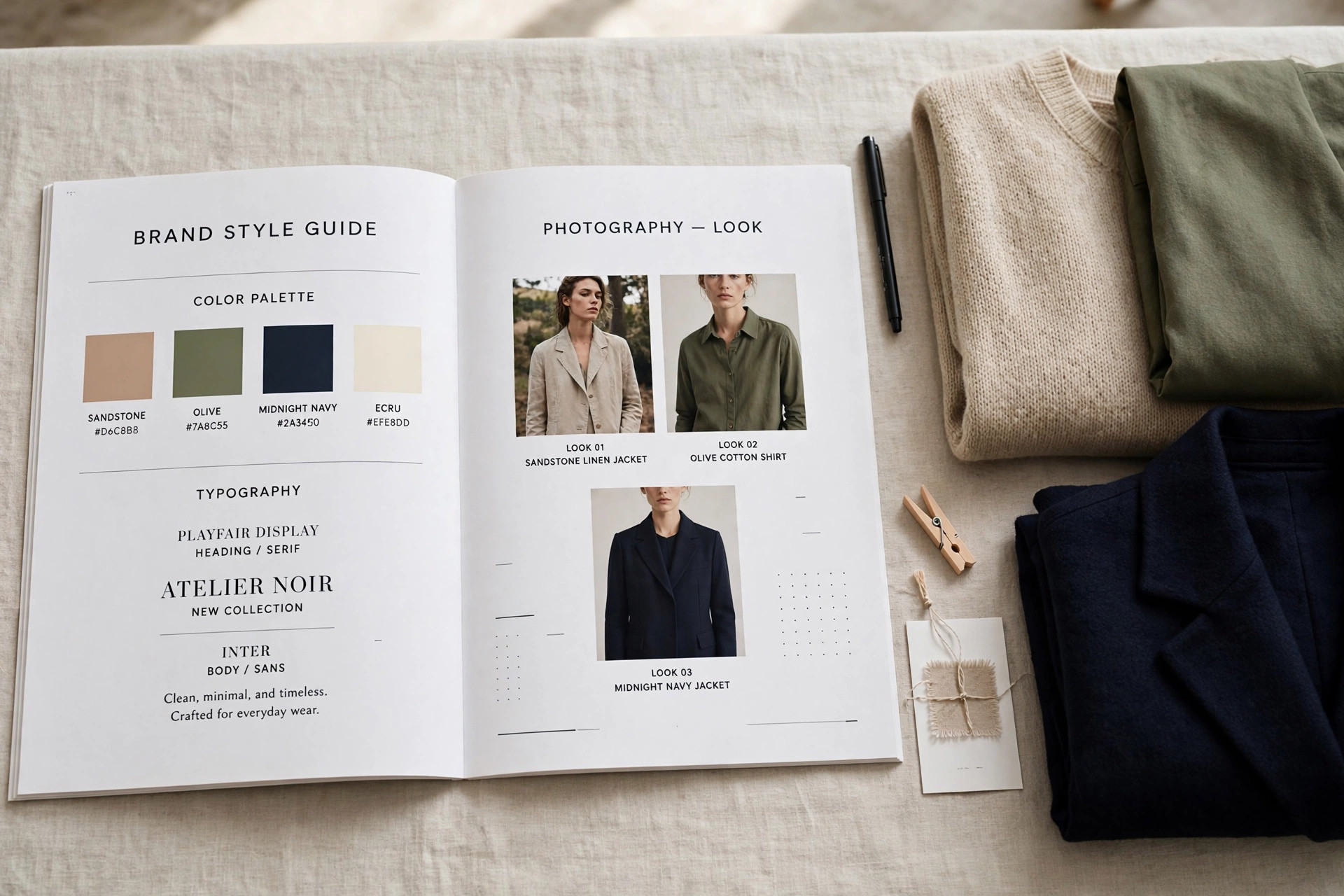
The visual system is what makes the brand identifiable at a glance, across a hangtag, a storefront, a shopping bag and a phone screen. Its elements are few and each carries weight: the name (short, sayable, available — and protectable, which is where the fashion trademarks guide becomes essential reading before anything is printed), the logo (most successful fashion marks are typographic and restrained, because they must sit quietly next to changing seasonal product), a color palette (usually two or three core colors held constant while seasonal colors rotate around them), typography, and an imagery style — the consistent photographic look that the Fashion Photography & Media Production guide explains how to produce. The test of the system is subtraction: remove the logo from a photograph or a page, and the brand should still be identifiable from color, type and image treatment alone.
Keeping the Identity Alive
Identity is finished last and maintained forever. The working tool is the style guide — a short, practical document recording the position statement, the voice traits with examples, and the visual rules. Its purpose is not rigidity: collections change every season, and the identity must be strong enough to let them change without the brand dissolving. The brands that last treat identity as a frame rather than a picture — the frame stays, the picture inside it is repainted each season. When the frame itself must change, that is a rebrand, and it is done deliberately, rarely, and with the legal checks the Fashion Law & Intellectual Property guide describes, because names and marks are assets with owners, histories and registrations attached.
More in Fashion Marketing & Brand Building
Common Questions
What is brand identity in fashion?
Brand identity is the set of deliberate choices that define what a fashion brand stands for and how it presents itself: its position in the market, its values and point of view, the way it speaks, and its visual system of name, logo, colors, typography and imagery. Identity is what the brand builds; brand image is what customers actually perceive — the goal is for the two to match.
How is a brand different from a logo?
A logo is one element of a brand — the visual mark. The brand itself is the whole meaning a customer attaches to the name: the quality they expect, the person they imagine wearing it, the price that seems fair, the feeling of the store or the package. A logo can be designed in a week; the brand is built by every product, photograph and interaction over seasons.
How much does building a brand identity cost?
The core work — positioning, naming and a basic visual system — can be done by a founder with time and judgment, or commissioned from designers and agencies at costs that range from modest freelance fees to very large agency engagements. The honest answer is that clarity costs more thought than money: an expensive identity built on a vague position fails, while a simple, consistent identity built on a sharp position works at almost any budget.
When should a new label work on identity — before or after the first collection?
Before. The identity decisions — who the clothes are for, what they promise, how they look and sound — shape the collection itself: its price level, fabrics, colors and photography. Labels that design first and brand later usually discover the two disagree, and reworking a launched identity is far more expensive than building one at the start.
Back to Fashion Marketing & Brand Building
The Fashion Marketing & Brand Building hub maps the whole discipline — identity, public relations, advertising, influencer and social media marketing, and collaborations and licensing.