Fashion Marketing & Brand Building · Influencers
Influencer Marketing for Fashion Brands
How brands work with the people audiences actually follow: finding the right creators, seeding and gifting product, structuring paid partnerships, and the disclosure rule that applies to all of it.
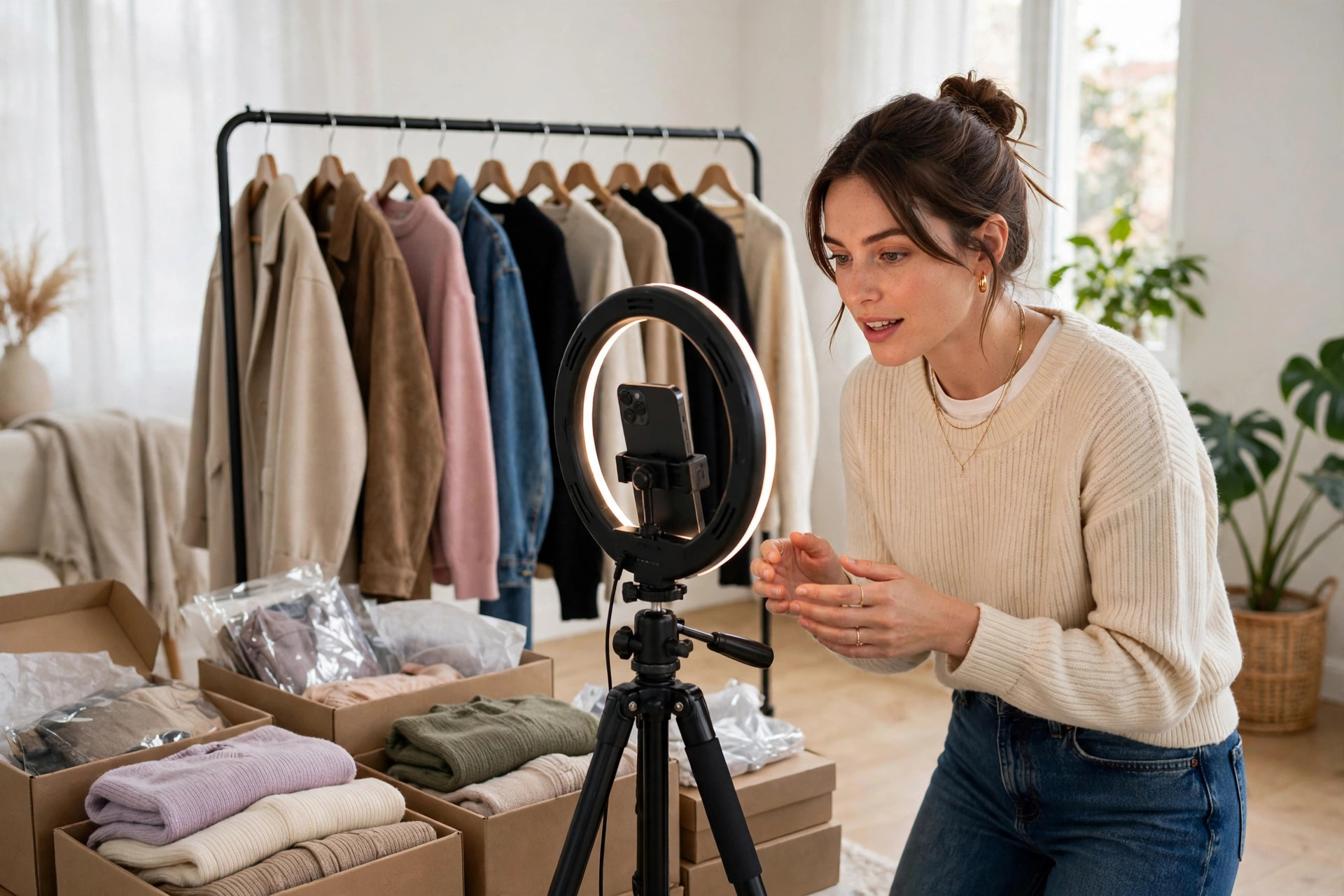
Influencer marketing is the branch of Fashion Marketing & Brand Building that works through individuals: the creators, stylists, models and enthusiasts whose posts, videos and recommendations their followers genuinely attend to. It grew out of an old fashion institution — the dress on the right person at the right event — rebuilt for social platforms. The mechanism is trust transfer. A follower has chosen this person's taste; when the person wears, unboxes or recommends a garment, some of that trust attaches to the brand. Everything in this guide is about earning that transfer honestly and structuring it so both sides know what was agreed. Apparel Search's fashion influence section profiles influencers and the business around them — the directory layer beneath this practice guide.
Finding Creators Whose Audience Fits
The beginner's error is shopping by follower count. What a brand is actually buying is access to a specific audience's attention and trust, so the working questions are different: Who follows this person, and does that overlap with who buys our clothes? Does the creator's style sit naturally beside our product, or would the garment look like a costume in their feed? Do their followers respond — comments with substance, saves, shares — or merely scroll past? And has the creator promoted competitors so often that one more brand means nothing? Brands assemble lists from platform search, from watching who already wears and tags them, from agencies and platforms that broker introductions, and from directories such as the Apparel Search influence section. A list built on fit, in the dozens, outperforms a celebrity booking for most labels.
Seeding and Gifting: Attention Without Obligation
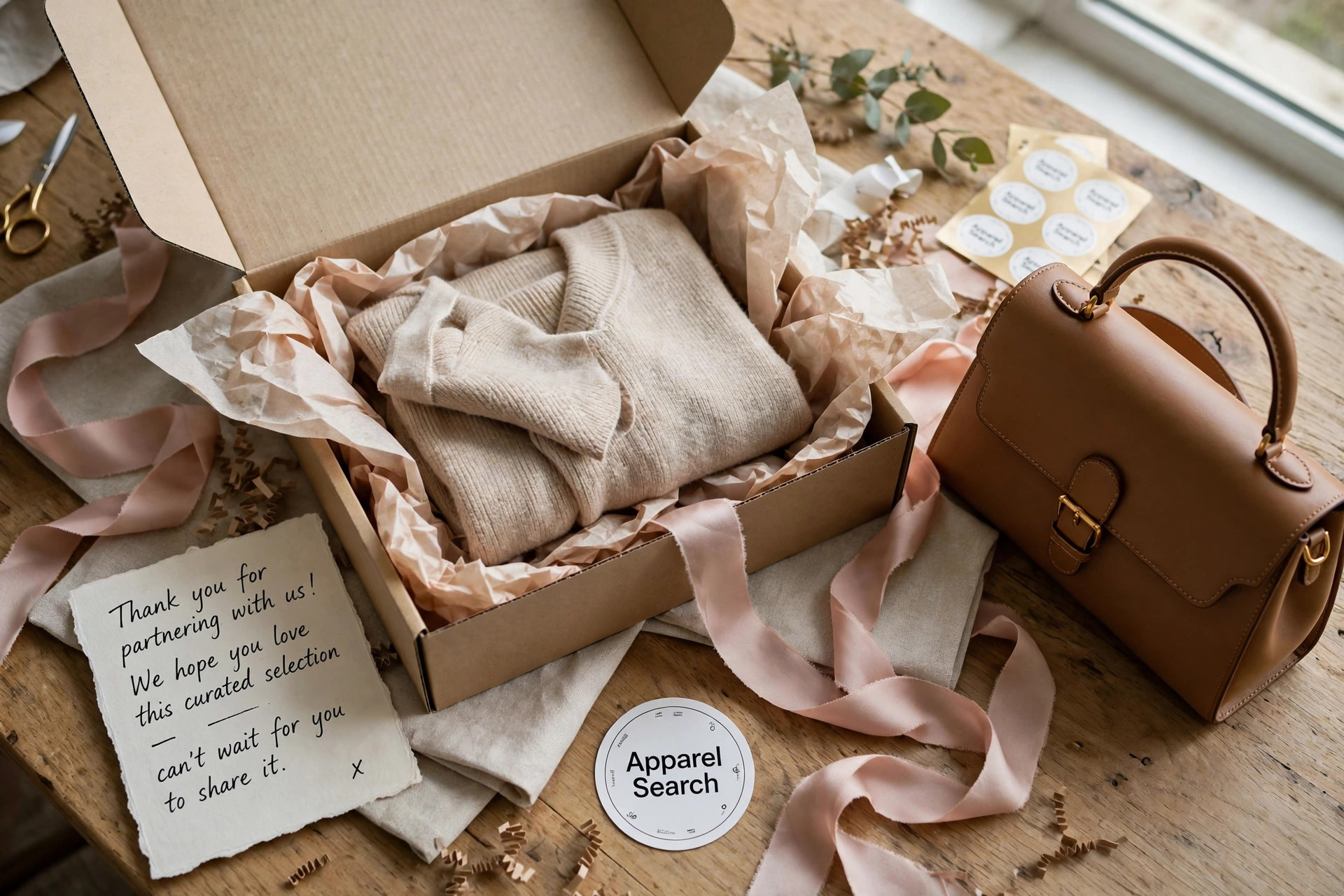
The lightest arrangement is the gift: product sent to a creator the brand hopes will like it, with no promise of coverage. Gifting works when the product is genuinely suited to the person — right size, right style, right moment in the season — and when the package itself respects the recipient's time. It is the digital descendant of the PR sample loan, adapted to people who keep what they are given. Brands budget for a low response rate and treat every resulting post as earned media, because that is what it is. The moment a brand requires a post, sets a date, or approves the content, the arrangement has stopped being a gift and become work — which brings it under the rules of the next section.
Paid Partnerships: The Working Agreement
A paid partnership is a contract, and professional brands treat it as one. The agreement covers the deliverables (how many posts, stories or videos, in which formats), the schedule, the fee, and two terms that are routinely worth more than the post itself: usage rights — whether the brand may reuse the creator's content in its own channels and advertising, and for how long — and exclusivity — whether the creator must avoid competing brands, and for what period. The brief matters as much as the contract: it should give the creator the product facts, the key message and the things that must not be said, while leaving the voice and format to the person the audience actually follows. Content that reads like the brand's own advertisement, pasted into a creator's feed, wastes the very trust the brand paid for.
Disclosure Is Not Optional
When a post exists because of a commercial relationship — a fee, a contract, or free product the creator is featuring — that relationship must be disclosed, clearly, in the content itself, so an ordinary viewer understands it is advertising. This is a regulatory requirement in major markets, a condition in platform partnership tools, and a term every brand agreement should state and check. The detailed legal framework sits with the Fashion Law & Intellectual Property guide; the working rule here is simple: if a reasonable follower would want to know the brand was involved, the involvement gets disclosed.
Measuring What It Bought
Measurement follows the arrangement. Gifted coverage is counted as earned media — reach, quality of placement, sentiment. Paid work is judged harder: engagement rate against the creator's own average, traffic and sales tracked through unique links and codes, cost per acquisition compared with the brand's other channels, and the downstream value of content the brand licensed for reuse. The mature programs also track the unglamorous metric — how many creators come back for a second season — because repeat relationships are both cheaper and more believable than a rotation of one-off posts.
More in Fashion Marketing & Brand Building
Common Questions
What is the difference between seeding, gifting and a paid partnership?
Seeding and gifting mean sending product to creators with no obligation to post — the brand hopes the item earns genuine attention, and often it does not, which is the accepted risk. A paid partnership is a contract: an agreed fee for agreed content, delivered to a schedule, usually with approval and usage terms. The line between them matters because obligations, control and disclosure duties all change when money and commitments enter the arrangement.
Do influencers have to disclose gifted or paid posts?
Yes. Advertising standards in the United States, the United Kingdom and many other markets require that a commercial relationship behind a post — payment, free product, or another material connection — be disclosed clearly enough that an ordinary viewer understands the content is advertising. The responsibility is shared: brands must require disclosure in their agreements and check that it happens, and creators must make it. A gifted item that prompts a post is a material connection even though no fee changed hands.
How much do fashion influencers charge?
There is no standard rate card. Fees scale with audience size, engagement, the platform, the content format, and whether the brand also wants usage rights — permission to reuse the content in its own advertising — and exclusivity. Small, highly engaged creators may work product-only or for modest fees; large accounts command fees comparable to traditional media buys. Because usage and exclusivity change the value so much, two quotes for 'one post' are rarely comparable without the terms attached.
Are small creators worth a fashion brand's time?
Often more than large ones. Smaller creators — sometimes called micro or nano influencers — typically have tighter, more trusting relationships with their audiences, higher engagement rates, and audiences concentrated in a niche the brand actually sells to. A modest account whose followers all buy workwear, vintage denim or modest fashion can outperform a celebrity account for that brand, at a fraction of the cost. The trade-off is scale: reaching a large audience through small creators means managing many relationships.
Back to Fashion Marketing & Brand Building
The Fashion Marketing & Brand Building hub maps the whole discipline — identity, public relations, advertising, influencer and social media marketing, and collaborations and licensing.