The Piece
Full Cover That Folds Away Into a Hat
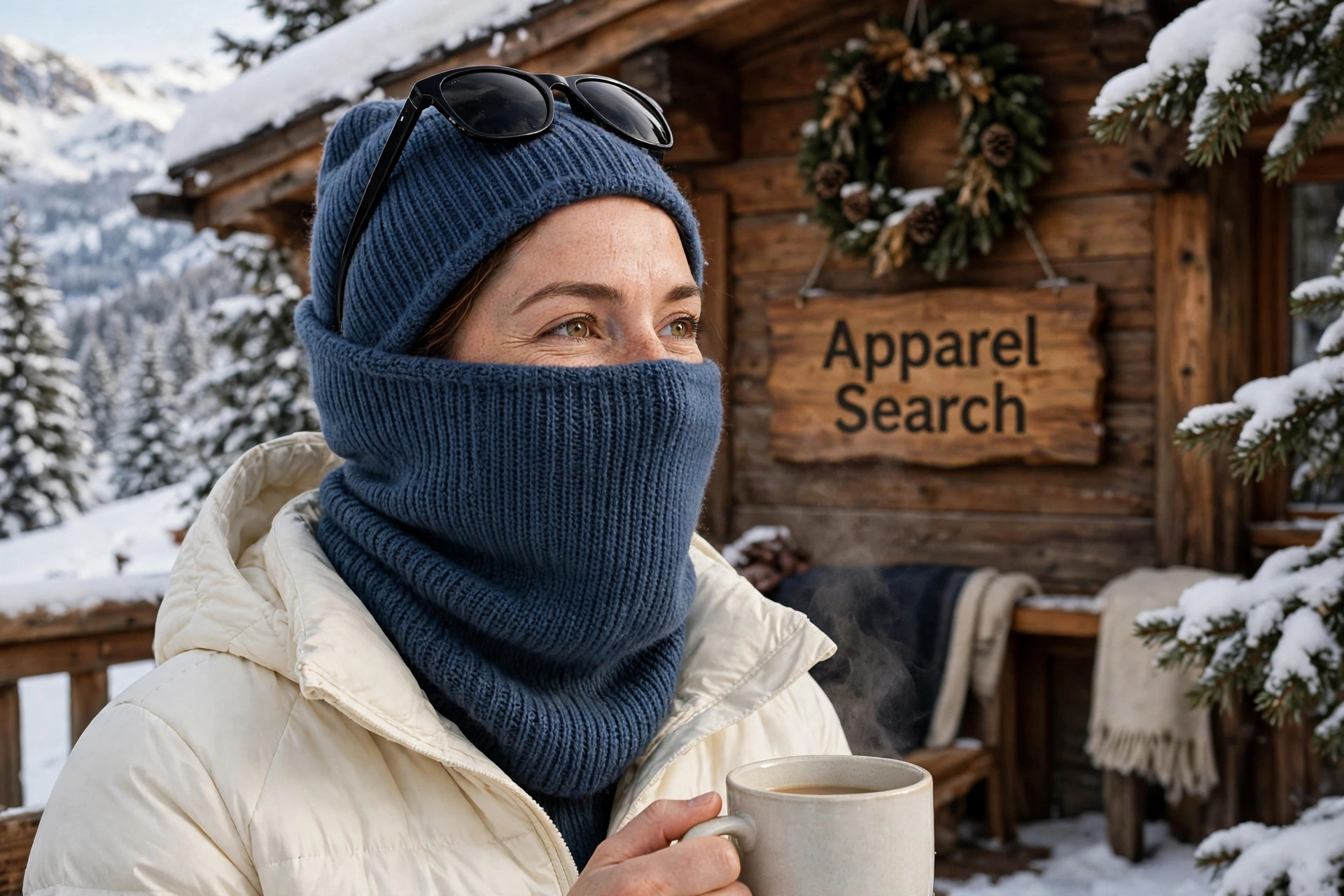
A balaclava is a close-fitting knitted hood that covers the head, ears and neck, leaving an opening for the face — the garment defined on our balaclava definition page. It began as soldiers’ and skiers’ cold-weather kit, and fashion adopted it because it solves a real dressing problem: no hat-and-scarf combination seals the gap at the collar, and no other single piece converts — down into a neck gaiter, up into a beanie — in seconds.
This guide covers the styles and fabrics worth choosing, the three ways to wear one, how to style it with coats and ski outfits, the etiquette that keeps a covered face friendly, and simple care. For product listings, browse the balaclavas product pages.
Styles & Fabrics
Fine Knits for Fashion, Technical Knits for the Slopes
The classic balaclava has one face opening; variations add a separate mouth or nose panel, a hinged face section that drops away cleanly, or a drawcord edge that snugs the opening in serious wind. Fashion versions are fine-gauge and neat, cut to sit smoothly under a coat collar; expedition and ski versions are thicker, sometimes windproof-panelled, and shaped to layer under a helmet.
Merino wool is the reference fabric: warm, breathable, soft against the face and naturally slow to pick up odour, in weights from a thin helmet liner to a chunky fashion knit. Synthetic knits — polyester and acrylic blends — dry fastest and suit sport, where breath and sweat matter more than looks. Cashmere and wool-blend fashion knits trade a little weather performance for a softer hand and a cleaner line with tailored coats. Whatever the fibre, the knit should recover its shape after stretching over the head; a face opening that bags out will annoy within one wear.
Three Ways to Wear It
Full, Rolled as a Beanie, or Down as a Neck Gaiter
Worn full, the balaclava covers everything but the face opening — cheeks, ears, neck and head sealed against wind. This is the ski-slope, chairlift and bitter-commute mode, and the one that pairs with goggles or sunglasses and a high-zipped jacket. Rolled as a beanie, the lower part folds or rolls up so the piece becomes a close cap covering the head and ears, face and neck bare: the town mode, warm without the full-cover look, and the easiest way to wear one with a smart coat. Down as a neck gaiter, the whole hood pulls down around the neck like a snood, ready to pull up when the weather turns — the in-between mode for changeable days, dog walks and cycling between stops.
Under a Helmet
Choose the thinnest merino or synthetic knit, put the balaclava on first and settle the face opening, then the helmet. There should be no bunched fabric at the forehead, and the opening’s edge should sit below the cheekbones so it never rides up toward the eyes on a descent.
Styling
With Coats in Town, With Ski Outfits on the Mountain
In town, the balaclava replaces both hat and scarf, so let it be the outfit’s one soft, close layer. A fine knit in a colour drawn from the coat — slate under a cream coat, dusty rose under charcoal — reads deliberate; a bright balaclava under a plain coat is the winter equivalent of a statement shoe. Keep the rest tailored: structured coats, straight trousers and clean boots stop the look sliding toward expedition gear, and rolling it up to beanie mode at the door keeps the styling when the cover is no longer needed.
On the mountain it is a working layer in the après-ski system: under the helmet on the lift, full against the wind on the descent, then rolled to a beanie or gaiter with a ski sweater for the lodge. Match or contrast it knowingly against the shell — the women’s skiwear guide and the men’s skiwear guide cover the outfits it layers into.
Etiquette & Care
When to Pull It Down — and How to Keep It Fresh
A covered face is weather gear outdoors and a discourtesy indoors. Pull the balaclava down — to gaiter mode — or roll it up whenever you enter a shop, bank, station or any staffed counter, before a security check, and whenever you speak to someone who has not chosen the conversation. It takes two seconds, and outdoors again it pulls back up just as fast. At the table, in a lodge or café, beanie or gaiter mode is the ceiling; full cover stays on the slope.
Care is simple but not optional, because the piece sits against the face. Wash merino cool and gentle, by hand or on a wool cycle, and dry it flat; synthetics machine-wash cool and air-dry. A balaclava worn daily against skin and breath needs washing far more often than a hat does — rotate two if you wear one every day. Store it clean and uncompressed, and check the face opening’s edge each season: once the knit stops recovering there, the fit, and the warmth, are gone. For lighter ear-only cover on milder days, the women’s ear muffs guide covers the alternative.
Questions
Common Questions
Is a balaclava warmer than a hat and scarf?
Usually, yes — it covers the head, ears, neck and much of the face in one piece, with no gap at the collar where wind gets in. A hat and scarf can match it only when the scarf is wrapped high and stays put, which a balaclava does by design.
When should I pull a balaclava down?
Whenever you go indoors, approach a counter or till, or talk to someone who needs to see your face — banks, shops, stations and security checks included. Rolling it down to a neck gaiter or up into a beanie takes seconds and is the polite default off the slopes.
Can a balaclava be worn under a ski helmet?
Yes — a thin merino or synthetic balaclava is the standard helmet liner. It should fit smoothly with no bunching at the forehead, and the face opening should sit so the fabric does not ride up into the eyes or block the helmet straps.
More to Explore
Search Apparel Search