Straw Bags
Fashion Influence — how style shapes, and is shaped by, the people who wear it
Straw bag is the umbrella name for bags woven from natural plant fibres — the lightest and most summery corner of the handbag family. This guide covers what 'straw' actually means on a label, the fibres it covers, the French market basket behind the style, and the shapes and care that woven bags involve.
Straw Bags
A straw bag is a handbag woven from plant fibre — straw itself, or raffia, seagrass or cane — and it is the one bag category defined by its material rather than its shape or its carry. Totes, baskets, clutches, bucket bags and crossbody bags are all made in straw, and every one of them carries the same associations: summer, holidays, markets and the beach. Woven fibre is light, breathable and cheap where it grows, which made it the world's bag material for millennia before fashion noticed it — and its weakness is the same as its charm, since a woven bag is a fair-weather object that water can spot and warp.
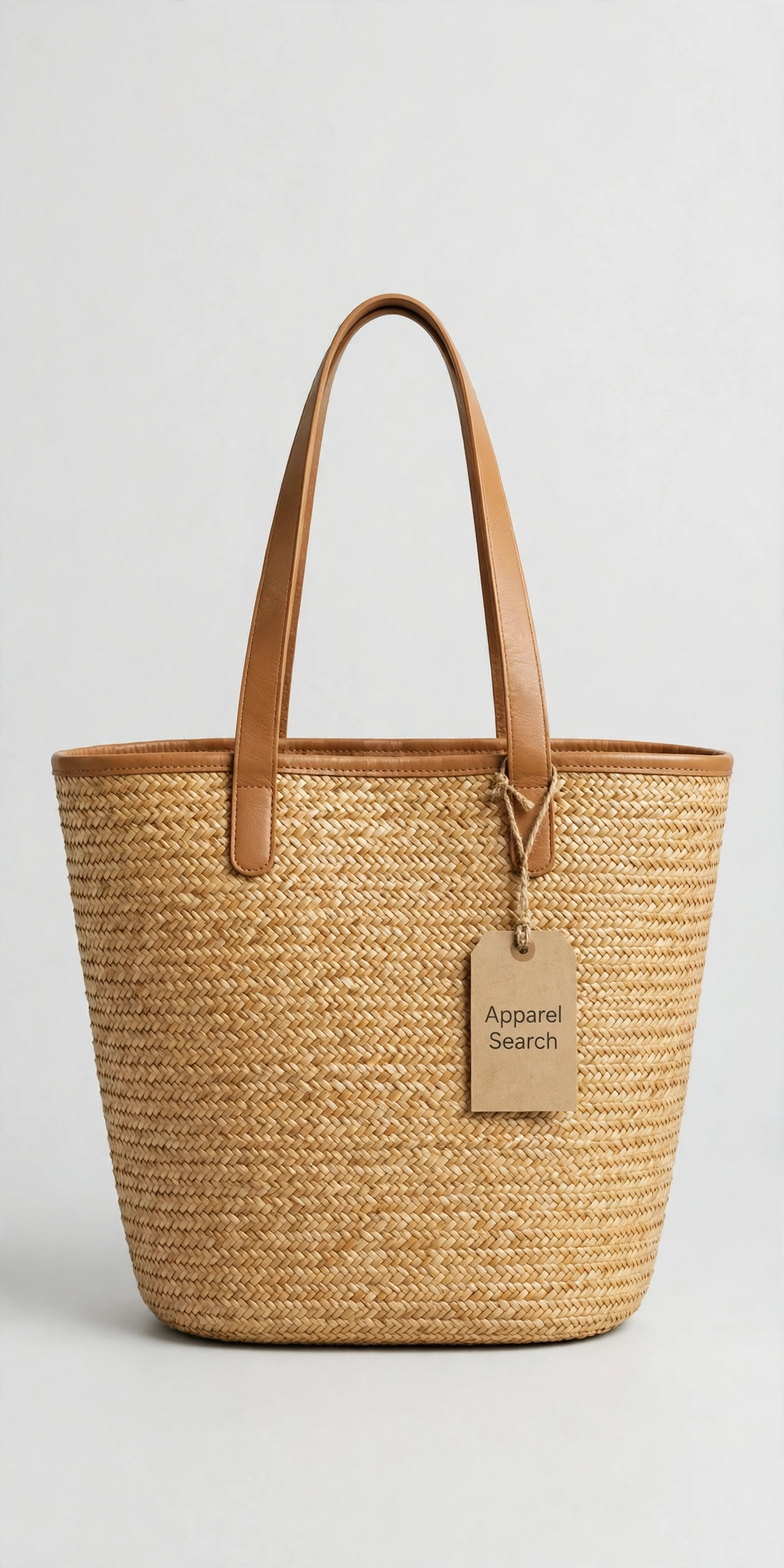
Baskets are among the oldest containers humans make, and the straw fashion bag descends directly from the working market basket of the Mediterranean — the sturdy handled basket carried to market in France, Spain and Italy. Its conversion into a fashion object has one famous author. In the late 1960s and 1970s Jane Birkin carried a simple woven market basket everywhere — with jeans, with evening dresses, on red carpets — and the photograph-proof of that habit made the basket a signature rather than a shopping tool. Fashion has renewed the idea every summer since, in waves: raffia crochet in the 1970s, straw totes with leather handles in the 1990s, and the designer woven bags of recent years, from raffia shoppers to rigid basket bags, which now anchor warm-weather collections at every price.
The Fibres Behind the Name
'Straw' on a label is an umbrella, and the fibres under it behave differently. True straw — the dried stems of wheat, rye or rice — is stiff, smooth and golden; it is braided into plaits that are then sewn together in spirals or rows, the construction of most classic straw totes. Raffia, stripped from the leaves of a Madagascan palm, is softer and flatter, and is crocheted or plaited by hand, which is why raffia bags are supple and slightly irregular. Seagrass is tougher and greener in tone, woven into sturdier, more rustic bags. Wicker is not a fibre at all but a method — weaving rigid canes of willow or rattan — and it produces the hard, fixed shapes of basket bags. Many modern 'straw' bags are quietly made from paper yarn or synthetic raffia, which trades a little of the natural handle for a lot of durability and rain tolerance.
Shapes and Carrying
The standard straw bag is the tote: open-topped, leather-handled, big enough for a market run or a beach towel, and often fitted with a drawstring fabric lining to keep small things from working through the weave. The basket bag is the rigid wicker form, carried by hand in Birkin fashion. Around those two stand the smaller shapes of a summer evening — woven clutches and envelope bags, round crossbody bags, straw bucket bags with leather drawstrings — usually trimmed in leather so that handles, edges and closures can take the wear the weave cannot. A straw bag's honest limits are weather and abrasion: it is a bag for dry days, carried for a season's light loads rather than a winter of commuting.
On this site the straw bag's family includes the totes it most often is, the drawstring bucket bags it is often shaped as, and the full survey of the types of handbags; the fibres and the term are set out in the straw bag definition.
Fashion Products Fashion Products S-Z Fashion Products S
Return to the Influence Fashion home page.
Common Questions
What is a straw bag made of?
Woven plant fibre. Retailers use 'straw' loosely for several materials: true straw (the dried stems of wheat or rice), raffia stripped from the raffia palm, seagrass, and the stiffer canes — wicker and rattan — used for basket bags. The weave, not the exact fibre, is what makes a bag read as a straw bag.
Who made the straw bag fashionable?
Jane Birkin, whose woven market basket, carried everywhere in the late 1960s and 1970s, turned a shopping basket into a style signature. Designers have returned to woven bags every summer since, and raffia totes and basket bags are now permanent warm-weather categories.
How do you care for a straw bag?
Keep it dry — water spots and warps woven fibres — brush dust off with a soft, dry brush, and store it stuffed with tissue in a dust bag so the weave keeps its shape. A straw bag is a fair-weather bag; rain is its one real enemy.