Women's Watches
Styles and materials for every occasion
Women's watches began as jewelry that happened to tell time and became sophisticated timepieces that blend style and functionality. In the 18th century women wore pendant watches as necklaces, small, intricately designed ornamental pieces regarded as fashionable accessories more than functional timekeepers. By the mid 19th century wristwatches had gained popularity among women in high society, with houses such as Patek Philippe and Breguet crafting exquisite pieces, well before men adopted the wristwatch. The early 20th century brought Art Deco geometry and color, the mid century matched watches to fashion with smaller, daintier dials and elegant bracelets from houses such as Rolex and Omega, the late century added sporty and versatile models from brands such as Swatch and Casio, and the 21st century fused fashion and technology in smartwatches. The styles now run classic, fashion, sports and fitness, dress, smart, jewelry and aviator, in materials from stainless steel, gold, rose gold and white gold to leather, ceramic, titanium, rubber and silicone, with gemstones and crystals as markers and embellishment. The leading international brands include Chanel, Omega, Cartier, Bvlgari, Patek Philippe, Audemars Piguet and Michael Kors, sold through specialist luxury watch retailers. This guide covers the history, the styles in turn, and the materials that define them.
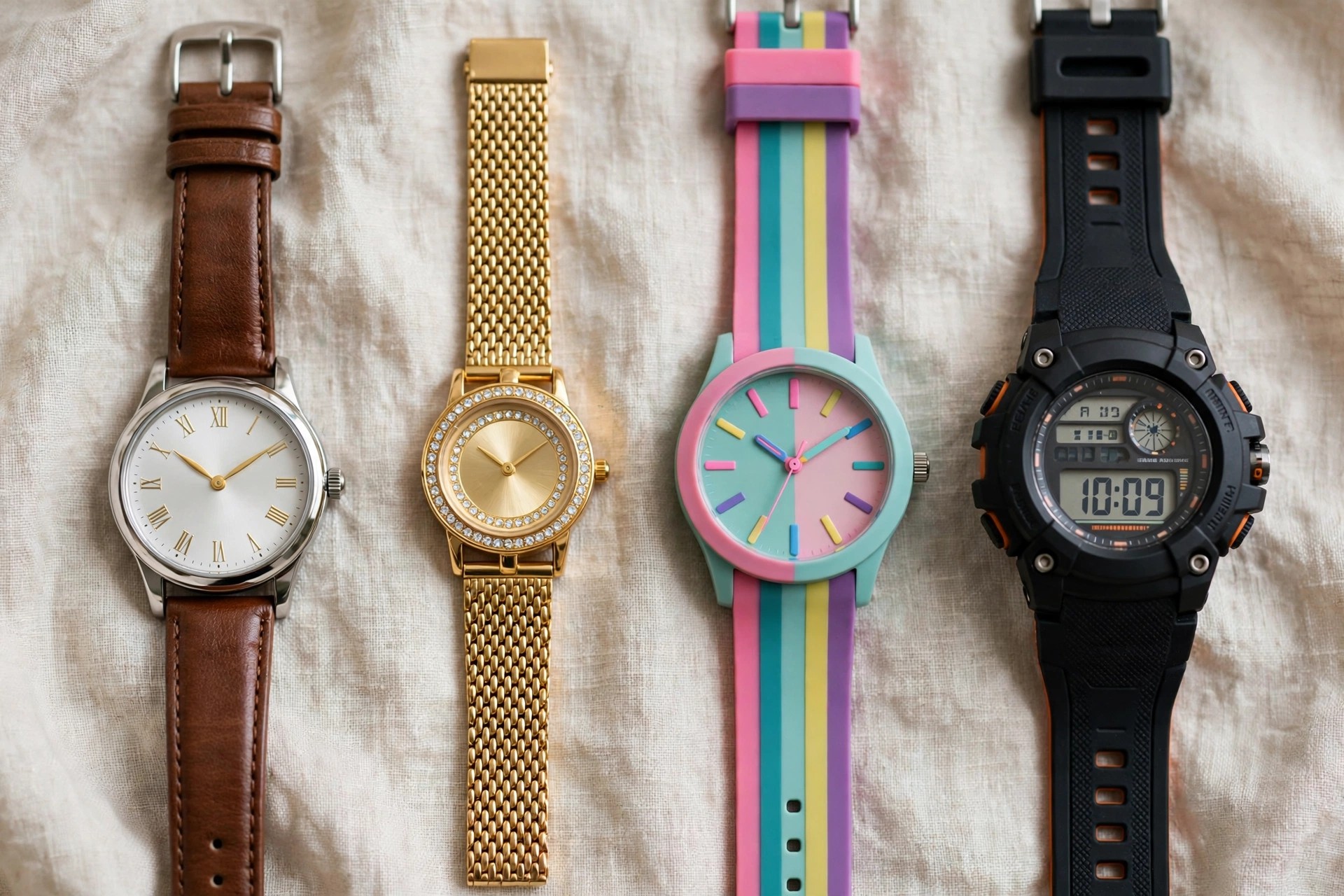
Women's Watches: A Timeless Journey in Elegance
Women's watches have evolved from delicate accessories to sophisticated timepieces that seamlessly blend style and functionality. This journey through history unveils the transformation of design, manufacturing, and trends that have shaped women's watches over the decades.
Historical Evolution
18th Century: Ornamental Timepieces
In the 18th century, women primarily used pendant watches, often worn as necklaces. These ornamental timepieces were small, intricately designed, and considered fashionable accessories more than functional timekeepers.
19th Century: The Rise of Wristwatches
By the mid-19th century, wristwatches gained popularity among women, particularly in high society. Brands like Patek Philippe and Breguet started crafting exquisite wristwatches with artistic designs and intricate details.
Early 20th Century: Art Deco and Elegance
The early 20th century witnessed the Art Deco movement, influencing watch designs with geometric shapes, vibrant colors, and intricate craftsmanship. Watches became symbols of elegance and femininity.
Mid 20th Century: Glamour and Fashion
In the mid-20th century, watches evolved to match fashion trends. Brands like Rolex and Omega began designing watches with smaller, daintier dials and elegant bracelets, catering to the changing tastes and styles of women.
Late 20th Century: Sporty and Versatile
Towards the late 20th century, the introduction of sporty and versatile watches for women gained traction. Brands like Swatch and Casio produced affordable, fashionable watches that appealed to a broader audience.
21st Century: Fusion of Fashion and Technology
The 21st century brought about a convergence of fashion and technology, with smartwatches gaining popularity among women. Luxury brands started integrating smart features into their watches, offering a balance between style and functionality.
Popular International Women's Watch Brands
Chanel is a renowned French luxury brand known for its elegant and iconic women's watches. They combine classic designs with modern aesthetics, making a bold statement in the world of fashion.
Omega offers a wide range of women's watches, blending precision with style. Their collections feature a diverse array of designs, from the sporty Seamaster to the classic De Ville, catering to various tastes.
Cartier is a French luxury brand known for its timeless and sophisticated women's watches. They offer a range of styles, from the classic Tank to the elegant Ballon Bleu, exuding luxury and refinement.
Bvlgari, an Italian luxury brand, is celebrated for its luxurious and glamorous women's watches. Their timepieces are known for their bold designs, exceptional craftsmanship, and use of precious materials.
Patek Philippe, a Swiss luxury brand, offers exquisite and highly coveted women's watches. Their timepieces are known for their sophistication, elegance, and intricate mechanical craftsmanship.
Audemars Piguet presents a range of luxurious women's watches known for their innovation and style. Their designs are a blend of traditional elegance and modern aesthetics.
Michael Kors is a well-known fashion brand offering stylish and affordable women's watches. Their timepieces feature a contemporary and trendy design, appealing to a fashion-forward audience.
These brands embody the epitome of elegance, luxury, and style in the world of women's watches. Each brand has its unique design language and craftsmanship, offering an array of options for women to express their individuality and grace through their choice of timepieces.
Here are some of the most popular international stores that specialize in selling luxury women's watches:
Watches of Switzerland:
- Watches of Switzerland is a premier retailer specializing in luxury watches, including an exquisite collection of women's timepieces. They offer a curated selection from top luxury brands, providing a personalized shopping experience.
- Website: Watches of Switzerland
Tourneau:
- Tourneau is a renowned luxury watch retailer with a wide range of women's watches from prestigious brands. They offer new and pre-owned watches, ensuring that watch enthusiasts can find a timepiece that suits their style and preferences.
- Website: Tourneau
Harrods:
- Harrods, an iconic luxury department store in London, boasts an exceptional watch department with a diverse collection of luxury women's watches. They offer an array of brands and styles, making it a destination for luxury watch shopping.
- Website: Harrods Watches
Net-a-Porter:
-
Net-a-Porter is a leading online luxury fashion retailer that also offers an exquisite selection of luxury women's watches. They curate a collection from renowned brands, blending fashion with horology for the modern woman.
- Website: Net-a-Porter Watches
The Watch Gallery:
- The Watch Gallery is a prestigious retailer offering an extensive range of luxury women's watches. They showcase timepieces from renowned brands, emphasizing both style and craftsmanship.
- Website: The Watch Gallery
Jomashop:
- Jomashop is a popular online retailer offering discounted luxury women's watches. They provide a vast selection of authentic timepieces from top brands, making luxury more accessible to a broader audience.
- Website: Jomashop Women's Watches
Saks Fifth Avenue:
- Saks Fifth Avenue, a prominent luxury department store, features a dedicated section for luxury women's watches. They curate a range of designer timepieces, catering to a discerning clientele.
- Website: Saks Fifth Avenue Women's Watches
Bloomingdale's:
- Bloomingdale's, a renowned luxury department store, offers a selection of luxury women's watches from top brands. They provide a range of styles to suit various tastes, ensuring there's something for every woman.
- Website: Bloomingdale's Women's Watches
These retailers provide a curated selection of luxury women's watches, allowing enthusiasts to explore and discover the perfect timepiece that aligns with their style and preferences. Whether seeking classic elegance or contemporary designs, these stores offer an array of options to choose from.
Styles and Materials of Women's Watches
Women's watches come in a variety of styles, each catering to different tastes, occasions, and fashion preferences. Additionally, the materials used in women's watches play a crucial role in defining their style, durability, and overall aesthetics. Here, we'll explore different styles and common materials used in women's watches.
Styles of Women's Watches
Classic Watches:
Classic women's watches feature timeless designs with a simple, elegant look. They often have a round or rectangular case, a clean dial with minimalist hour markers, and a leather or metal strap. Classic watches are versatile and suitable for both formal and casual settings.
Fashion Watches:
Fashion watches emphasize style and trends, often designed by renowned fashion houses or influencers. They incorporate contemporary design elements, vibrant colors, unique patterns, and may feature unconventional shapes. Fashion watches allow for self-expression and are ideal for trend-conscious individuals.
Sports and Fitness Watches:
These watches are designed for active women who engage in sports or fitness activities. They typically offer features like water resistance, chronographs, GPS tracking, and heart rate monitoring. The design is durable, with a focus on functionality and robustness.
Dress Watches:
Dress watches are designed for formal occasions and special events. They are typically thin and elegant, often adorned with gemstones or precious metals. Dress watches complement evening gowns and formal attire, adding a touch of sophistication.
Smartwatches:
Smartwatches merge technology with fashion. They offer features like fitness tracking, notifications, and apps while allowing customization of watch faces and bands. Smartwatches are versatile and appeal to those seeking both style and functionality.
Jewelry Watches:
Jewelry watches are more like pieces of jewelry than timekeepers. They often incorporate precious metals, gemstones, intricate detailing, and sometimes feature a blend of horology and fine jewelry. Jewelry watches are elegant and luxurious, often worn on special occasions.
Aviator/Pilot Watches:
Aviator watches draw inspiration from the aviation world, featuring bold designs and oversized dials for enhanced legibility. They may have additional features like a chronograph and tachymeter. Aviator watches are stylish and sporty.
Materials Used in Women's Watches
Stainless Steel:
Stainless steel is a popular material for women's watches due to its durability, resistance to corrosion, and versatility. It can be polished to a high shine or given a matte finish, making it suitable for both casual and dressy styles.
Precious Metals (Gold, Rose Gold, White Gold):
Precious metals like gold, rose gold, and white gold are often used in luxury women's watches. They impart a luxurious and timeless look, making them ideal for high-end and dress watches.
Leather:
Leather straps are a classic choice for women's watches. They provide a sophisticated and elegant look, often used in dress watches. Leather straps come in various colors and textures, allowing for versatility in design.
Ceramic:
Ceramic is a modern and lightweight material used in women's watches. It's scratch-resistant, hypoallergenic, and available in various colors. Ceramic watches often have a sleek and contemporary design.
Titanium:
Titanium is known for being lightweight, durable, and hypoallergenic. It's often used in sports or active-wear watches, providing a modern and rugged aesthetic.
Rubber/Silicone:
Rubber or silicone straps are commonly found in sports and fitness watches. They are comfortable, durable, and water-resistant, making them ideal for active lifestyles.
Gemstones/Crystals:
Gemstones and crystals are
used to add a touch of luxury and elegance to women's watches. They are
often used as hour markers, bezel embellishments, or on the dial, enhancing
the overall design and visual appeal.
Understanding these styles and
materials enables individuals to choose a women's watch that suits their
lifestyle, fashion preferences, and the occasions they wish to wear it for.
Whether it's the classic charm of stainless steel or the luxury of precious
metals, women's watches offer a wide array of options to suit every taste
and need.
You may also want to learn about men's watches.
You may also want to learn about women's clothing.
Choosing a Women's Watch by Occasion
The styles map onto a wardrobe in a straightforward way. A classic watch in steel or leather is the everyday anchor, readable and neutral enough for work and casual wear alike. A dress or jewelry watch is kept for formal occasions, where its precious metal, gemstones and slim profile are meant to be seen as part of the outfit. A sports, fitness or smart watch is the working tool, chosen for its functions and its strap's comfort and water resistance rather than its looks, although modern designs have closed much of that gap.
Fit is decided the same way as with any watch: the case should sit comfortably within the width of the wrist, the strap or bracelet should hold the watch steady without pinching, and the dial should be legible at a glance. With materials ranging from ceramic and titanium to gem-set gold, the practical checks, weight on the wrist, clasp security and water resistance matched to real life, matter as much as style. A watch that suits its wearer's actual days will be worn; the most beautiful watch in a drawer tells no one the time.
Common Questions
What are the main styles of women's watches?
Seven broad styles cover the range. Classic watches are timeless and simple, round or rectangular with clean dials, for formal and casual wear. Fashion watches follow trends and design houses, with color, pattern and unusual shapes. Sports and fitness watches add water resistance, chronographs, GPS and heart rate monitoring in durable designs. Dress watches are thin and elegant, often in precious metals or with gemstones, for formal occasions. Smartwatches merge fashion with notifications, apps and fitness tracking. Jewelry watches are pieces of jewelry first, in precious metals and stones. Aviator watches borrow bold, oversized, highly legible dials from aviation.
Which materials are most used in women's watches, and why?
Stainless steel leads for durability, corrosion resistance and a finish that can be polished bright or matte. Precious metals, gold, rose gold and white gold, give luxury and dress watches their character. Leather is the classic strap material, sophisticated and varied in color and texture. Ceramic is modern, lightweight, scratch resistant and hypoallergenic. Titanium is light, durable and hypoallergenic for active wear, rubber and silicone serve sports and fitness models, and gemstones and crystals are used as hour markers, bezel embellishment and dial decoration where the watch is also a jewel.
How did women's watches lead the history of the wristwatch?
Women wore timepieces as ornaments first, as pendant watches in the 18th century, and adopted the wristwatch in the mid 19th century, when it was still considered a feminine bracelet watch and men carried pocket watches. The women's market therefore carried wristwatch design through its Art Deco and mid-century fashion eras while the men's wristwatch was still establishing itself through military use. Sporty, fashion and smart models later broadened the same market, so the history of the wristwatch as a worn, designed object runs through women's watches from the start.
More to Explore
- Chanel Watches
- Omega Women's Watches
- Cartier Women's Watches
- Bvlgari Women's Watches
- Patek Philippe Women's Watches
- Audemars Piguet Women's Watches
- Michael Kors Women's Watches
- Watches of Switzerland
- Tourneau
- Harrods Watches
- Net-a-Porter Watches
- The Watch Gallery
- Jomashop Women's Watches
- Saks Fifth Avenue Women's Watches
- Bloomingdale's Women's Watches
- Gemstones
- Women's Accessories
- about men's watches
- about women's clothing
- Watch Guide
- Watch Guide Pg. 2
- Watch Designers
- Jewelry Guide
- Top 10 Watch Brands
- Swiss Watch Guide
- Designer Brand Watches
- Women's Fashion