Print Designs
Pattern families printers can print on fabric and clothing, and the design services that create them.
Every printed garment begins as a print design: artwork created to repeat, scale and sit correctly on fabric or on a finished piece of clothing. Printers can print a wide range of designs, but the artwork has to be built for the process — separated into the colors the press will lay down, sized for the garment or the fabric width, and, for yardage, engineered as a seamless repeat. This page lists the classic print families that buyers ask for by name, and explains who creates this artwork when a print shop or brand has no illustrator of its own.
The pattern list below doubles as a shared vocabulary. When a customer asks for a Liberty print, a tonal print or a scarf print, the printer and the designer need to mean the same thing: the families differ in motif, scale, color use and the garments they traditionally appear on, and those differences decide how the design is drawn and printed.
Printing Guides
Print Pattern Families
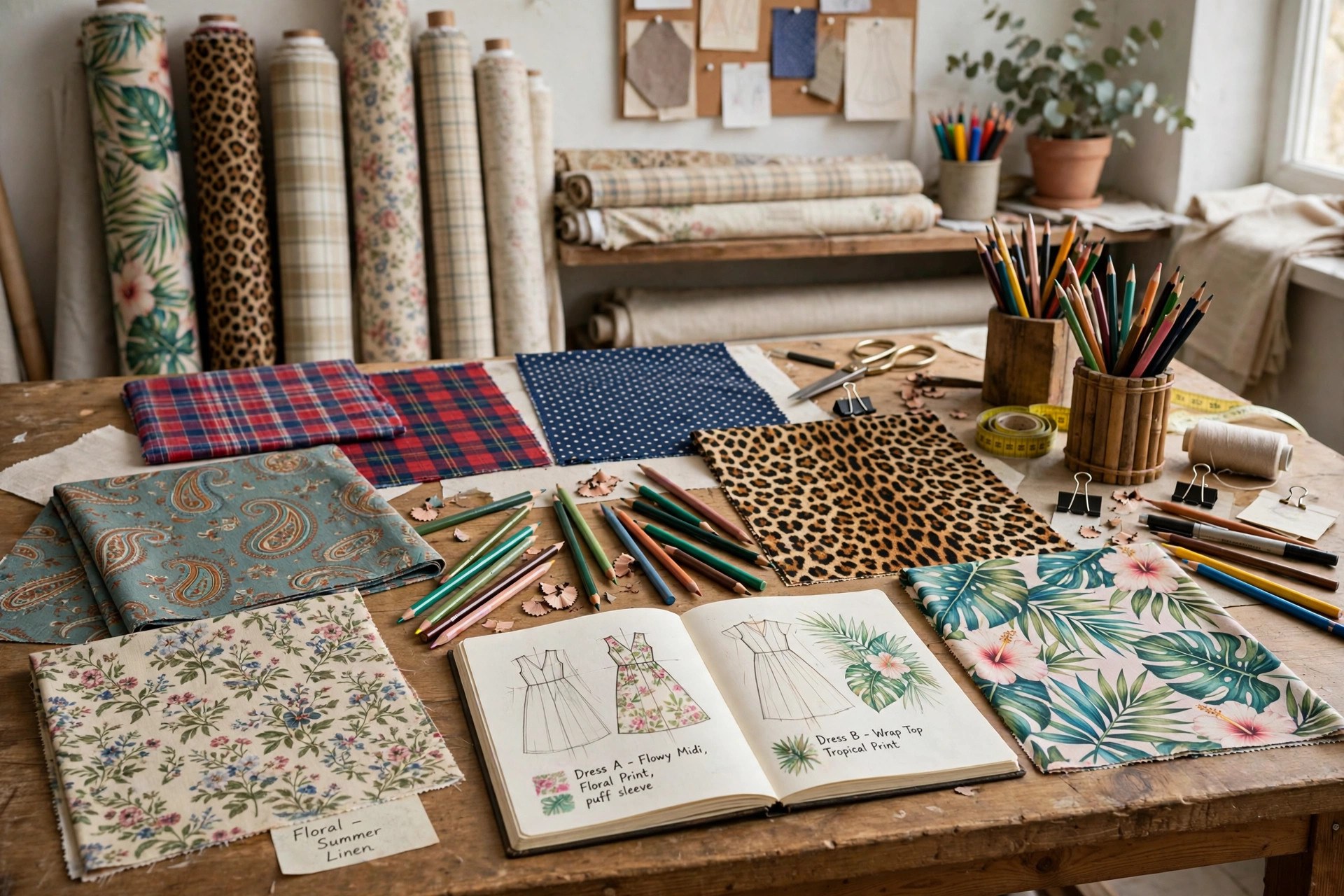
The classic families printers are asked for include: Animal Print, Bohemian Print, Checkered Print, Country Garden Print, Diamond Print, Dot Print, Ethnic Print, Floral Print, Graphic Print, Hawaiian Print, Heart Print, Herringbone Print, Island Print, Jungle Print, Leaf Print, Leopard Print, Liberty Print, Oriental Print, Paisley Print, Palm Print, Patriotic Print, Pinstripe Print, Plaid Print, Polka Dot Print, Rose Print, Scarf Print, Snakeskin Print, Solid Print, Star Print, Striped Print, Swirl Print, Tonal Print, Tribal Print, Tropical Print, Tulip Print, Vine Print, Zebra Print and Zigzag Print. Each name describes the motif system of the design: florals and vines draw on plants, plaids and checks on woven geometry, animal prints on skins such as leopard, zebra and snakeskin, and graphic prints on drawn or photographic artwork placed on the garment.
Knowing the family helps at the ordering stage because it sets expectations for color count and scale. A tonal print works in shades of one color and prints economically; a tropical or jungle print may need many screens or a digital process to hold its detail; a scarf print is composed as a finished panel with borders rather than a repeat. A designer who knows the target family can quote the artwork correctly and a printer can choose between screen printing and digital printing with the real design in mind.
Who Needs Print Design Services?
T-shirt print shops typically need design services when they do not have a full-time staff of illustrators. A customer arrives with a logo, a photograph or an idea described in words, and someone has to turn it into print-ready artwork: cleaned up, separated and sized. Brands and garment manufacturers need the same skills at a larger scale — seasonal print collections, repeats engineered for specific fabrics, and artwork adapted from a designer concept to what a press can actually print. Freelance artists and design agencies fill both needs, and the Artist Guide on this site is a starting point for locating designers who develop artwork for fashion print designs.
Working With Designers and Artists
A productive design brief names the garment or fabric, the print family, the finished size of the motif, the number of colors the budget allows and the printing method. With those five facts, a graphic designer or fashion illustrator can produce artwork that a printer accepts without rework. The design links below cover the neighboring specialties a print project often touches: design agencies for full programs, illustrators for hand-drawn motifs, hang tag and packaging designers for the finished product presentation, and technical drawing for the specification sheets that travel with the artwork to the factory.
Design Links of Interest
More Manufacturing Resources
Common Questions
What is a print design for clothing?
Artwork created to be printed on fabric or on a finished garment. It is built for the printing process: separated into the colors the press will print, sized for the garment or fabric width, and engineered as a seamless repeat when yardage is printed.
What are the most common print pattern families?
Floral, paisley, plaid, checkered, polka dot, striped and animal prints such as leopard, zebra and snakeskin are requested constantly, alongside tropical, graphic, tonal, scarf and Liberty prints. Each family names a motif system that sets color count and scale.
Who creates print designs when a shop has no illustrator?
Freelance artists, graphic designers, fashion illustrators and design agencies. Print shops without full-time illustrators use them to turn a customer logo, photograph or idea into separated, print-ready artwork.