Bamboo Yarn Manufacturer Directory
Manufacturers and spinners producing yarn from bamboo-derived fibre.
Bamboo yarn is yarn spun from fibre derived from bamboo, a fast-growing grass whose culms can be turned into textile fibre in two very different ways. Most bamboo yarn in world trade is viscose (rayon) made from bamboo: the bamboo is dissolved into a cellulose pulp and regenerated into smooth filament or staple fibre. A much smaller amount is mechanically processed bamboo fibre, separated from crushed culms by retting and combing in a process closer to flax production. The two fibres feel different, cost different amounts, and must be labelled differently, so this directory treats the distinction as part of the product, not fine print.
The manufacturers below spin bamboo and bamboo-combination yarns in Turkey, Taiwan and South Africa: a large spinner combining bamboo with cotton and organic cotton, a covered-yarn maker whose range reaches bamboo yarn among its technical yarns, and a long-established rotor spinner offering bamboo among its fibre range together with yarn dyeing and twisting. The sections that follow explain what bamboo-derived fibre is, how the yarn is spun and blended, where it is used, and the questions to ask before ordering.
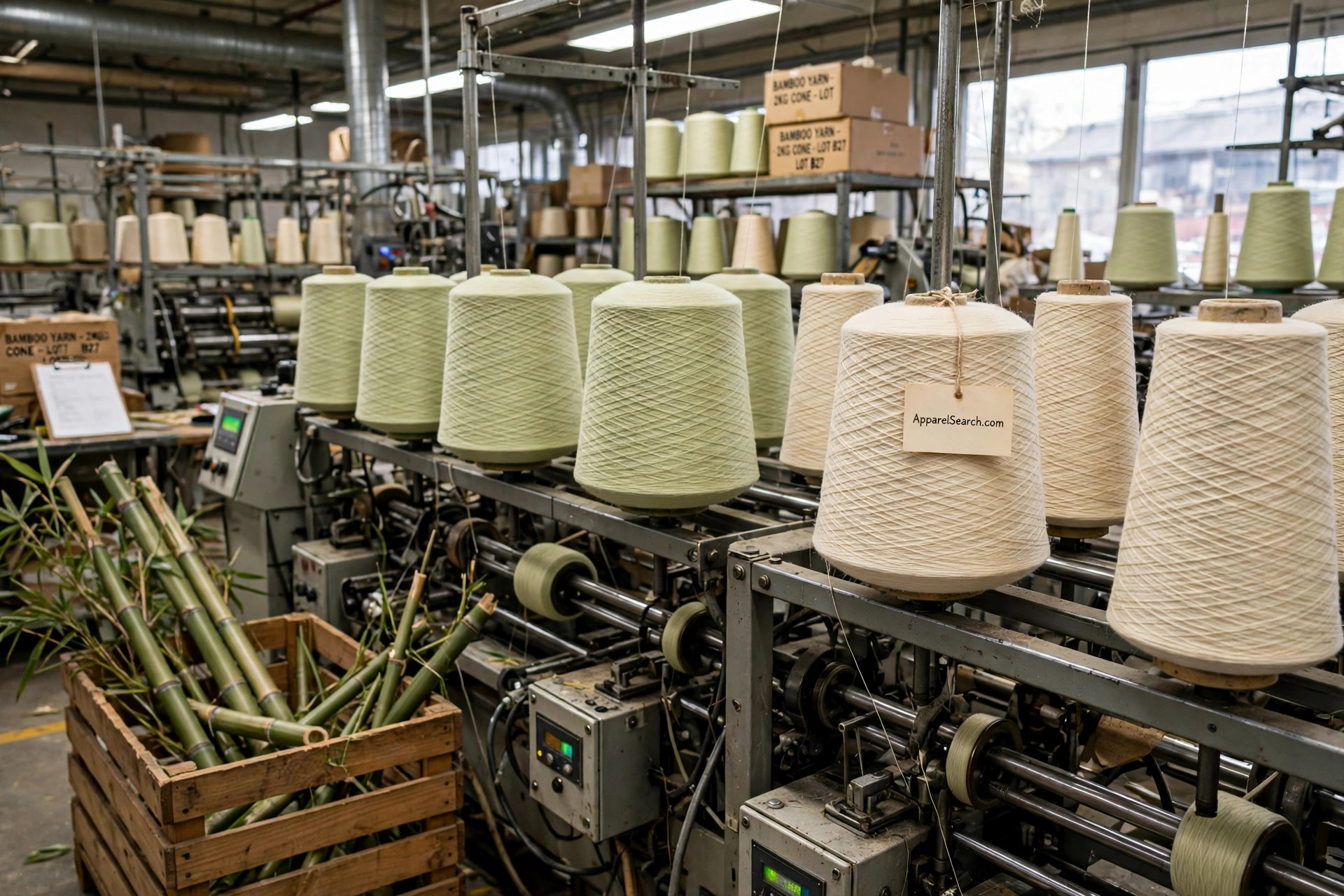
Yarn, Bamboo Fibre & Fabric Resources
Viscose From Bamboo, Stated Honestly
In the regenerated route, bamboo culms are chipped and processed into cellulose pulp, dissolved, and extruded into fibre — the viscose process. The fibre that comes out is chemically regenerated cellulose: smooth, soft, absorbent and cool-feeling, with a gentle sheen, but it no longer contains the bamboo plant's own structure. Regulators in major markets therefore require it to be labelled as viscose or rayon made from bamboo, rather than simply as 'bamboo fibre', and claims carried over from the living plant — such as natural antibacterial performance — do not automatically survive the dissolving process.
None of that makes the yarn a poor product. Viscose from bamboo spins into notably soft, drapey yarns that knitters and weavers use for garments worn next to the skin, and its absorbency suits towels, socks and summer knitwear. The honest specification is what matters: a buyer should ask which route the fibre took, require the fibre content to be declared in the legally correct form for the destination market, and treat any performance claim as a testable specification — ask for the test report — rather than a property inherited from the plant.
Mechanically Processed Bamboo and Blends
Mechanical bamboo fibre is produced by crushing the culms, softening them (traditionally with natural enzymes and retting), and combing out the fibre, in a labour-intensive route similar to linen from flax. The fibre is coarser and less uniform than regenerated bamboo viscose, the supply is far smaller, and the price is higher — which is why it appears mainly in blends and in products sold specifically on their processing method. If a supplier offers mechanically processed bamboo, ask what share of the yarn it forms and how the rest of the blend is made up.
Blending is the norm for bamboo yarns in volume production. The Turkish spinner in the listings produces cotton, organic cotton and bamboo combination yarn, a pairing that balances bamboo-derived fibre's softness and absorbency with cotton's strength, spinning familiarity and price. Bamboo-derived fibre is also blended with polyester, viscose from other sources, acrylic and linen — the South African spinner below rotor-spins cotton, polyester, viscose, acrylic, bamboo and linen fibres. State the exact blend percentages in the order; 'bamboo blend' without percentages is not a specification.
Spinning Quality and What to Check
Bamboo-derived staple is spun on the same ring and rotor systems as other cellulosic fibres, and the quality markers are the usual ones, measured rather than asserted. One spinner in this directory works to Uster standards and reports production quality among the top 5% on those statistics, with state-of-the-art machinery giving online control of all production stages and strainers that filter out impurities — evenness, hairiness and contamination control are exactly what a buyer should ask any spinner to document, in Uster terms or an equivalent test report.
Two properties deserve specific attention. Regenerated cellulosic fibres lose strength when wet, so wet processing, dyeing and laundering conditions should be agreed with the spinner and the dyer, and garment care labelling should reflect them. And absorbency cuts both ways: bamboo-derived yarns take dye readily and evenly, which is an advantage for shade ranges, but shade approval should be done on production yarn, not on a cotton substitute, because the same dye recipe sits differently on cellulosic fibre.
Uses and Ordering Bamboo Yarn
Bamboo yarn goes into knitwear, woven shirting and dress fabrics, socks and hosiery, towels and other absorbent goods, and blended yarns for garments marketed on softness and plant origin. One maker in the listings reaches bamboo yarn from the covered-yarn side, among technical yarns that also include nano silver yarn and recycled PET yarn — a reminder that 'bamboo yarn' can mean a core product or one line in a specialist's range, and the enquiry should establish which.
A complete order states the fibre route (viscose from bamboo, or mechanically processed), the blend and its percentages, the count and ply, ring or rotor spun, the put-up, and the labelling wording required in the destination market. Ask for minimum quantities per blend, because combination yarns are often spun to order rather than held as stock. Where a spinner also offers yarn dyeing and twisting, as the South African listing does, confirm whether dyed and twisted bamboo yarn can be supplied as one package or must be sent out.
Bamboo Yarn Manufacturers & Spinners
Spinners and manufacturers whose ranges include bamboo yarn. Contact details are given in the listings where they were provided.
Eren Tekstil (Turkey)
Eren Tekstil has a capacity of 26,000 spindles, and produces cotton, organic cotton and bamboo combination yarn. According to Uster standards, production quality of yarn is among the top 5%. State-of-the-art machinery allows online control of all production stages, and produces high quality with the help of strainers that filter out impurities.
Maw Chawg Enterprise Co. Ltd. (Taiwan)
It is a manufacturer of spandex & metallic (lurex) covered yarns as well as qualified artificial yarns. The yarns they produce are widely used in many fields of the textile industry. They are used in the production of narrows, hosiery (tights, stocking and socks), embroidery, knitwear, knitted fabrics (flat and round knitting machines) and at weaving plants. Some of them are also used for special technical purposes such as bamboo yarn, nano silver yarn, recycling PET and so on. They produce elasticity covering yarn.
Spandex & Metallic (Lurex) Covered Yarns · Artificial Yarns · Elasticity Covering Yarn · Bamboo Yarn · Nano Silver Yarn · Recycled PET Yarn — bamboo yarn manufacturer · metallic yarn manufacturer · elastic yarn manufacturer
Address: No. 374 Fan Hua RD., Shiow Shui Township, Chung Hua County, Taiwan Phone: 886-4-7683889 Fax: 886-4-7683974 E-mail: maw.chawg@msa.hinet.net or webmaster@machangx.com Contact: David Tsao
Table Bay Spinners (Africa)
Established in 1954, Table Bay Spinners is South Africa's most versatile yarn spinner of synthetic fibres. Their state-of-the-art machinery produces rotor spun yarns from cotton, polyester, viscose, acrylic, bamboo and linen fibre using best quality raw materials. In addition they offer yarn dyeing and twisting facilities and a wide variety of stock yarns catering to the local textile industry.
With a versatile yarn production spectrum and complete service range they are a reliable and competent partner for one-stop purchasing, and are committed to setting standards in local yarn production, striving to provide world class excellence in service, supply and quality.
Rotor Spun Yarns — Cotton · Polyester · Viscose · Acrylic · Bamboo · Linen · Yarn Dyeing · Twisting · Stock Yarns
More Yarn & Industry Resources
Common Questions
Is bamboo yarn really made from bamboo?
The fibre starts as bamboo, but in most commercial bamboo yarn the bamboo has been dissolved and regenerated as viscose (rayon), so the fibre is regenerated cellulose made from bamboo rather than bamboo fibre in its natural form. A smaller supply is mechanically processed bamboo fibre, made by crushing, retting and combing the culms. Ask the supplier which route was used and label the product accordingly.
What is bamboo yarn blended with, and why?
Cotton is the most common partner — one spinner in this directory produces cotton, organic cotton and bamboo combination yarn — because cotton adds strength, spinning familiarity and price balance to bamboo-derived fibre’s softness and absorbency. Bamboo-derived fibre is also blended with polyester, viscose, acrylic and linen. Always order by exact blend percentages.
What should a buyer check before ordering bamboo yarn?
Confirm the fibre route and the legally correct fibre name for your market, the blend percentages, count and ply, and whether the yarn is ring or rotor spun. Ask for evenness and quality documentation (for example Uster statistics), and agree wet-processing and care conditions, because regenerated cellulosic fibres lose strength when wet.