Marc Le Bihan History
Earlier company descriptions, brand line-ups, store counts and photographs from the history of Marc Le Bihan, kept for historical reference.
← Back to the current Marc Le Bihan profile
The Company Description of Its Time
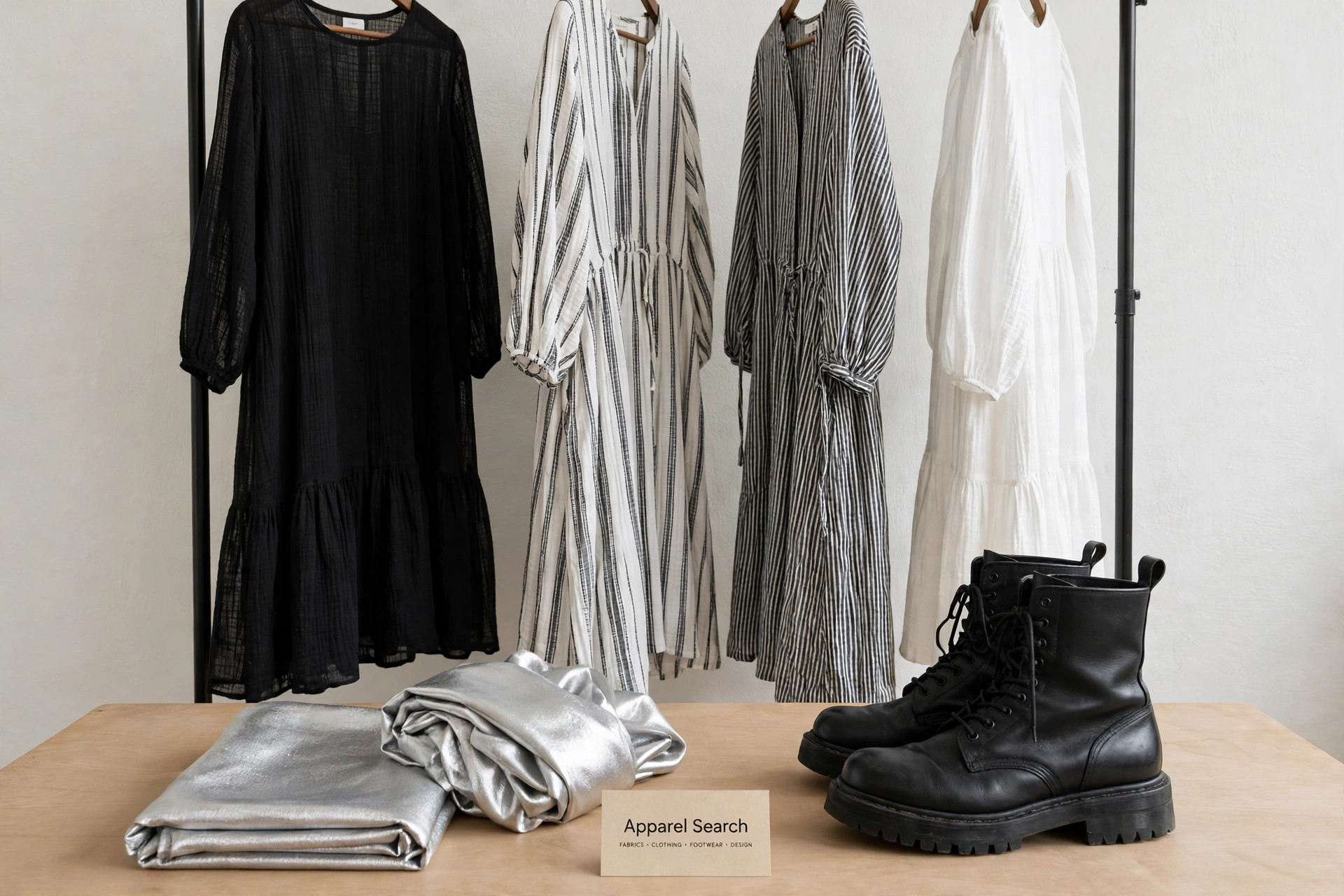
Le lange et le linceul, the swaddling cloth and the shroud, the first and last garments: that theme, from one of his earliest collections, is also the name of the company Marc Le Bihan founded in 1991. The filing presents a Parisian designer filed as a guest member of Haute Couture whose horizons oscillate between alpha and omega, art and fashion, preferring one step forward and one step back in order to view a single reality through two prisms. Like a dark winter sky cutting into the purity of a snowfield, in the historical record's image, his work plays light against shadow across fine black and white muslins and long silver flowing dresses that glide over hips with exceptional cutting skill.
Tapestry Training Before Fashion
The craft underneath the clothes is weaving. Marc Le Bihan trained in the ancient art of tapestry weaving at the Manufacture des Gobelins from 1982 to 1986, then worked as a tapestry weaver until 1990. The filing says he cannot handle fabric without giving it some of the added soul that industrial materials lack, a sentence that reads differently once the Gobelins years are known: a weaver spends months inside a single textile, and that patience becomes a standard against which factory cloth is judged. His formal fashion training ran through the textile design section of the Ecole nationale superieure des Arts decoratifs, where he was presenting two collections from 1990 onwards, and then Central Saint Martins College of Art and Design in London in 1993.
Recognition arrived through materials no couture house would normally touch. Returning to France, he received the special prize of the Festival international des arts de la mode at Hyeres for a collection of spectacular dresses cut from mail bags and old linen sheets. Postal sacks and household linen, rebuilt as couture dresses, compress the whole philosophy into one gesture: humble cloth, exacting cut, and a garment whose previous life stays visible inside its new form. The following year an ANDAM bursary enabled him to create his own label, converting prize-winning experimentation into a continuing house.
Lange et Linceul at Work
The production figures kept here give the label a concrete scale. Lange et Linceul produces 2,000 ready-to-wear pieces and 1,000 couture line pieces every year. That ratio matters for understanding the house: couture is not a ceremonial sideline but a third of annual output, and the one-off pieces cut from recovered garments sit inside a working production structure rather than outside commercial reality altogether. Ready-to-wear carries the design language to a wider rail, while the couture line keeps the hand processes, the vintage cloth selection and the singular garments at the centre of the practice.
The filing closes by naming the achievement plainly: an artist-artisan-designer who developed a highly personal, profound and oneiric universe without conforming to the constraints of commercial fashion. Oneiric, dreamlike, is the source's own chosen word, and it fits a label named for the first and last cloth a life touches. The routes on this page lead to the haute couture definitions and guides and to the designer directories the historical record chose, plus his Spring 2010 collection report. For the label's present activity, the official Marc Le Bihan website in the References is the authority; this page preserves the training, prizes and production record exactly as the directory filed them.
Photos

More to Explore on Apparel Search
References & Further Reading
Looking for More Fashion Companies?
This profile is one filing in the Apparel Search company names directory. Browse the full A-to-Z listing on the Fashion Company Names directory, or shop by category in the Apparel Search shopping directory.