Royal & State Fashion · Historical Profiles
Marie Antoinette: The Queen Who Made Dress a Public Language
Every modern story about a royal wardrobe moving markets, setting colours and starting arguments begins, whether it knows it or not, in Paris in the 1770s. Marie Antoinette, queen of France from 1774, did something no consort before her had done at this scale: she treated dress as a medium. She elevated a shopkeeper to the status of a minister, wore her hair as political commentary, launched a simple white dress that was denounced as a national betrayal and then copied everywhere, and put her name to colours the way later royals would put theirs to charities. The record is unusually well documented — by the marchande who dressed her, the hairdresser who built her coiffures, the painter whose portrait had to be withdrawn, and the museum curators who reconstructed it all two and a half centuries later. This guide follows that documented record, and it is careful about what the record cannot show: there are no sales figures for the 1770s, and this page invents none.
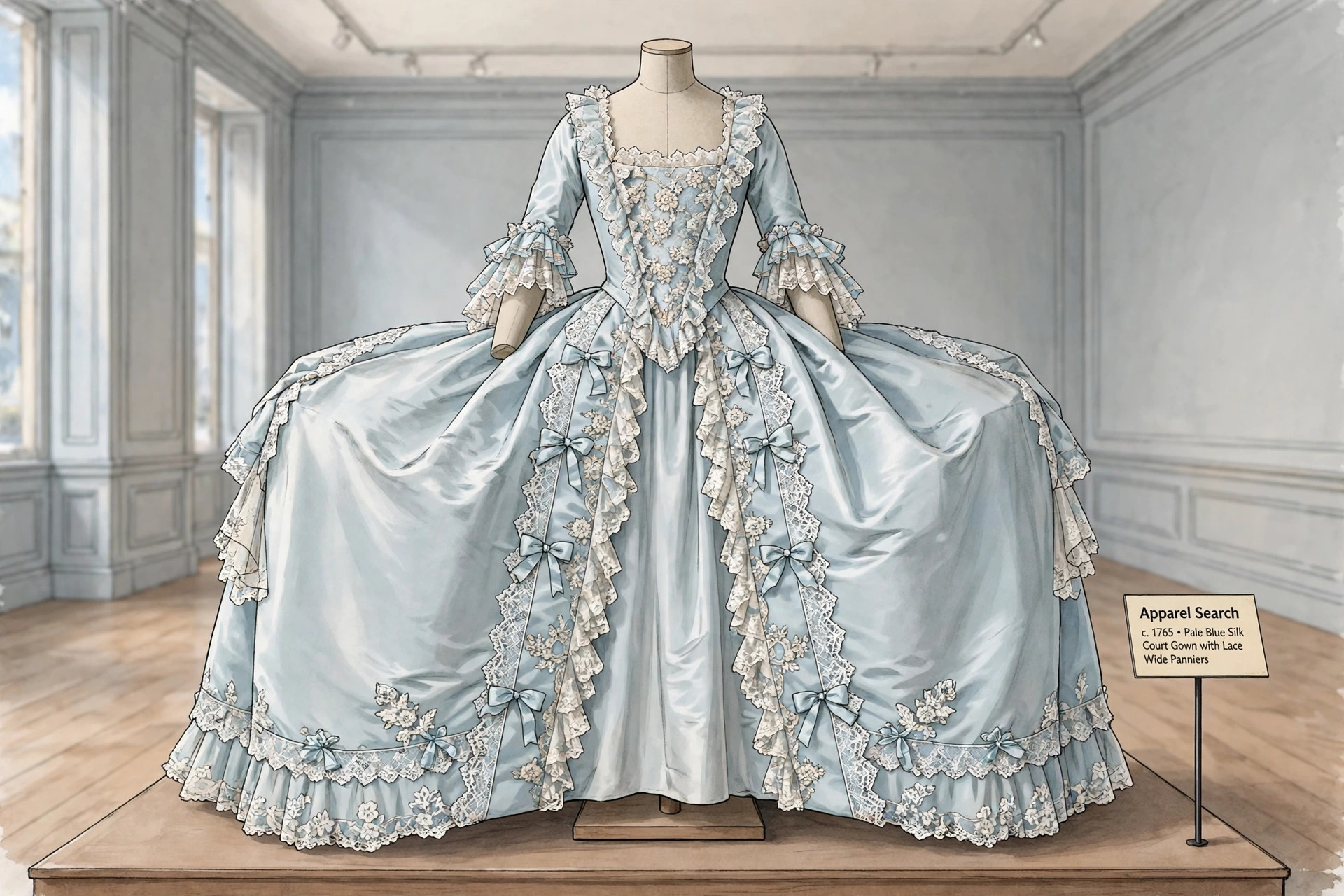
At a Glance
- The queen
- Marie Antoinette, queen of France from 1774; the court she dressed for is the world of our late eighteenth-century guides
- The marchande
- Rose Bertin, introduced in 1774 and nicknamed the "ministre des modes" — the Minister of Fashion
- The shop
- Le Grand Mogol, on the Rue Saint-Honoré in Paris — a proto-couture house with seasonal collections and a full workroom
- The hairdresser
- Léonard Autié, creator of the poufs — towering coiffures built as political media
- The scandal dress
- The chemise à la reine, a white muslin dress whose 1783 portrait was withdrawn from the Salon
- The exhibition
- Marie Antoinette Style at the V&A, 20 September 2025 to 22 March 2026 — around 250 objects, curated by Sarah Grant
The Minister of Fashion
Rose Bertin and Le Grand Mogol: Couture Before Couture
The system began with an introduction. In 1774 the young queen was introduced to Rose Bertin, a marchande de modes — a dealer in fashion goods, trimmings and finished finery — and Bertin's shop, Le Grand Mogol on the Rue Saint-Honoré, became something the fashion world had not quite seen before. It functioned as a proto-couture house: it presented seasonal collections, it kept a full workroom producing complete looks rather than mere trimmings, and it managed the release of its designs the way a modern house manages a drop. Copies of a new style were available to the public only two weeks after the queen had debuted the look. That two-week embargo is easy to pass over and worth pausing on: it is the logic of couture — exclusivity first, diffusion second, the wearer's precedence protected by a calendar — operating in the 1770s, generations before the word existed.
Contemporaries understood exactly how much power had changed hands, and they named it with a joke that stuck: Bertin was the ministre des modes, the Minister of Fashion. The joke had a serious edge. Court etiquette existed precisely to keep tradespeople at arm's length from royalty, yet the queen received Bertin twice a week, in private, bypassing the etiquette that governed everyone else's access. Access was the scandal: a shopkeeper had a standing appointment that great nobles had to petition for. Every later royal-designer relationship — the warrant-holders, the official designers, the dressers who became confidantes — follows the template Bertin established: the maker admitted inside the palace, the wearer's image built as a collaboration, and the public watching the results on a schedule the house controlled.
The world Bertin dressed her queen for was the formal France of panniers, silk and ceremony surveyed in our 1750 to 1795 fashion history guide — which is what makes the queen's other great experiment, the deliberate abandonment of all that formality, so startling. Before that experiment, though, came the hair.
Hair as Headlines
Léonard's Poufs: Coiffure as Political Media
If Bertin controlled what the queen wore, her hairdresser Léonard Autié controlled what she said. Léonard's creation was the pouf: a towering coiffure built up over pads and pomade into a structure tall enough to carry objects, scenes and arguments. The V&A's curator Helena Cox, describing this material for the museum's coverage of the queen's style, documents the poufs as political media — and the two famous examples show the range of the medium. The pouf à l'inoculation was an argument: a coiffure supporting smallpox inoculation, worn when inoculation was a live and contested public question, turning the queen's head into an endorsement that every courtier had to look up at. The second was news. In 1778, after a French naval victory, Léonard built the pouf à la Belle Poule — a full French warship, sails and all, riding in the queen's hair, named for the frigate whose action it celebrated.
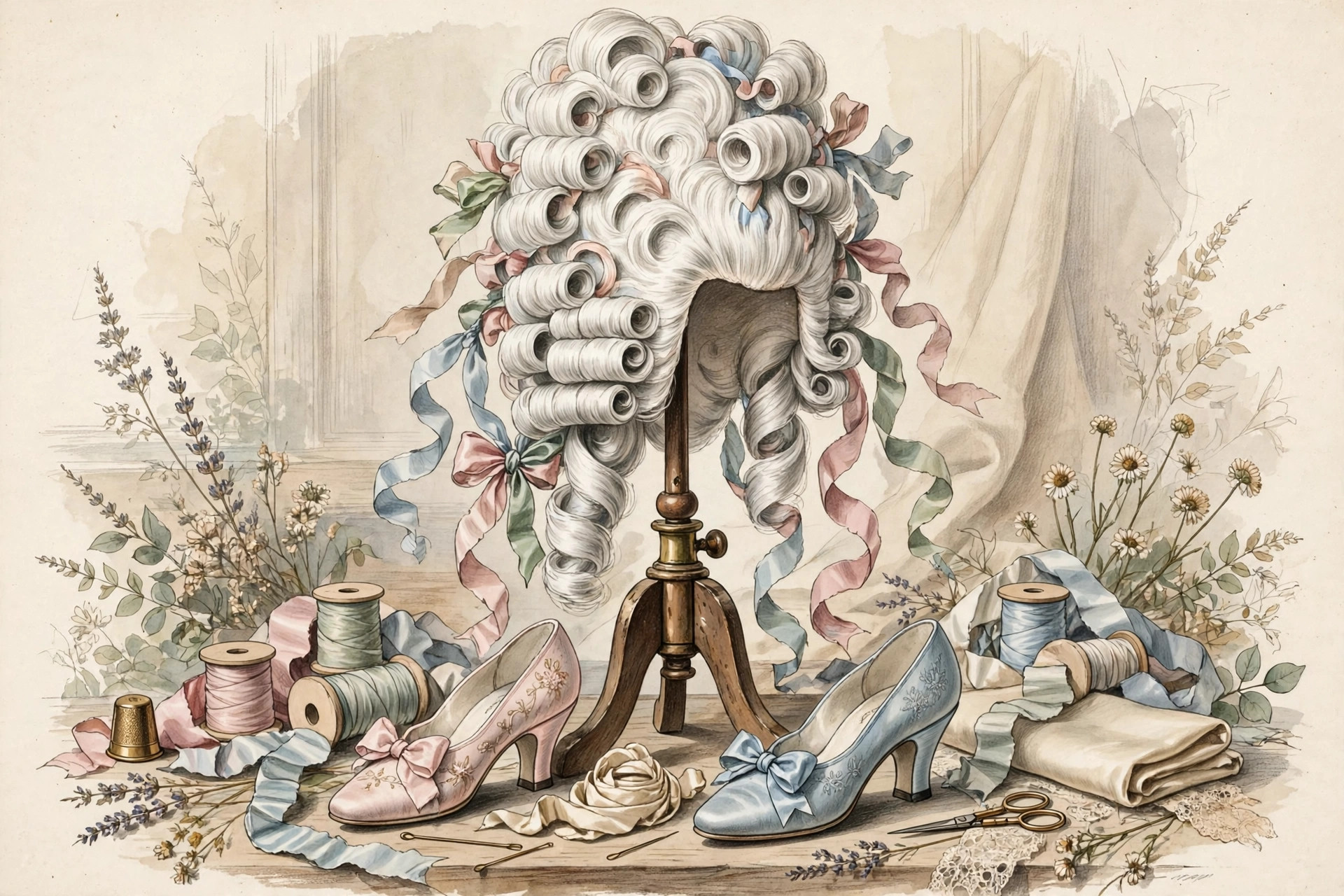
It is tempting to file the poufs under extravagance, and contemporaries who disliked the queen did exactly that. But the documented examples are doing communicative work: a medical position, a naval celebration, current events carried at the most visible point of the most watched woman in France. The pouf was a headline worn on the head, changed as the news changed, and understood by its audience as commentary. State dressing usually works through emblems embroidered on cloth; Léonard worked through architecture built on hair, and the court read it fluently. That fluency matters for everything else in this guide: the queen's clothes were never read as mere clothes by the people around her. They were read as statements — which is why a plain white dress could cause a crisis.
The Scandal Dress
The Chemise à la Reine: Simplicity as Scandal
At the Petit Trianon, the small estate where the queen escaped court ceremony, Bertin made her a dress of radical simplicity: the chemise à la reine, also called the gaulle — a loose white muslin dress, soft, high-waisted and unstructured, the opposite in every particular of the panniered silk court gown. As private dress it was a comfort. The crisis came when it went public. In 1783 her portraitist Élisabeth Vigée Le Brun exhibited a portrait of the queen wearing the chemise at the Paris Salon — and the portrait was withdrawn amid scandal.
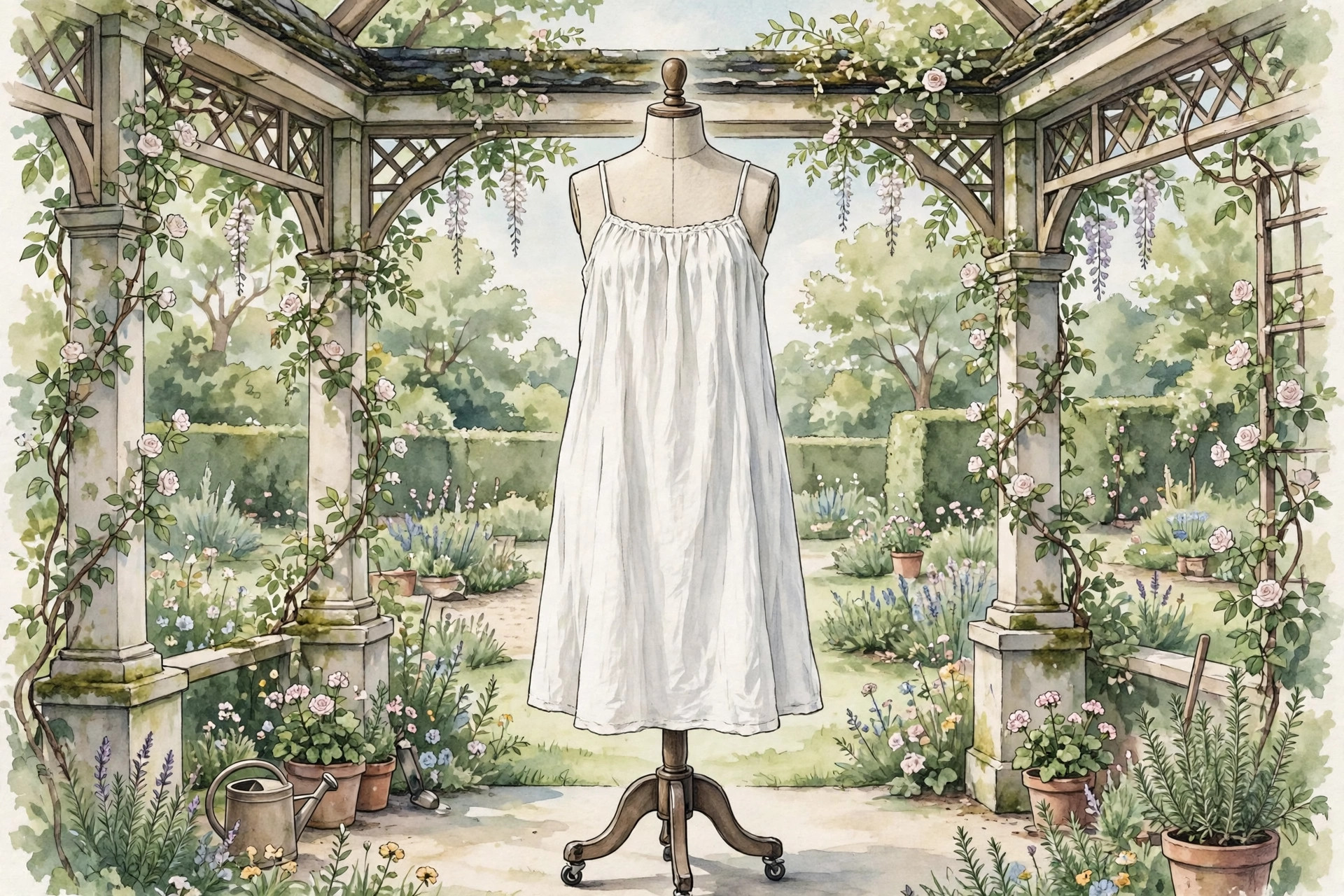
The objections, as documented, were three, and each one is a lesson in how dress was read. First, the reading of the garment itself: to its critics the chemise looked like underwear — a queen of France had allowed herself to be painted, in public, in what read as her underclothes. Second, the economics: the dress was made of imported cotton muslin, and every muslin chemise was an argument against French silk. The silk workers of Lyon, whose livelihoods depended on the court's appetite for silk, were a live political grievance, and a queen dressed in foreign cotton was read as unpatriotic in the most literal, industrial sense. Third, the sociology: the chemise's simplicity blurred class. A dress that a woman of far lower rank could wear, cut and copy made the visible distance between queen and subject collapse — and in a society built on legible rank, that collapse was itself an offence.
Then came the punchline that makes the episode the most consequential own-goal in fashion history. The scandal did not kill the chemise. Within a few years the style was everywhere — the soft white muslin dress became the defining silhouette of the next generation of European dress. The queen had been denounced for wearing, in 1783, what fashionable Europe would wear as a matter of course by the end of the decade. The pattern is now familiar from every later royal wardrobe in this section: the controversial look, the hostile reading, the universal adoption. Marie Antoinette's chemise is simply the first fully documented run of the cycle — complete with the industrial politics, the class anxiety and the portrait that had to be taken down.
Setting the Colour
Puce, Hair-Coloured Silk and the Dolls That Carried Paris
A queen who is read as a medium does not only set silhouettes; she sets the vocabulary. Marie Antoinette's colour-setting is documented in unusual detail. The famous case is puce: the shade took its name from Louis XVI's joke about her brownish-purple dress — puce is French for flea — and the joke, instead of killing the colour, launched it. Puce spawned a whole shade family with names of escalating absurdity and precision: ventre de puce, belly of flea, and cuisse de puce, thigh of flea, among them. A royal joke had become a dye-card. Alongside it, a silk shade was named cheveux de la reine — the queen's hair — for her hair colour, so that a woman could wear the queen's hair as a dress fabric. Styles associated with her were written up as à la reine in the Galerie des Modes, among the first fashion magazines: the queen's looks, engraved, described and named for a reading public.
A royal joke became a dye-card: puce, belly of flea, thigh of flea — a shade family named into existence at court.
Print was one distribution network; the other was three-dimensional. Life-sized fashion dolls carried her looks across Europe, dressed in miniature versions of current Paris styles and sent to courts and capitals where no fashion magazine yet reached. Between Bertin's two-week embargo, the engraved plates of the Galerie des Modes and the travelling dolls, the system around the queen had all three elements of a modern fashion launch: protected exclusivity for the originator, editorial coverage that named and explained the look, and physical samples that let distant makers copy it exactly. None of this required the queen to sell anything. The influence was the product — and it is precisely because the system was reputational rather than commercial that its impact has to be measured differently, as the next section insists.
The Record
Impact Without Invented Numbers: The Institutional Legacy
Honesty first, because this section of Apparel Search holds every wardrobe to the same standard: no period retail figures exist for Marie Antoinette's fashion influence, and none are invented here. There were no sales dashboards in 1778, no search indices, no sell-out reports. Anyone who quotes a number for the value of her effect is making it up. What can be documented is an institutional and cultural legacy, and it is substantial. The fashion plates and dolls described above made her court the reference point for European dress. The Rococo taste she embodied was revived under her name in the nineteenth century's Rococo Revival. And in the twentieth century, Christian Dior's New Look of 1947 — the wasp waist and full skirt that reset post-war fashion — consciously recalled her silhouette: the panniered court gown, redrawn for a new century's fabric rationing and longing.
The museum record gives the legacy its modern anchor. The Victoria and Albert Museum's Marie Antoinette Style, which ran from 20 September 2025 to 22 March 2026, was the United Kingdom's first exhibition devoted to her style: around 250 objects, curated by Sarah Grant and sponsored by Manolo Blahnik, with loans from Versailles, the Louvre and private lenders — some of her possessions reunited for the first time since the Revolution. Our guide to the Victoria and Albert Museum covers the institution that staged it. One caveat from the exhibition record must travel with any account of it, and this guide states it plainly: surviving garments are mostly fragments. Most of the "her dresses" a visitor sees in exhibitions are period pieces, portraits and loans that reconstruct her world, not intact gowns taken from her back. The fragments are the honest relics; the full skirts are the reconstruction.
That combination — a documented system, an admitted absence of numbers, and a legacy carried by institutions — is why Marie Antoinette opens the historical end of this section. She built, with Bertin and Léonard, the first recognisably modern royal fashion operation: a named maker with protected designs, a wearer who understood dress as communication, a press that named her colours, and a public that copied her within weeks and condemned her within the same breath. Every wardrobe that follows in this section, from mourning courts to modern investitures, works inside possibilities she and her makers opened.
Common Questions
Questions & Answers
Who was Rose Bertin and why was she called the Minister of Fashion?
Rose Bertin was the marchande de modes introduced to Marie Antoinette in 1774 whose shop Le Grand Mogol on the Rue Saint-Honore functioned as a proto-couture house. Contemporaries nicknamed her the ministre des modes, or Minister of Fashion, because the queen received her twice weekly and bypassed court etiquette to do so, and because copies of a new look reached the public only two weeks after the queen first wore it.
What was the chemise a la reine and why did it cause a scandal?
The chemise a la reine, also called the gaulle, was a simple white muslin dress made by Rose Bertin for the queen's private life at the Petit Trianon. When Vigee Le Brun's 1783 Salon portrait showed the queen wearing it, the picture was withdrawn amid scandal. Critics read the dress as underwear, attacked it as unpatriotic because imported cotton threatened the Lyon silk industry, and objected that its simplicity blurred class distinctions. Within a few years the style was everywhere.
Can you still see Marie Antoinette's dresses today?
Very few garments survive intact, and most surviving pieces are fragments. The Victoria and Albert Museum exhibition Marie Antoinette Style, which ran from 20 September 2025 to 22 March 2026 with around 250 objects curated by Sarah Grant and sponsored by Manolo Blahnik, brought together loans from Versailles, the Louvre and private lenders. Most dresses shown in exhibitions are period pieces, portraits and loans rather than intact gowns worn by the queen herself.
Royal Style on Apparel Search
The section hub, the site's own royal-style reading, and the guides closest to this one — a mourning court, the ceremonial system, and the modern standard.
Search Apparel Search