Royal & State Fashion · State Dressing Profiles
Meghan, Duchess of Sussex: The Wardrobe That Moved Markets
Meghan, Duchess of Sussex held a working-royal role for less than two years, from her wedding in May 2018 to the couple's step back in 2020. In that short span she produced the most closely measured wardrobe in modern royal history: a wedding dress whose veil carried the flowers of 53 Commonwealth countries, tour dressing chosen to honour host countries and small brands, and a run of sell-outs and search surges recorded, with dates attached, by the retailers and platforms that sold and tracked the clothes. This guide keeps the royal and state period as its spine, because that is where the documented record lies — and it quotes every impact figure with the name of whoever measured it, because in this case the measurers, not the mythology, are the story.
At a Glance
- The wedding
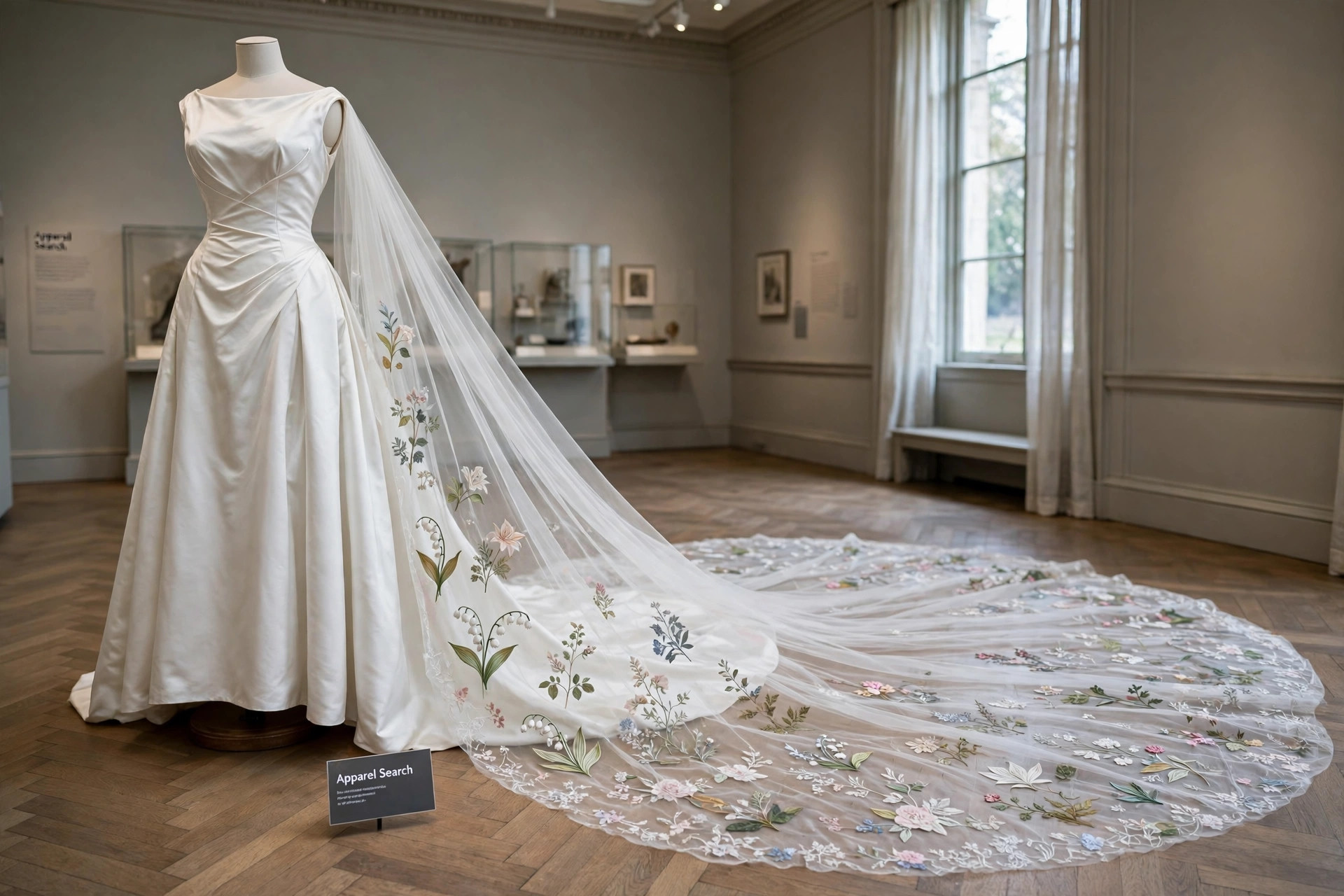
- 19 May 2018 — Givenchy by Clare Waight Keller; bateau neckline, double-bonded silk cady, triple silk organza underskirt
- The veil
- Embroidered with the flowers of all 53 Commonwealth countries — diplomatic dressing in a single garment
- Principal houses
- Givenchy, Stella McCartney, Safiyaa and Goat, alongside accessible labels including J.Crew, Everlane, Club Monaco, Veja and Rothy's
- Tour practice
- Host-country, small, Black-owned and sustainable brands worn deliberately on tour, notably in South Africa in 2019
- The evidence
- Net-a-Porter figures reported 30 May 2018; Brand Finance and Walpole, October 2018; Lyst Year in Fashion reports for 2018 and 2019
- The limit
- No equivalent measured series exists for the post-2020 period; later claims are anecdotal
The Wedding
19 May 2018: A Dress and a Veil That Did the Diplomacy
The wedding dress was the first statement, and it was made with unusual economy. Clare Waight Keller, then artistic director of Givenchy, designed a gown of double-bonded silk cady with a bateau neckline and a triple silk organza underskirt: no lace, no beading, no embroidery on the dress itself. In a decade of heavily decorated royal bridal gowns — the world our 2010s fashion history guide surveys — the plainness was the point. The dress said confidence and modernity; everything the gown declined to say was carried instead by what trailed behind it.
The veil was embroidered with the flowers of all 53 Commonwealth countries. Read that as what it was: a new member of the Royal Family arriving, on her first and most photographed day, wearing the entire Commonwealth on her person. It belongs to the oldest tradition in this section — the emblem language Norman Hartnell worked into the 1953 coronation dress — translated for a bride whose own future role was expected to be Commonwealth-facing. Our guide to diplomatic dressing treats the veil as a set piece of the craft, and it earns the place: the compliment was total, it was legible to every one of the 53 nations it named, and it required no speech, no press release and no announcement. The embroidery was the announcement.
For the evening reception she changed into a second dress with a different register entirely: a lily-white silk crepe halterneck by Stella McCartney. Where the Givenchy was ceremonial and architectural, the McCartney was sleek and personal — and, as the sales figures in a later section show, the public responded to both dresses at once, in different tills, within the same weekend. Two dresses, two British-based houses, two distinct messages about the kind of royal she intended to be: the state occasion honoured in full, and the private celebration dressed in a modern designer's minimalism.
The Working Wardrobe
2018–2020: Couture Houses and Accessible Labels, Deliberately Mixed
The working-royal wardrobe that followed was built on a deliberate mixture. At the formal end stood the houses: Givenchy and Stella McCartney from the wedding, joined by Safiyaa and by Goat, the British label whose dress she wore for her first post-wedding engagement. At the accessible end stood labels any of her audience could buy the same afternoon: J.Crew, Everlane, Club Monaco, Veja trainers and Rothy's flats. The mixture was not an accident of taste. A duchess who wore only couture would have been remote; a duchess who wore only the high street would have lacked ceremony. The wardrobe alternated registers the way a speaker changes tone — full state dress where the occasion demanded it, recognisable everyday clothes where the work was a school visit, a charity kitchen or a walkabout.
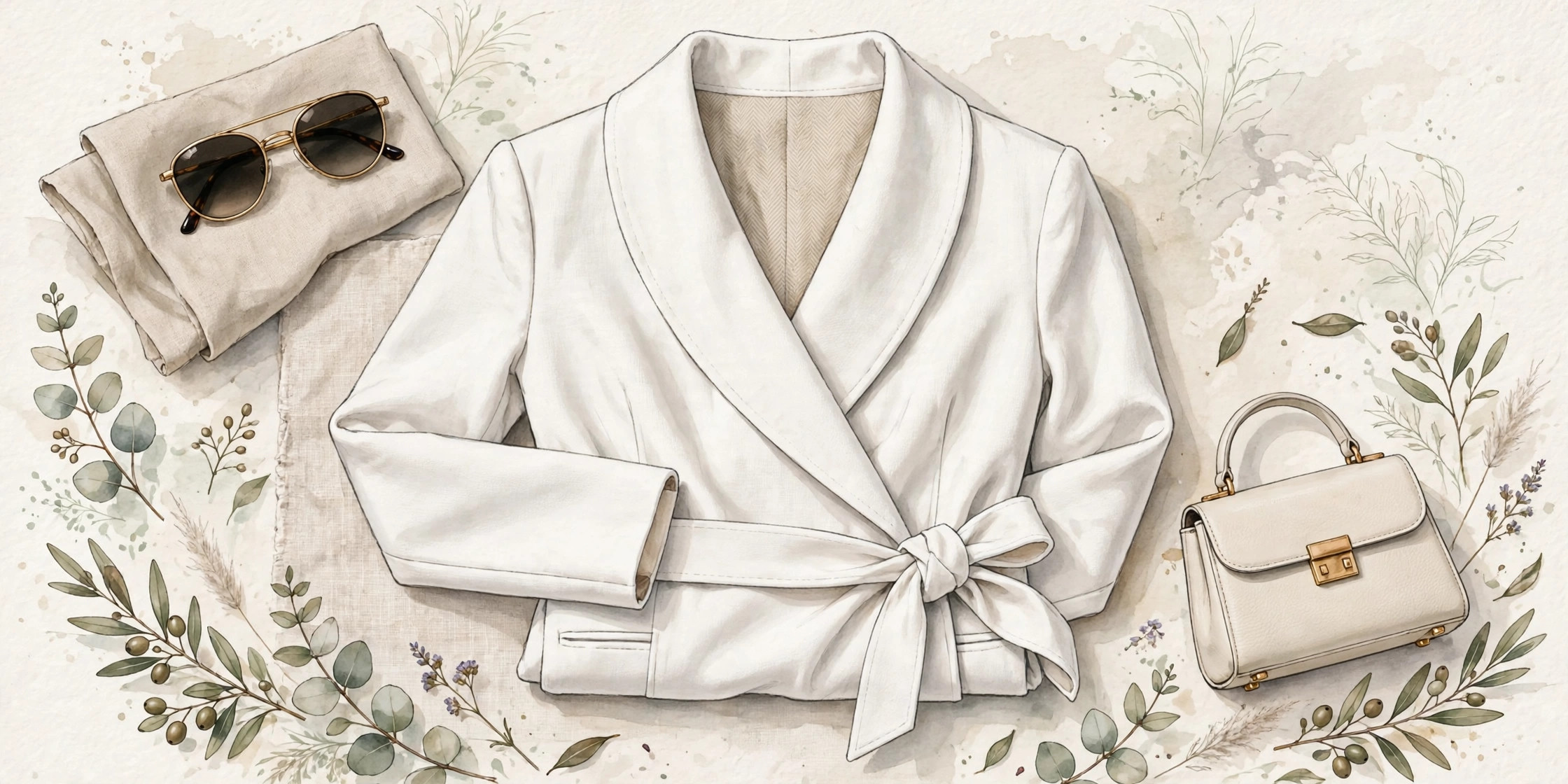
The pattern was set before the wedding. The white wrap coat she wore for the engagement announcement, by the Canadian label Line the Label, sold out in minutes and crashed the label's website — an early warning, months before she held any royal role, of the commercial weather that would follow her clothes. Sunglasses by Finlay and a Strathberry bag carried in Edinburgh would produce the same effect at larger scale, and both episodes are documented in the impact section below with their sources attached. The wardrobe's accessibility was therefore also its amplifier: because so many of the pieces were buyable, every appearance could be converted by her audience into a purchase within the hour, and the platforms that tracked those purchases left an unusually complete record of the conversion.
Tour Dressing
Wearing the Host Country: Tours and Small Brands
On tour, the wardrobe followed the host-country rule that runs through this whole section: dress, where you can, in a compliment to the place you are visiting. In her case the compliment took a contemporary form. Rather than only wearing a host nation's colours or emblems, she repeatedly chose host-country labels, small brands, Black-owned brands and sustainable brands, giving little-known makers the full force of the attention that followed her. It was diplomatic dressing updated for an era when the compliment a small label values most is not a colour but a customer.
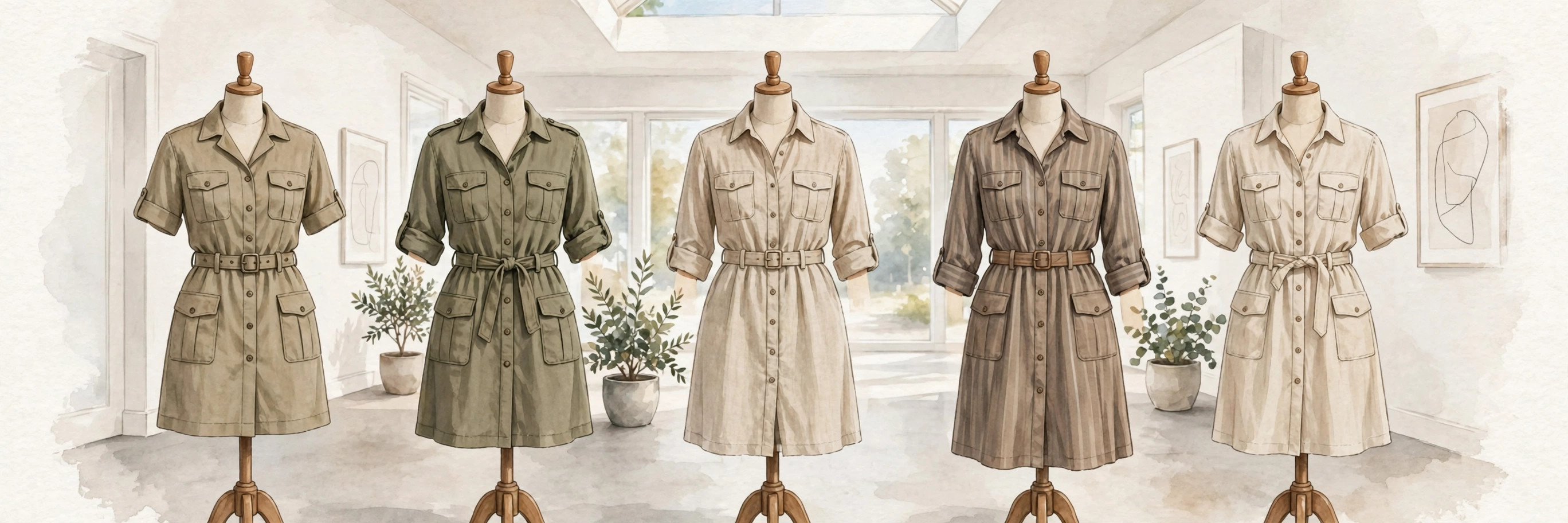
The clearest documented run came in South Africa in 2019. Across that tour she wore a series of five shirt dresses — practical, modest, repeatable garments suited to the itinerary — and the fashion data platform Lyst recorded the effect at category level: searches for shirt dresses rose 45 percent over the month. One dress from that tour, by Club Monaco, saw searches rise 570 percent and sold out in under 24 hours. The episode matters because it shows the mechanism at its most complete: a working garment, chosen for a working visit, worn by a wearer whose audience could buy the same category instantly, with the resulting demand measured by a named platform and published with a date.
Set beside the older practice in this section — a falcon embroidered for Saudi Arabia, wattle embroidered for Australia — the South Africa tour shows both continuity and change. The continuity is intent: the clothes were chosen with the host in mind. The change is the beneficiary: where an embroidered emblem honours a state, a small brand worn on tour honours, and materially rewards, a maker. Both are statecraft. The second kind simply leaves receipts.
The Measured Effect I
Wedding Week and After: What the Retailers Reported
The impact record begins eleven days after the wedding. On 30 May 2018, TheIndustry.fashion reported figures from the luxury retailer Net-a-Porter: full-price Givenchy sales were three times higher in the three days after the wedding than in the three days before it, and full-price Stella McCartney sales were up by half over the same comparison. Those are a retailer's own reported figures for its own tills — the strongest kind of short-window evidence available, and this guide quotes them as exactly that: Net-a-Porter's numbers, reported on a named date, not an independent audit of the whole market.
The same report recorded the first of the famous sell-outs: the dress she wore for her first post-wedding engagement, the Flavia dress by Goat, priced at £590, sold out and crashed Goat's website. In October 2018, Brand Finance, in its Walpole report on royal fashion influence, ranked her a close second to Catherine, Princess of Wales, and quoted a set of brand-reported examples: sunglasses maker Finlay reported United States revenue up 2,700 percent; searches for Strathberry bags rose 2,044 percent and the bag she carried sold out in 11 minutes; and the Line the Label engagement coat had sold out in minutes and crashed that label's site. Those percentages are Brand Finance's quoted brand reports — figures the brands supplied and Brand Finance published, labelled as such here because they were not independently audited. Even read with that caution, the pattern they describe is consistent with the retailer's own numbers above: small and mid-sized labels, exposed to her audience, saw demand they were not built to absorb.
The Measured Effect II
The Lyst Years: Search Data, 2018 and 2019
The measured evidence is narrower than the legend — and more interesting, because it can be checked.
The second body of evidence comes from Lyst, the fashion search platform, whose Year in Fashion reports measure what millions of shoppers actually searched for. Lyst's 2019 report named her the most powerful dresser of the year: her outfits sparked, on average, a 216 percent increase in searches for similar pieces. The same report supplied the tour figures used earlier in this guide — the Club Monaco dress at 570 percent and the shirt-dress category up 45 percent across the South Africa tour month. Lyst's 2018 report had set the baseline: a designer she wore saw, on average, a 200 percent increase in search demand in the following week, and searches for Givenchy dresses rose 184 percent after the wedding.
Against that measured record, one famous figure must be filed correctly. Before the wedding, Brand Finance estimated that she could add about £150 million a year to British fashion; its chief executive gave the figure to Business of Fashion in 2018. It is a pre-wedding projection — a forecast made before a single one of the measured episodes above had happened — not a measurement of anything that later occurred, and no audited series has since confirmed it. This guide prints it only in that labelled form. The honest summary of the impact evidence is therefore precise: for 2017 to 2019, platform search data and retailer-reported sell-outs document an effect that was real, repeated and unusually large; the round annual totals attached to it in headlines were estimates, and should be read as estimates.
After the Royal Years
An Honest Closing: Where the Record Stops
In 2020 the couple stepped back from working-royal life, and this guide's spine ends there, because the evidence does. Her later dressing — the Montecito chapter, and a lifestyle brand launched in 2025 — has been photographed and discussed as widely as anything she wore as a duchess, but it has produced nothing comparable to the 2017–2019 record: no platform has published an equivalent measured series for the post-2020 period, and the claims made for those years are anecdotal. A guide that treated the two periods as equally documented would be inventing a symmetry the sources do not support.
What the royal period itself established is enough. In under two years, the wardrobe demonstrated the complete modern circuit of state dressing: a ceremonial garment that carried a diplomatic message in its embroidery, a working wardrobe that mixed couture with clothes its audience could buy, tour dressing that directed attention and income toward host-country and small brands, and an audience whose response was captured, dated and published by the retailers and platforms involved. Future wearers will be measured against many wardrobes in this section. On the quality of the surviving evidence — named measurers, named dates, figures that can be traced — hers is the benchmark.
Common Questions
Questions & Answers
Who designed Meghan, Duchess of Sussex wedding dress?
Her wedding dress, worn on 19 May 2018, was designed by Clare Waight Keller for Givenchy. It was a bateau-neck gown in double-bonded silk cady with a triple silk organza underskirt. Her veil was embroidered with the flowers of all 53 Commonwealth countries, and her reception dress was a lily-white silk crepe halterneck by Stella McCartney.
What is the Meghan effect and how was it measured?
It is the name given to the sales and search surges that followed her appearances. Net-a-Porter, reported on 30 May 2018, said full-price Givenchy sales were three times higher in the three days after the wedding than in the three days before. Lyst named her the most powerful dresser of 2019 and said her outfits sparked on average a 216 percent increase in searches for similar pieces.
Did Meghan really add 150 million pounds a year to British fashion?
That figure was a projection, not a measurement. Before the wedding, Brand Finance estimated she could add about 150 million pounds a year to British fashion. The measured evidence is narrower: retailer and platform reports of sell-outs and search increases for 2017 to 2019, and no equivalent measured series exists for the years after 2020.
Royal Style on Apparel Search
Her sister-in-law's parallel wardrobe, the section's reference wardrobe, the craft guide her veil belongs to, and the site's own royal-style reading.
Search Apparel Search