Royal & State Fashion · State Dressing Profiles
Catherine, Princess of Wales: The Discipline of the Working Wardrobe
No modern royal wardrobe has been watched, copied or argued about like Catherine's. Since her wedding in 2011 she has built a working wardrobe on a few unwavering principles: a small circle of core houses, high-street labels worn without apology beside couture, outfits re-worn in public as a matter of policy, and tour dressing that pays tailored compliments to host countries. The commercial response to that wardrobe — the so-called Kate effect — produced the most quoted figure in royal fashion and, on inspection, the least substantiated. This guide keeps the two things separate. It documents the wardrobe itself, then examines the evidence for its effect with the sourcing attached: retailer-reported sell-outs that genuinely happened, a respectable perception survey, a billion-pound claim that dissolves under scrutiny, and a 2025 press row that shows what happens when the wardrobe's publicity is questioned.
At a Glance
- The wedding gown
- Sarah Burton for Alexander McQueen, 29 April 2011 — the house has anchored the wardrobe ever since
- Core houses
- Alexander McQueen, Jenny Packham, Catherine Walker and Emilia Wickstead
- High street
- Zara, Reiss, Hobbs, L.K.Bennett and Whistles, worn in public alongside couture
- The stylist
- Natasha Archer, her long-serving stylist and personal assistant
- The practices
- Public re-wearing, the coat-dress as uniform, colour-blocked tour dressing with host-country nods
- The evidence
- Documented sell-outs (Issa 2010, Reiss 2011); a Brand Finance and Walpole perception survey (2018); the "£1bn a year" figure is an unaudited press estimate — see the evidence section
The Foundation
The Wedding Gown and the Core Houses
The wardrobe begins with the most scrutinised dress of its decade: the wedding gown by Sarah Burton for Alexander McQueen, worn on 29 April 2011. The choice set the template for everything after — a British house, a designer relationship that would endure, and a silhouette of disciplined tailoring rather than fairy-tale excess. McQueen remained a core house for the state occasions of the years that followed, through the world our 2010s fashion history guide covers and into the next decade.
Around that anchor, a small and stable roster formed. Jenny Packham supplied evening glamour. Catherine Walker — the same house that had built Diana's working wardrobe — provided tailored coat-dresses and suits. Emilia Wickstead brought a sculptural, ladylike line to day dressing. The roster's stability is itself the story: where Diana's wardrobe evolved in public chapters, Catherine's was consistent from the start, a uniform refined rather than reinvented. The consistency was recognised at the highest level of the industry when she appeared on the cover of British Vogue's centenary issue in June 2016 — a working royal presented by the fashion establishment as one of its own fixtures.
Running the wardrobe day to day is her long-serving stylist and personal assistant Natasha Archer — the professional counterpart to Angela Kelly in the Queen's household, and evidence that the modern royal wardrobe is again an operation, not an impulse. The system shows in the practices of the next sections: nothing about the re-wearing, the tour planning or the high-street mixing is accidental.
The Mix
High Street Beside Couture
The wardrobe's most copied decision was to treat the high street as a legitimate part of a royal uniform. Zara, Reiss, Hobbs, L.K.Bennett and Whistles appear in her public dressing alongside McQueen and Packham, at prices her audience could actually pay — and did, in quantities the next section documents. In the early 2010s she was also widely credited in the fashion press with popularising nude pumps, the plain court shoe that became the default footwear of a generation of office dressing.
A princess who wears a £175 high-street dress to meet a president is making the high street part of the state wardrobe — and the state wardrobe part of the high street.
The mix is a deliberate piece of state dressing in the modern key. The Queen's wardrobe communicated through visibility and emblem; Diana's through closeness and compliment. Catherine's adds a third register: relatability at retail. A coat-dress by Catherine Walker speaks to the institution; a Reiss dress speaks to the shopper. Wearing both, sometimes in the same week, lets one wardrobe address the crowd at the barrier and the customer at the till in their own languages. Whether that was the intention is her office's business; that it was the effect is documented below.
The Practices
Re-wearing, Coat-dresses and the Tour Wardrobe
Three practices define the wardrobe's working method. The first is public re-wearing: outfits return, visibly and repeatedly, at engagements months or years apart. In a culture that treats a repeated outfit as a story, the repetition is the point — thrift and continuity presented as virtues, and a quiet refusal of the disposable logic of celebrity dressing. The second is the coat-dress: a tailored, single-garment solution that is formal at any hour, photographs cleanly, and needs no adjustment between a school visit and a state reception. It is the uniform the whole system is built around.
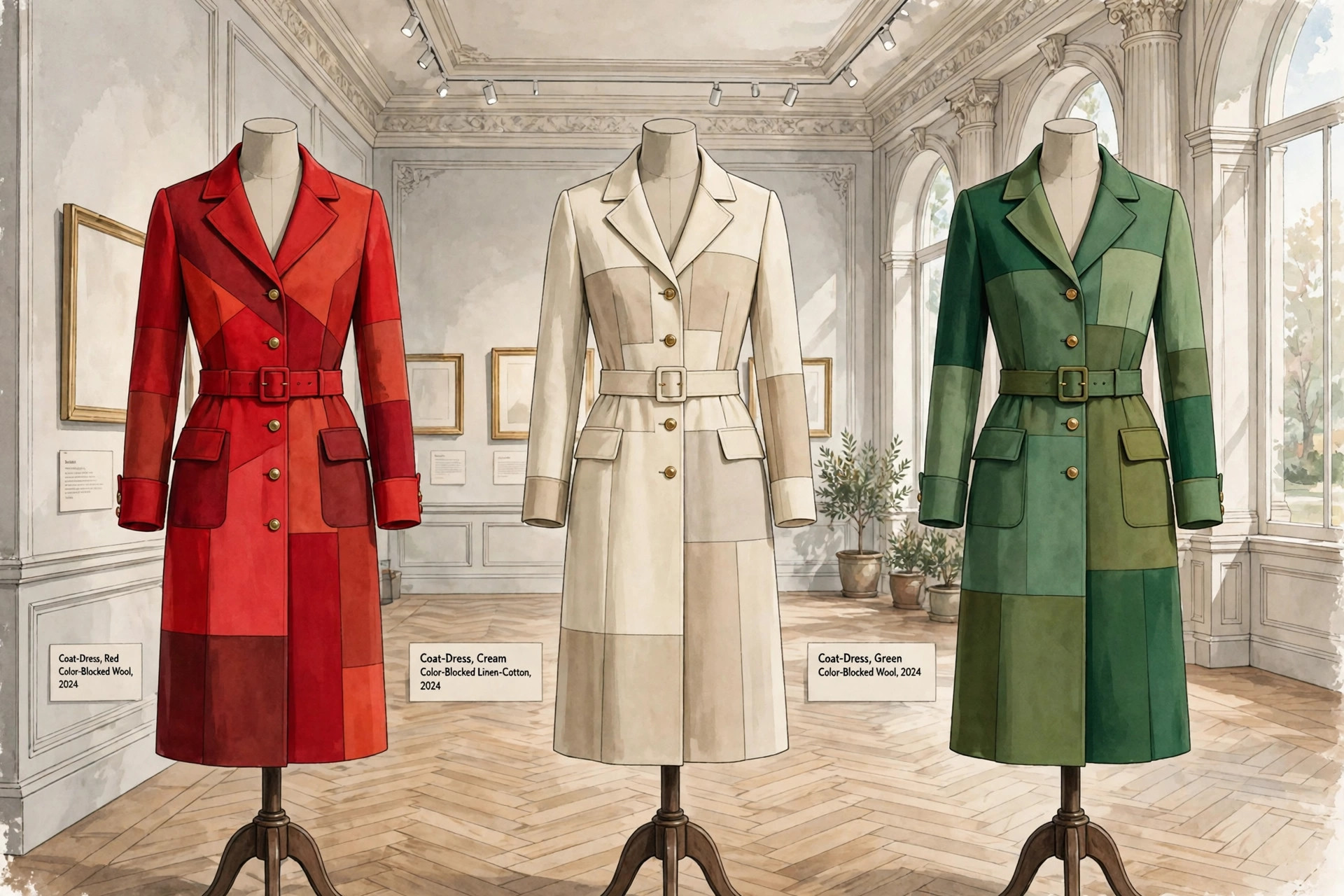
The third practice is tour dressing: colour-blocked wardrobes planned for each visit, with nods to the host country woven in — the direct inheritance of the diplomatic dressing Diana and the Queen practised, updated for the social-media tour. The documented examples span her whole working life: Canada in 2011 and again in 2016, Poland and Germany in 2017, each wardrobe built as a sequence of considered compliments rather than a suitcase of favourites. As the 2020s fashion history of her era continues to be written, the practices have not changed — which is, in the end, the practice: a wardrobe that behaves like an institution, not a feed.
The three practices interlock, and the interlocking is the message. Re-wearing gives the coat-dress a history; the coat-dress gives re-wearing a recognisable silhouette to return in; and the tour wardrobe proves the same discipline can speak a foreign visual language without breaking its own rules. Set against the other wardrobes in this section, the contrast is instructive. The Queen's system optimised for visibility — colour chosen so a crowd could find her. Diana's optimised for closeness — rules discarded so an encounter could happen at arm's length. Catherine's optimises for predictability: the same houses, the same silhouette family, the same courtesies to hosts, repeated until repetition itself becomes the signal. In state dressing, that is a position, not an absence of one. A wardrobe that never surprises is telling its audience that the institution it represents does not improvise — and it tells them so every single time it is photographed, which is to say, constantly.
The Evidence, Part One
The Sell-outs: Issa and Reiss
The effect's foundation is not the famous billion. It is two dresses, each documented at the time by named sources. The first is the sapphire-blue Issa wrap dress she wore for the engagement announcement on 16 November 2010. It sold out rapidly, and it was copied at every price point — Tesco's £16 copy sold out within an hour, per contemporaneous reporting. The honest counterweight belongs in the same paragraph: Issa's founder Daniella Helayel later said the demand surge strained the small label. The effect could overwhelm a business as readily as enrich it, and any account that prints only the sell-out half is advertising, not evidence.
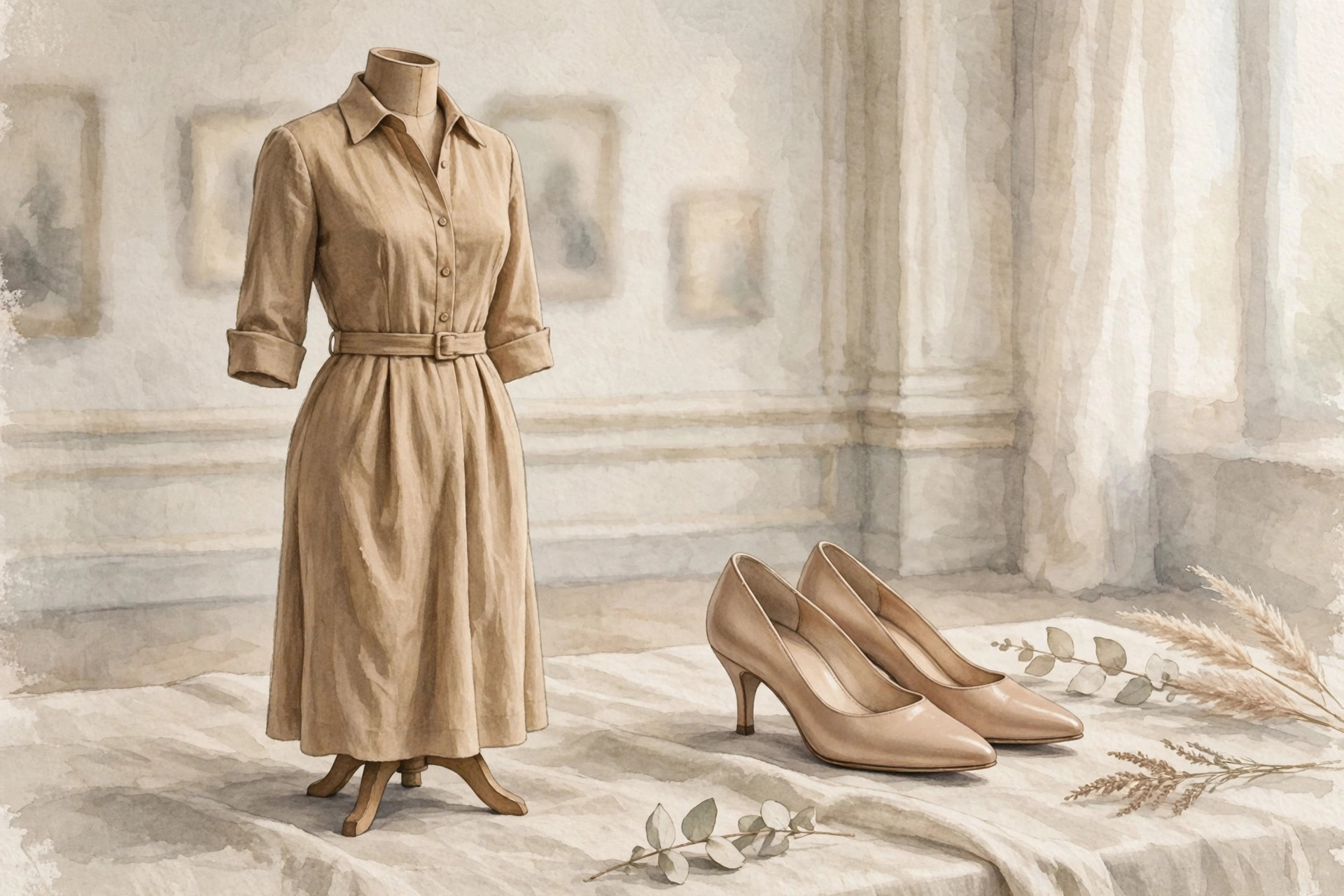
The second dress is the Reiss "Shola," a £175 camel bandage dress worn on 24 May 2011 for the meeting with the Obamas. Retail Week, the trade paper, reported on 26 May 2011 that Reiss said the dress had sold out after customers rushed to its shops and crashed its website — the site went down minutes after she appeared on television — and that it had sold out in stores as well. A further detail, that the dress was selling at one per minute with twenty gone in the first two minutes, comes from a Reiss spokesperson quoted by the specialist site that tracks her wardrobe: plausible, attributed, and a tier below the trade-press report, so this guide attributes it to Reiss rather than stating it as measured fact. Two dresses do not make a billion pounds. They make something better: a documented, dated, sourced record that the effect, at retail level, was real.
The Evidence, Part Two
The Billion-Pound Question
Now the famous figure, handled the way this section handles every figure: by tracing it. The claim that the "Kate effect" is worth £1 billion a year to British fashion has circulated in the press for over a decade, repeated as recently as September 2025 by the Mail on Sunday's royal editor. Traced to its earliest locatable origin, it is a Newsweek estimate from 2012 that put the effect at more than $1 billion annually to the UK fashion industry — in dollars, not pounds — and it later mutated into the round £1 billion of British reporting. No methodology, government analysis or audited report behind the figure has ever been published; scrutiny of the claim in autumn 2025 stated plainly that no public financial reports or government analyses confirm it. The correct label, and the one this guide uses, is: an unaudited press estimate, traced to Newsweek's 2012 $1 billion estimate, with no methodology ever published. Nothing stronger is honest.
The respectable evidence is different in kind. In October 2018, a Walpole and Brand Finance report, launched in New York on 25 October, published a survey of 1,515 American adults that named Catherine the most powerful royal fashion influencer, with Meghan, Duchess of Sussex, a close second; her endorsement was reported to raise a garment's desirability among about 38 percent of American shoppers. That is perception-survey evidence — what shoppers say a royal wearing would do to their interest — not sales data, and it is cited here as exactly that. Between the documented sell-outs, the survey, and the unaudited billion, a reader can see the whole anatomy of a fashion effect: real at the till in specific cases, measurable as influence in surveys, and unproven at the headline number. The wardrobe deserves the precise version.
Media Literacy
February 2025: The Outfit-Details Row
The wardrobe's strangest chapter is a story about its own publicity, and it is included here because it teaches exactly the skill this section asks of readers: checking both halves. On 1–2 February 2025, The Sunday Times reported, from a Kensington Palace source, that the Palace would stop routinely sharing Catherine's outfit details. The reported reasoning was that "there is an absolute feeling that it is not about what the princess is wearing… the style is there but it's about the substance," with exceptions possible for major state and family events. A week of backlash followed, including the criticism that small designers would lose the boost her wearing gave them.
Then came the second half. On 11 February 2025 a Palace spokesman issued a clarification, carried by the Press Association: the comments reported were his, not the Princess's, and "to be clear, there has been no change in our approach to sharing information about Her Royal Highness's clothing." The story that had run for a week — a policy change about the most-watched wardrobe in Britain — was officially withdrawn by the office said to have made it. Both halves are on the record, and both belong in any honest account: the initial report, because it was seriously sourced and widely believed, and the clarification, because it is the Palace's own final word. A guide that printed only the first half would be repeating a claim its source retracted; a guide that printed only the second would pretend the row never happened. The episode is the Kate effect studying itself — proof that by 2025, the details of this wardrobe were considered news worth fighting over, and worth correcting.
Common Questions
Questions & Answers
Who designed Catherine's wedding dress?
Sarah Burton for Alexander McQueen designed the wedding gown Catherine wore on 29 April 2011. Alexander McQueen has remained a core house in her wardrobe since, alongside Jenny Packham, Catherine Walker and Emilia Wickstead, mixed with high-street labels including Zara, Reiss, Hobbs, L.K.Bennett and Whistles.
Is the Kate effect really worth 1 billion pounds a year?
That figure is an unaudited press estimate, not a measurement. It traces to a Newsweek estimate in 2012 that put the effect at more than $1 billion a year for the UK fashion industry, and it later circulated in British reporting as 1 billion pounds a year. No methodology, government analysis or audited report behind it has ever been published. The documented evidence is narrower and stronger: named retailers reported specific sell-outs, and a 2018 Brand Finance and Walpole survey of 1,515 American adults named her the most powerful royal fashion influencer.
Did Kensington Palace stop sharing the Princess's outfit details in 2025?
The Sunday Times reported in February 2025, from a Kensington Palace source, that the Palace would stop routinely sharing her outfit details. After a week of criticism, a Palace spokesman clarified on 11 February 2025 that the comments were his own and not the Princess's, and said that there had been no change in the approach to sharing information about her clothing. Both halves are on the record, and this guide reports both.
Royal Style on Apparel Search
The section's hub and its companion profiles, plus the site's own princess and fashion-queen reading.
Search Apparel Search